How to Protect Yourself from Seasonal Allergies: Easy Prevention Tips
Published: 7 Apr 2026
Seasonal allergies affect many people every year. They cause sneezing, itchy eyes, a runny nose, and fatigue.
Learning how to protect yourself from seasonal allergies can make daily life easier. Small changes in your habits and environment can reduce symptoms a lot. Allergies can make work, school, or outdoor activities hard. This guide will show practical ways to prevent allergies naturally.
Let’s explore how to protect yourself from seasonal allergies.
How to Protect Yourself from Seasonal Allergies
In this section, we will share effective tips to reduce exposure to allergens. Seasonal allergies happen when your immune system reacts to pollen, dust, mold, or pet dander.
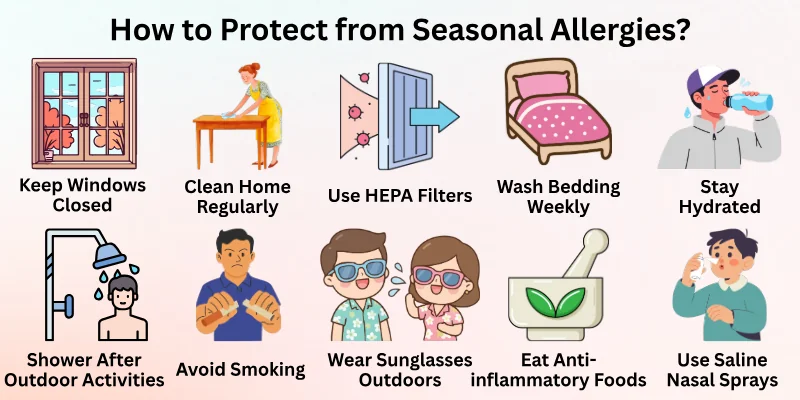
Each tip is simple and safe to follow at home. By practicing them regularly, you can feel better and avoid discomfort.
Tips List:
- Monitor Pollen Levels
- Keep Windows Closed
- Use HEPA Filters
- Clean your Home Regularly
- Wash Bedding Weekly
- Shower After Outdoor Activities
- Change Clothes after Being Outside
- Wear Sunglasses Outdoors
- Avoid Outdoor Exercise on High Pollen Days
- Use Saline Nasal Sprays
- Stay Hydrated
- Eat Anti-inflammatory Foods
- Take Allergy-friendly Supplements
- Reduce Exposure to Pet Dander
- Avoid Smoking and Secondhand Smoke
Let us cover all these tips in detail.
1. Monitor Pollen Levels
Pollen is one of the main triggers of seasonal allergies. It floats in the air during spring, summer, and fall. Checking daily pollen counts helps you avoid heavy exposure.
High pollen days can cause sneezing, congestion, and itchy eyes. Planning your outdoor activities around pollen levels reduces allergy problems. Monitoring your environment keeps symptoms under control.
- Check local pollen forecasts online or on apps.
- Limit outdoor activities when pollen is high.
- Close windows on high pollen days.
2. Keep Windows Closed
Open windows let pollen, dust, and mold spores enter your home. This can trigger sneezing and watery eyes. Keeping windows closed reduces allergens indoors.
Air conditioning also filters the air and keeps it clean. Maintaining a closed environment is important during high pollen seasons. This simple habit protects your family from allergy flare-ups.
- Use AC instead of natural ventilation.
- Keep bedroom windows shut at night.
- Seal gaps where pollen may enter.
3. Use HEPA Filters
HEPA filters remove pollen, dust, and pet dander from the air. They are useful in bedrooms, living rooms, and offices.
Cleaner air reduces allergy symptoms like congestion and sneezing. Regular maintenance ensures they continue working well. HEPA filters are a safe and effective allergy prevention method. Using them consistently improves indoor air quality.
- Place filters in bedrooms and living areas.
- Replace filters regularly.
- Use vacuum cleaners with HEPA filters.
4. Clean Your Home Regularly
Dust and pollen settle on floors, furniture, and surfaces. Regular cleaning removes allergens and prevents symptoms.
Using a damp cloth or mop avoids spreading dust into the air. Vacuuming with HEPA filters keeps carpets clean. Consistent cleaning makes your home safer for allergy sufferers. Small daily habits make a big difference.
- Dust surfaces twice a week.
- Vacuum carpets and rugs regularly.
- Wash curtains and furniture covers often.
5. Wash Bedding Weekly
Bedding can hold dust mites, pollen, and pet dander. Washing sheets in hot water kills these allergens. Clean bedding reduces nighttime sneezing and congestion.
Regular washing keeps your bedroom safe during allergy season. Using hypoallergenic covers adds extra protection. This habit is simple but very effective.
- Wash pillowcases, sheets, and blankets weekly.
- Use water hotter than 60°C (140°F).
- Change bedding more often during high pollen seasons.
6. Shower After Outdoor Activities
Pollen sticks to your skin, hair, and clothes. Showering removes these allergens before they trigger reactions.
Washing thoroughly can prevent itchy eyes and sneezing. Daily showers are especially helpful during high pollen days. This routine keeps allergens out of your home. Simple hygiene is an effective allergy prevention method.
- Use mild soap and shampoo.
- Rinse hair carefully to remove pollen.
- Dry with a clean towel.
7. Change Clothes After Being Outside
Outdoor clothes carry pollen and dust into your home. Changing clothes immediately reduces allergen exposure. This simple habit prevents flare-ups. It also keeps furniture and bedding cleaner. Regular clothing changes are easy and effective.
- Keep a dedicated basket for outdoor clothes.
- Avoid wearing outdoor shoes indoors.
- Wash heavily exposed clothes frequently.
8. Wear Sunglasses Outdoors
Sunglasses protect eyes from pollen and reduce irritation. They prevent redness, itching, and watery eyes. Wrap-around sunglasses provide better coverage.
Wearing sunglasses during high pollen seasons reduces allergy symptoms. Combining them with a hat increases protection. This is an easy and effective tip for daily allergy prevention.
- Choose wrap-around sunglasses.
- Wear them even on cloudy days.
- Use a hat to block additional pollen.
9. Avoid Outdoor Exercise on High Pollen Days
Exercise increases your breathing rate, letting more allergens into your lungs. Outdoor exercise on high pollen days can worsen symptoms.
Planning workouts indoors prevents allergy attacks. Early mornings or after rainfall are safer for outdoor activities. Regular exercise indoors keeps your body healthy without triggering allergies.
- Check pollen forecasts before exercising outdoors.
- Use indoor gyms or home workouts on high pollen days.
- Wear a mask if you must exercise outside.
10. Use Saline Nasal Sprays
Saline sprays rinse pollen and dust from nasal passages. They relieve sneezing, congestion, and irritation. Saline sprays are safe for daily use. They help reduce the intensity of seasonal allergies. Regular use keeps nasal passages clear.
- Spray 1–2 times daily.
- Use sterile saline solutions.
- Follow product instructions carefully.
11. Stay Hydrated
Drinking water thins mucus and reduces nasal congestion. Hydration supports overall immune function. It also prevents dry throat and irritation.
Staying hydrated helps your body fight allergens. Water-rich foods can add extra protection. Proper hydration improves overall health during allergy season.
- Drink at least 8 glasses of water daily.
- Include water-rich fruits like watermelon and cucumber.
- Avoid excess caffeine or sugary drinks.
12. Eat Anti-Inflammatory Foods
Some foods reduce inflammation and allergy severity. Leafy greens, berries, and fatty fish improve immune response.
These foods help your body fight allergens naturally. Avoid processed and sugary foods, which can worsen symptoms. A healthy diet supports allergy prevention. Eating well helps you feel better overall.
- Include vegetables, fruits, and omega-3 foods.
- Add ginger and turmeric for natural anti-inflammatory benefits.
- Limit processed or sugary foods.
13. Take Allergy-Friendly Supplements
Certain supplements strengthen the immune system. Vitamin C, quercetin, and probiotics may reduce allergy symptoms.
Supplements work best with a healthy diet. Always consult a doctor before starting new supplements. They help your body fight seasonal allergens naturally.
- Take as per recommended dosage.
- Combine with a balanced diet.
- Monitor for any side effects.
14. Reduce Exposure to Pet Dander
Pets carry dander that triggers allergies. Limiting exposure reduces symptoms. Grooming pets regularly helps remove dander.
Keeping pets out of bedrooms prevents allergic reactions. Cleaning pet areas often keeps allergens low. Simple changes reduce the impact of pet allergies.
- Bathe pets weekly.
- Vacuum pet areas regularly.
- Keep pets off furniture and bedding.
15. Avoid Smoking and Secondhand Smoke
Smoke irritates the airways and worsens allergies. Both smokers and those exposed to secondhand smoke experience more sneezing and congestion.
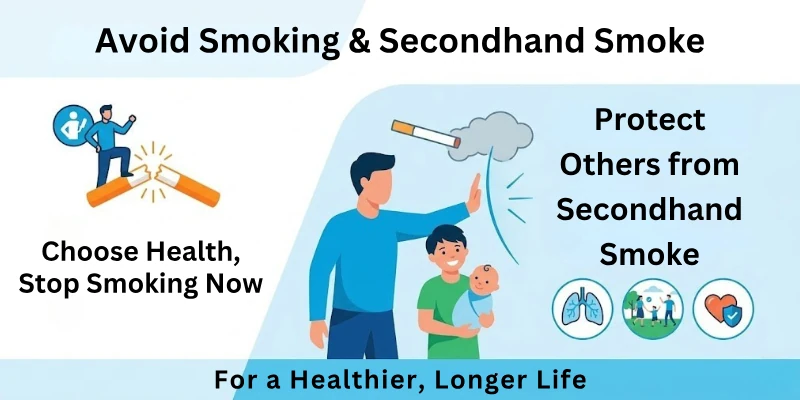
Avoiding smoke improves breathing and reduces flare-ups. Smoke-free environments help protect your family. Simple avoidance prevents allergy complications.
- Do not smoke indoors.
- Avoid areas with heavy smoke.
- Encourage family members to quit smoking.
How to Protect Children from Seasonal Allergies
Children are more sensitive to pollen, dust, and pet dander. Simple preventive measures reduce symptoms. Teaching good habits early helps them manage allergies naturally.
Tips to Protect Children:
- Keep windows closed during high pollen days.
- Use HEPA filters in bedrooms and play areas.
- Bathe and change clothes after outdoor play.
- Wash hands and face frequently.
- Avoid outdoor exercise during peak pollen hours.
- Limit exposure to pets if they trigger allergies.
- Keep toys, bedding, and furniture clean.
- Encourage a diet rich in fruits, vegetables, and omega-3 foods.
Seasonal Allergy Prevention While Traveling
Travel exposes you to new allergens like pollen, dust, and different pet dander. Awareness and preparation help you prevent seasonal allergies while on the move.
Tips for Traveling:
- Check pollen levels at your destination before traveling.
- Carry allergy medications and saline nasal sprays.
- Wear sunglasses and a mask to reduce pollen exposure.
- Choose accommodations with air conditioning and HEPA filters.
- Keep hotel windows closed during high pollen times.
- Shower and change clothes immediately after outdoor exposure.
- Avoid eating foods that commonly trigger allergies.
- Plan indoor activities during peak pollen periods.
Workplace Allergy Prevention
Allergies can affect productivity if your workplace has dust, mold, or poor ventilation. Small steps can keep symptoms under control while at work.
Tips for the Workplace:
- Keep your desk and work area clean and dust-free.
- Use an air purifier if allowed.
- Wash hands frequently during the day.
- Avoid placing flowers or plants that produce pollen indoors.
- Keep windows closed or use AC to prevent pollen entry.
- Take short breaks to step outside when pollen is low.
- Drink water regularly to stay hydrated.
Outdoor Allergy Management
Allergy exposure outdoors can be high during peak seasons. Proper preparation reduces symptoms.
Tips for Outdoors:
- Check daily pollen forecasts before going out.
- Wear a mask during high pollen days.
- Choose early morning or evening for outdoor activities.
- Wear sunglasses to protect eyes from pollen.
- Avoid walking in grassy fields or near blooming plants.
- Shower and change clothes after outdoor exposure.
- Keep outdoor shoes at the door to prevent bringing pollen indoors.
Diet and Lifestyle for Allergy Prevention
Your diet and habits influence how your body reacts to allergens. Healthy lifestyle choices reduce the severity of seasonal allergies.
Tips for Diet and Lifestyle:
- Drink at least 8 glasses of water daily.
- Eat anti-inflammatory foods like leafy greens, berries, and fatty fish.
- Avoid processed foods, sugary drinks, and alcohol.
- Get 7–8 hours of sleep daily to strengthen the immune system.
- Exercise regularly but avoid high pollen hours for outdoor workouts.
- Practice stress-reducing habits like meditation or deep breathing.
- Take allergy-friendly supplements if advised by your doctor.
Final Note
In this guide, we have covered how to protect yourself from seasonal allergies using simple, practical tips for home, outdoors, and travel.
My personal advice is to combine environmental control, hygiene habits, and a healthy diet for the best protection. Avoid triggers, stay hydrated, and follow these preventive measures daily. Stay safe, breathe well, and enjoy allergy-free days! 🌸
FAQs: Seasonal Allergies
Here are some of the most commonly asked questions related to how you can avoid seasonal allergies:
Sneezing, runny nose, itchy eyes, congestion, and fatigue are common symptoms. They usually appear in spring, summer, or fall. Recognizing symptoms early helps take preventive steps.
Monitor pollen levels, keep windows closed, use HEPA filters, shower after outdoor exposure, and eat anti-inflammatory foods. These habits reduce exposure and strengthen your immune system.
Yes, children have sensitive immune systems and react more strongly to pollen and dust. Keeping their environment clean and teaching hygiene helps reduce symptoms.
Yes, anti-inflammatory foods like leafy greens, berries, and omega-3 fish reduce allergy severity. Avoid processed and sugary foods. A healthy diet supports the immune system.
Yes, saline nasal sprays rinse pollen and dust from nasal passages. They relieve sneezing, congestion, and irritation. They are safe for daily use.
Pets carry dander that triggers allergic reactions. Limiting pet access to bedrooms and grooming pets reduces symptoms.
Yes, outdoor exercise can increase pollen exposure. Indoor workouts or exercise during low pollen times are safer.
Yes, oils like lavender or peppermint calm nasal passages and reduce irritation. They can be inhaled or applied topically in small amounts.
Hygiene is very important. Washing hands, face, and hair after outdoor exposure removes allergens. Changing clothes prevents pollen from spreading indoors.
See a doctor if symptoms are severe, persistent, or cause breathing problems. They may recommend medications or allergy testing. Early medical help prevents complications.




- Be Respectful
- Stay Relevant
- Stay Positive
- True Feedback
- Encourage Discussion
- Avoid Spamming
- No Fake News
- Don't Copy-Paste
- No Personal Attacks
- Be Respectful
- Stay Relevant
- Stay Positive
- True Feedback
- Encourage Discussion
- Avoid Spamming
- No Fake News
- Don't Copy-Paste
- No Personal Attacks
