Leg Exercises for Seniors: Easy Home Workouts for Stronger Legs
Published: 1 Nov 2026
Many seniors find everyday activities like walking, standing, and climbing stairs more difficult as they age. This happens because muscle strength naturally decreases over time, especially in the legs.
Weak leg muscles can affect balance, mobility, and independence while increasing the risk of falls. Regular exercise can help seniors build stronger legs and stay active.
In this guide, you’ll discover the best leg exercises for seniors that are safe, low-impact, and easy to do at home. We’ll also cover safety tips, common mistakes, and FAQs to help you exercise with confidence.
Best Leg Exercises for Seniors
Regular exercise is one of the best ways to keep your legs strong, improve balance, and make everyday movements easier as you age. The right exercises can help increase lower body strength, support healthy joints, and reduce the risk of falls.
Whether you’re just starting or looking to stay active, these beginner-friendly movements are safe and easy to perform at home.
Here are the best leg exercises for seniors:
- Chair Sit-to-Stand
- Seated Leg Extension
- Standing Calf Raises
- Heel-to-Toe Walk
- Side Leg Raises
- Standing Hamstring Curl
- Mini Squats
- Step-Ups
- Seated Marching
- Standing Hip Extension
- Standing Hip Abduction
- Toe Taps
- Glute Bridge
Let’s take a closer look at each exercise in detail.
1. Chair Sit-to-Stand
The Chair Sit-to-Stand is a simple lower-body exercise that strengthens the quadriceps, glutes, hamstrings, and core muscles. These muscles help you stand up, sit down, walk, climb stairs, and maintain better balance during daily activities.
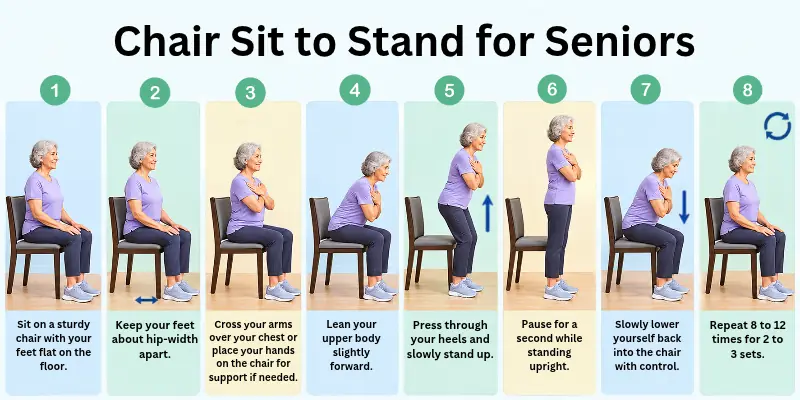
Regular practice can improve leg strength, stability, and mobility while helping seniors stay independent and reduce the risk of falls.
How to Do It:
- Sit on a sturdy chair with your feet flat on the floor.
- Keep your feet about hip-width apart.
- Cross your arms over your chest or place your hands on the chair for support if needed.
- Lean your upper body slightly forward.
- Press through your heels and slowly stand up.
- Pause for a second while standing.
- Slowly lower yourself back into the chair with control.
- Repeat 8 to 12 times for 2 to 3 sets.
Tip: Use a sturdy chair that does not slide and start slowly if you are new to leg exercises for seniors.
2. Seated Leg Extension
The Seated Leg Extension is a simple exercise that targets the quadriceps, the muscles at the front of your thighs. It helps strengthen the knees, improve leg stability, and make daily activities like walking, standing, and climbing stairs easier.
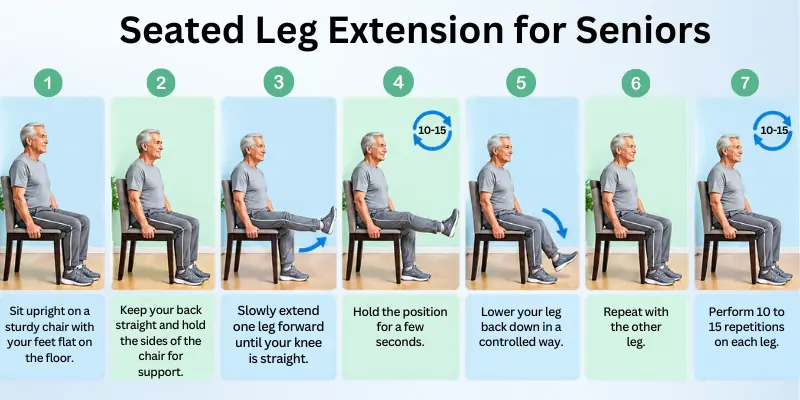
This low-impact movement is especially useful for seniors because it can be done while sitting and does not require any equipment. Seniors with knee problems may need gentle strengthening movements to support better comfort and mobility. Explore our guide on quad exercises for bad knees for more targeted exercises.
How to Do It:
- Sit upright on a sturdy chair with your feet flat on the floor.
- Keep your back straight and hold the sides of the chair for support.
- Slowly extend one leg forward until your knee is straight.
- Hold the position for a few seconds.
- Lower your leg back down in a controlled way.
- Repeat with the other leg.
- Perform 10 to 15 repetitions on each leg.
Tip: Avoid locking your knee completely and perform the movement slowly for better control.
3. Standing Calf Raises
Standing Calf Raises are a simple lower-body exercise that strengthens the calf muscles at the back of your lower legs. Strong calves help improve balance, walking ability, and stability while performing daily activities.
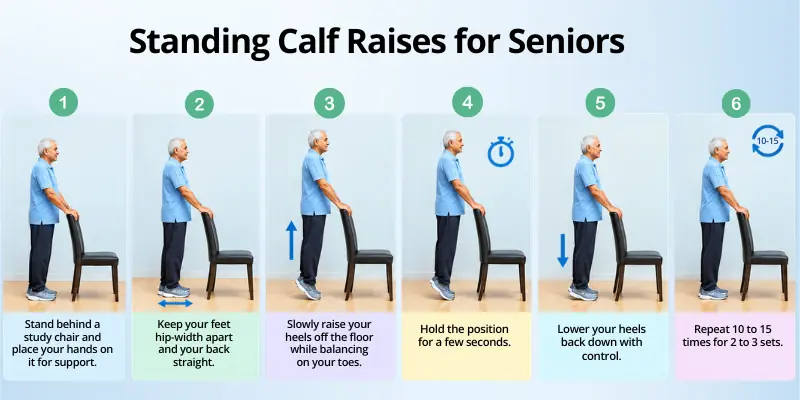
This exercise also supports ankle strength and can help seniors maintain better control while standing and moving.
How to Do It:
- Stand behind a sturdy chair and place your hands on it for support.
- Keep your feet hip-width apart and your back straight.
- Slowly raise your heels off the floor while balancing on your toes.
- Hold the position for a few seconds.
- Lower your heels back down with control.
- Repeat 10 to 15 times for 2 to 3 sets.
Tip: Keep your movements slow and use the chair for support to maintain balance.
4. Heel-to-Toe Walk
The Heel-to-Toe Walk is a simple balance exercise that helps strengthen the leg muscles, improve coordination, and support better stability while walking. It mainly works the lower legs, ankles, and core muscles, which play an important role in maintaining balance and reducing the risk of falls.
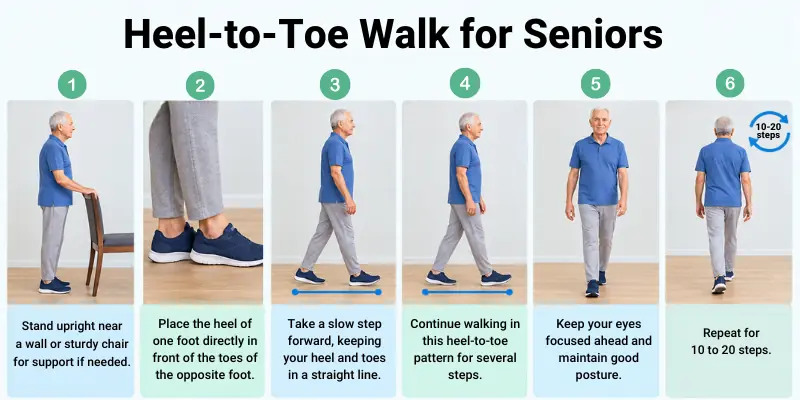
This exercise is especially helpful for seniors who want to improve their walking confidence and overall mobility.
How to Do It:
- Stand upright near a wall or sturdy chair for support if needed.
- Place the heel of one foot directly in front of the toes of the opposite foot.
- Take a slow step forward, keeping your heel and toes in a straight line.
- Continue walking in this heel-to-toe pattern for several steps.
- Keep your eyes focused ahead and maintain good posture.
- Repeat for 10 to 20 steps.
Tip: Practice this exercise near a stable surface until your balance and confidence improve.
5. Side Leg Raises
Side Leg Raises are a simple lower-body exercise that targets the hip muscles, glutes, and outer thighs. This movement helps strengthen the hips, improve movement control, and support safer changes in direction for seniors.
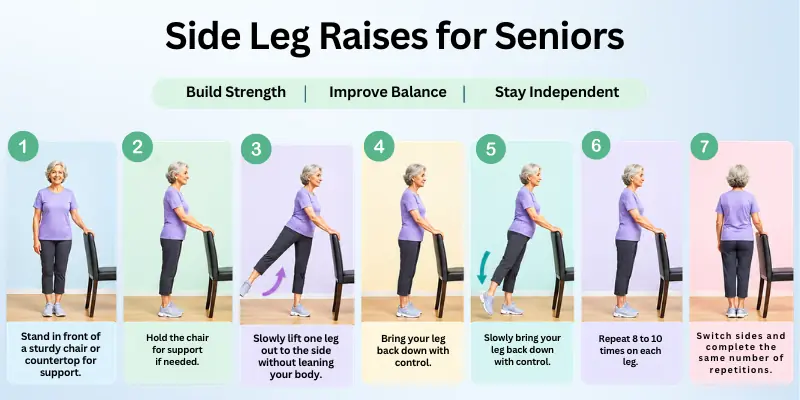
Strengthening the hip muscles can also support better posture and lower the risk of falls. It is a low-impact exercise that can be easily added to a senior’s home workout routine.
How to Do It:
- Stand upright and hold a sturdy chair or countertop for support.
- Keep your back straight and your feet facing forward.
- Slowly lift one leg out to the side without leaning your body.
- Hold the position for a few seconds.
- Lower your leg back down with control.
- Repeat 10 to 15 times on each leg.
- Switch sides and complete the same number of repetitions.
Tip: Keep your movements slow and controlled to properly engage your hip muscles.
6. Standing Hamstring Curl
The standing hamstring curl is a simple lower-body exercise that targets the hamstrings, the muscles at the back of your thighs. It also engages the glutes and helps improve leg strength, balance, and knee stability.
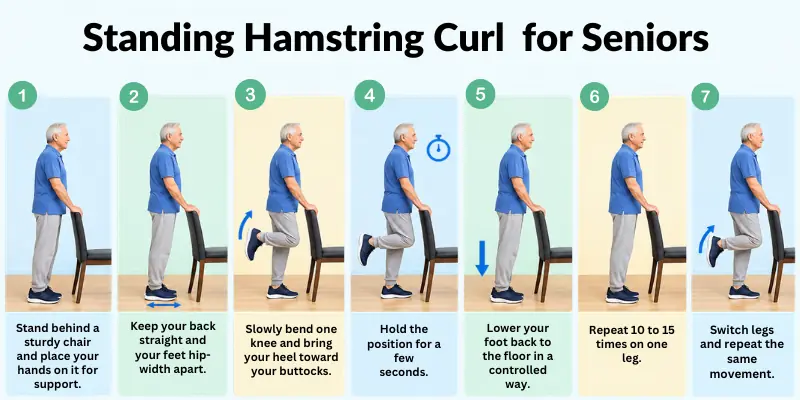
This exercise can make daily movements like walking, climbing stairs, and getting up from a chair easier for seniors. It is a low-impact movement that can be performed at home with a chair for support.
How to Do It:
- Stand behind a sturdy chair and place your hands on it for support.
- Keep your back straight and your feet hip-width apart.
- Slowly bend one knee and bring your heel toward your buttocks.
- Hold the position for a few seconds.
- Lower your foot back to the floor in a controlled way.
- Repeat 10 to 15 times on one leg.
- Switch legs and repeat the same movement.
Tip: Avoid moving your hips forward and keep your upper body stable during the exercise.
7. Mini Squats
Mini Squats are a beginner-friendly lower-body exercise that strengthens the quadriceps, glutes, hamstrings, and core muscles. This movement helps improve leg strength, balance, and stability, making daily activities like standing, walking, and climbing stairs easier for seniors.
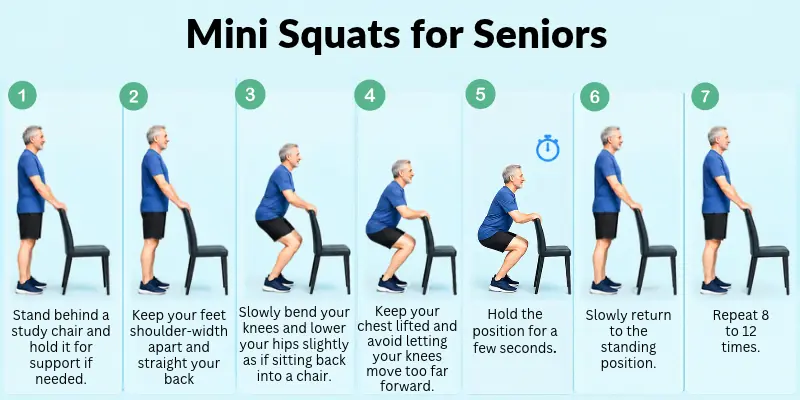
Because it uses a smaller range of motion than regular squats, it places less stress on the knees while still helping build lower-body strength.
How to Do It:
- Stand behind a sturdy chair and hold it for support if needed.
- Keep your feet shoulder-width apart and your back straight.
- Slowly bend your knees and lower your hips slightly as if sitting back into a chair.
- Keep your chest lifted and avoid letting your knees move too far forward.
- Hold the position for a few seconds.
- Slowly return to the standing position.
- Repeat 8 to 12 times.
Tip: Keep the movement shallow and controlled to avoid putting extra pressure on your knees.
8. Step-Ups
Step-Ups are a practical lower-body exercise that copies everyday movements like stepping onto a curb or climbing stairs.
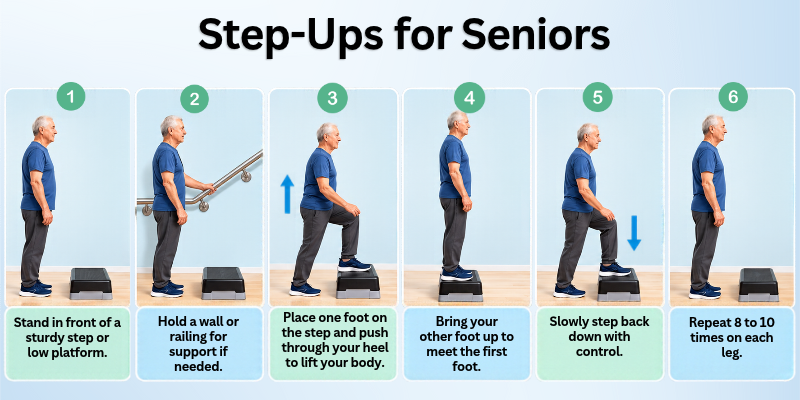
This exercise mainly targets the quadriceps, glutes, and hamstrings while helping seniors develop stronger legs and better coordination. It can also improve confidence during movement and support independence in daily activities.
How to Do It:
- Stand in front of a sturdy step or low platform.
- Hold a wall or railing for support if needed.
- Place one foot on the step and push through your heel to lift your body.
- Bring your other foot up to meet the first foot.
- Slowly step back down with control.
- Repeat 8 to 10 times on each leg.
Tip: Start with a low step and focus on controlled movements to maintain proper balance.
9. Seated Marching
Seated Marching is a gentle chair exercise that activates the hip flexors, thighs, and core muscles while improving lower-body movement. It is a great option for seniors who have difficulty with standing exercises because it can be done safely while sitting.
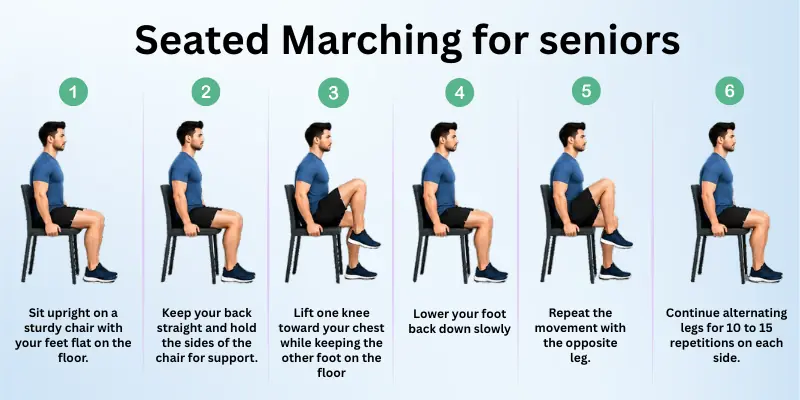
This exercise helps maintain leg mobility, supports better posture, and makes everyday movements like walking and lifting the legs easier.
How to Do It:
- Sit upright on a sturdy chair with your feet flat on the floor.
- Keep your back straight and hold the sides of the chair for support.
- Lift one knee toward your chest while keeping the other foot on the floor.
- Lower your foot back down slowly.
- Repeat the movement with the opposite leg.
- Continue alternating legs for 10 to 15 repetitions on each side.
Tip: Keep your movements slow and avoid leaning backward while lifting your knees.
10. Standing Hip Extension
Standing Hip Extension is a simple lower-body exercise that targets the glutes, hamstrings, and hip muscles. It helps improve hip strength, support better posture, and make movements like walking, standing, and climbing stairs more comfortable.
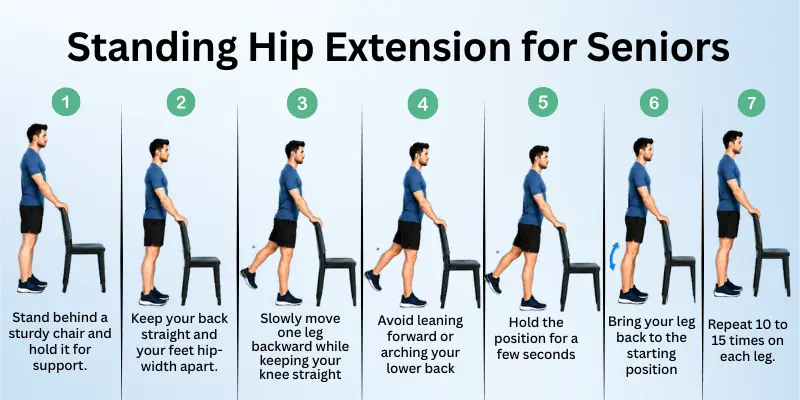
This exercise is especially useful for seniors because strong hip muscles play an important role in maintaining balance and lower-body control.
How to Do It:
- Stand behind a sturdy chair and hold it for support.
- Keep your back straight and your feet hip-width apart.
- Slowly move one leg backward while keeping your knee straight.
- Avoid leaning forward or arching your lower back.
- Hold the position for a few seconds.
- Bring your leg back to the starting position.
- Repeat 10 to 15 times on each leg.
Tip: Keep your movements controlled and avoid swinging your leg backward.
11. Standing Hip Abduction
Standing Hip Abduction is a simple lower-body exercise that targets the hip abductors, glutes, and outer thigh muscles. It helps improve hip strength, support better balance, and enhance control during movements like walking and changing direction.
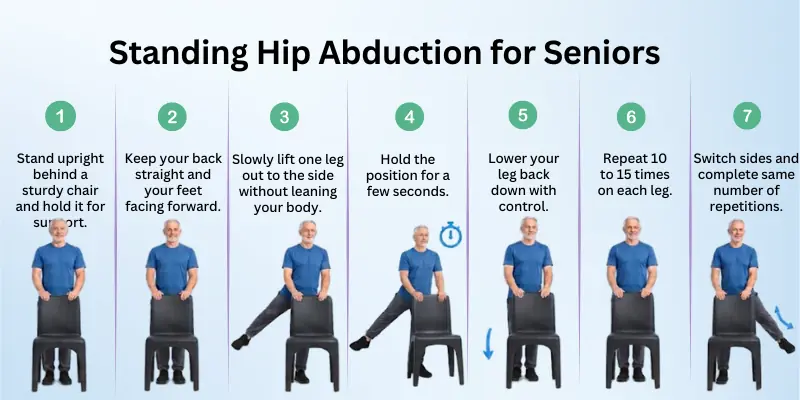
This exercise is especially helpful for seniors because strong hip muscles play an important role in maintaining stability and preventing falls.
How to Do It:
- Stand upright behind a sturdy chair and hold it for support.
- Keep your back straight and your feet facing forward.
- Slowly lift one leg out to the side without leaning your body.
- Hold the position for a few seconds.
- Lower your leg back down with control.
- Repeat 10 to 15 times on each leg.
- Switch sides and complete the same number of repetitions.
Tip: Keep your toes pointing forward and avoid swinging your leg during the movement.
12. Toe Taps
Toe Taps are a simple lower-leg exercise that targets the muscles around the ankles, feet, and shins. This movement helps improve ankle mobility, foot control, and balance, which can support safer walking and reduce the risk of tripping.
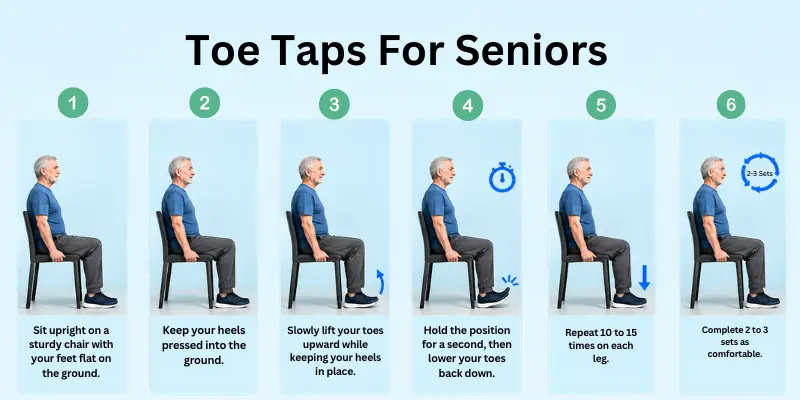
It is a gentle exercise for seniors that can be performed while sitting, making it a good option for beginners or those with limited mobility.
Improving foot and toe mobility can also support better movement and balance. You can explore our guide on toe exercises for hammer toe for more helpful exercises.
How to Do It:
- Sit upright on a sturdy chair with your feet flat on the floor.
- Keep your heels pressed into the ground.
- Slowly lift your toes upward while keeping your heels in place.
- Hold the position for a second, then lower your toes back down.
- Repeat the movement 10 to 15 times.
- Complete 2 to 3 sets as comfortable.
Tip: Keep your heels on the floor throughout the exercise to properly engage your lower-leg muscles.
13. Glute Bridge
The Glute Bridge is a simple floor exercise that targets the glutes, hamstrings, lower back, and core muscles. It helps strengthen the muscles that support the hips and spine while improving lower-body stability and posture.
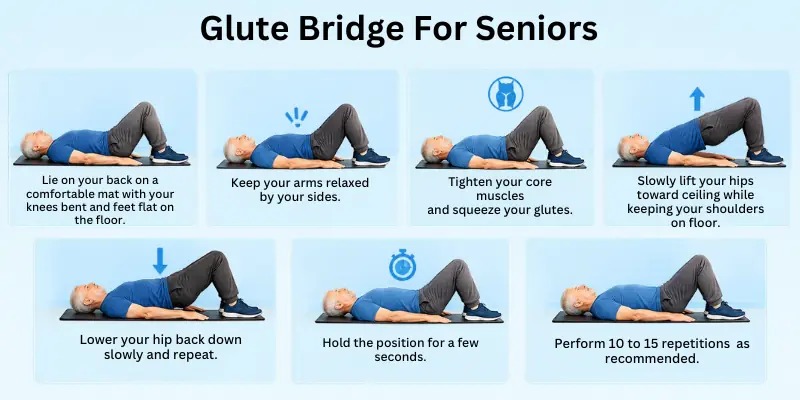
This exercise can help seniors build better control during movements like standing up, walking, and maintaining balance.
How to Do It:
- Lie on your back on a comfortable mat with your knees bent and feet flat on the floor.
- Keep your arms relaxed by your sides.
- Tighten your core muscles and squeeze your glutes.
- Slowly lift your hips toward the ceiling while keeping your shoulders on the floor.
- Hold the position for a few seconds.
- Lower your hips back down slowly and repeat.
- Perform 10 to 15 repetitions as comfortable.
Tip: Move slowly and avoid arching your lower back while lifting your hips.
Safety Tips Before Starting Leg Exercises for Seniors
Before starting any new exercise routine, seniors should take simple safety steps to avoid injuries and make workouts more comfortable. Proper preparation can help you exercise with confidence while improving strength, balance, and mobility safely.
Here are some important safety tips to follow before you begin:
- Medical Advice: Talk to your doctor if you have a medical condition, injury, or ongoing pain.
- Footwear: Wear comfortable, supportive shoes to improve stability and prevent slips.
- Warm-Up: Start with gentle movements to prepare your muscles and joints.
- Surface: Exercise on a flat, non-slip surface to reduce the risk of falls.
- Support: Keep a sturdy chair or stable surface nearby for extra balance.
- Movement: Perform each exercise slowly and with proper control.
- Hydration: Drink enough water before and after your workout.
- Awareness: Stop exercising if you feel pain, dizziness, or shortness of breath.
Common Mistakes to Avoid During Leg Exercises
Doing leg exercises for seniors correctly is important for getting better results and avoiding unnecessary strain. Small mistakes in form, speed, or preparation can reduce the benefits of exercise and may increase the risk of discomfort or injury.
Avoid these common mistakes:
- Warm-Up: Skipping warm-up exercises can leave your muscles and joints unprepared.
- Posture: Using poor posture can put extra stress on your knees, hips, and back.
- Breathing: Holding your breath during exercises can make movements more difficult.
- Speed: Moving too quickly can reduce control and increase the risk of injury.
- Repetitions: Doing too many repetitions can cause muscle fatigue and discomfort.
- Pain: Ignoring pain may worsen existing problems or lead to injury.
- Rest: Not allowing enough recovery time can slow muscle improvement.
- Hydration: Forgetting to drink water can affect energy and exercise performance.
Avoiding these mistakes can help seniors perform exercises safely and build strength more effectively.
Conclusion
In this guide, we covered the importance of leg exercises for seniors, including how they can help improve strength, balance, mobility, and independence. We also discussed safety tips before exercising and common mistakes to avoid.
Keeping your legs strong can make everyday activities like walking, standing, and climbing stairs easier. The key is to start with simple exercises, maintain proper form, and stay consistent with your routine. Even a few minutes of regular movement can help seniors support healthier aging and maintain an active lifestyle.
Choose exercises that feel comfortable for your fitness level, listen to your body, and make leg strengthening a regular part of your healthy routine.
Frequently Asked Questions
Many seniors have questions about starting a safe and effective exercise routine. These FAQs answer common concerns about leg exercises for seniors, including their benefits, frequency, safety, and how they can support better strength, balance, and mobility.
1. What are the best leg exercises for seniors at home?
The best leg exercises for seniors at home include:
- Chair Sit-to-Stand: Builds thigh and hip strength.
- Seated Leg Extension: Strengthens quadriceps and supports knee stability.
- Standing Calf Raises: Improves calf strength and balance.
- Side Leg Raises: Strengthens hip muscles.
- Toe Taps: Improves ankle mobility and foot control.
- Mini Squats: Builds lower-body strength safely.
2. How often should seniors do leg exercises?
Seniors should aim to do leg strengthening exercises about 2 to 3 times per week, allowing rest days between workouts. Light activities like walking and stretching can be included on other days to support mobility.
3. Can seniors strengthen weak legs naturally?
Yes, seniors can strengthen weak legs through regular exercise, a balanced diet, enough rest, and staying physically active. Consistent leg workouts can gradually improve muscle strength and movement.
4. Are chair leg exercises effective for seniors?
Yes, chair leg exercises can be very effective for seniors, especially beginners or people with limited mobility. They help strengthen the lower body while providing extra support and reducing the risk of losing balance.
5. Which leg exercise is best for improving balance?
Exercises that can help improve balance include:
- Heel-to-Toe Walk: Improves coordination and walking stability.
- Side Leg Raises: Strengthens hip muscles for better control.
- Standing Calf Raises: Supports ankle strength and balance.
6. What is the safest leg exercise for beginners?
Chair sit-to-stands and seated leg extensions are among the safest leg exercises for beginners because they are simple, low-impact, and easy to control.
7. Can leg exercises help reduce the risk of falls?
Yes, regular leg exercises can help improve muscle strength, balance, and coordination, which may lower the risk of falls and make daily movements safer.
8. Should seniors exercise every day?
Seniors can stay active every day, but they do not need to do intense leg workouts daily. Light activities like walking, stretching, and mobility exercises can be done regularly, while strength exercises should include recovery time.
9. Are these exercises safe for seniors with knee pain?
Many low-impact leg exercises can be safe for seniors with knee pain, but movements should be adjusted based on comfort level. Anyone with ongoing or severe knee pain should consult a healthcare professional before starting a new exercise routine.
10. How long does it take to build stronger legs?
The time needed to build stronger legs varies from person to person. With regular exercise, many seniors may notice improvements in strength, balance, and mobility within a few weeks.
11. When should seniors stop exercising and see a doctor?
Seniors should stop exercising and seek medical advice if they experience:
- Chest Pain: Any chest discomfort during or after exercise.
- Severe Pain: Strong or unusual pain in muscles or joints.
- Dizziness: Feeling lightheaded or faint.
- Breathing Issues: Unusual shortness of breath.
- Swelling: Sudden swelling after exercise.




- Be Respectful
- Stay Relevant
- Stay Positive
- True Feedback
- Encourage Discussion
- Avoid Spamming
- No Fake News
- Don't Copy-Paste
- No Personal Attacks
- Be Respectful
- Stay Relevant
- Stay Positive
- True Feedback
- Encourage Discussion
- Avoid Spamming
- No Fake News
- Don't Copy-Paste
- No Personal Attacks
