Exercises for Flat Feet: Simple Moves to Strengthen Your Arches
Published: 3 Nov 2026
Do you have flat feet and wonder if exercise can actually help? Many people think flat feet cannot be improved, but strengthening the muscles around your feet can support your arches and reduce discomfort. Simple exercises for flat feet can help improve balance, stability, and daily movement.
These exercises focus on building foot strength, improving flexibility, and giving better support to your feet. With regular practice, they can help you move more comfortably and reduce stress on your feet during daily activities.
In this article, you will learn easy exercises that you can do at home to support stronger and healthier feet.
Best Exercises for Flat Feet
The right exercises can help strengthen the muscles that support your arches and improve foot stability. These movements focus on building strength, increasing flexibility, and helping your feet handle daily activities with less stress.
Here are some simple exercises for flat feet that you can do at home:
- Towel Scrunches
- Toe Raises
- Heel Raises
- Marble Pickups
- Arch Lifts (Short Foot Exercise)
- Toe Spreads
- Big Toe Stretch
- Calf Stretch
- Plantar Fascia Stretch
- Tennis Ball Roll
- Single Leg Balance
- Resistance Band Foot Flexes
1. Towel Scrunches
Towel scrunches are a simple exercise that strengthens the small muscles under your feet and helps support your arches. This movement improves foot control, stability, and balance, which can reduce stress on your feet during walking and standing.
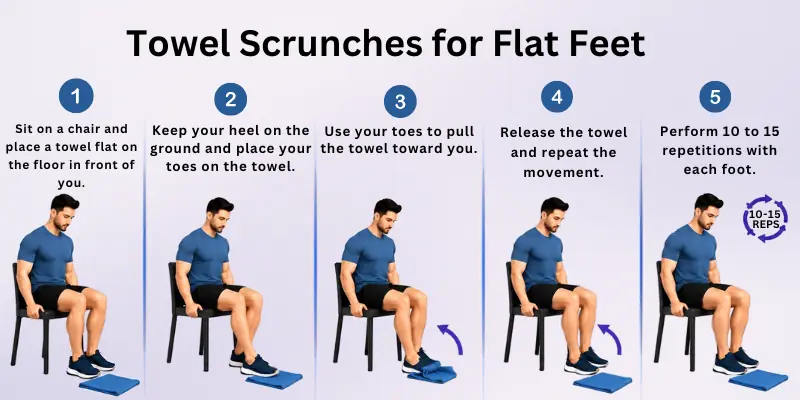
It also helps improve the connection between your toes and foot muscles, making everyday movements like walking and standing more comfortable. Regular practice can help your feet become stronger and provide better support for your body weight.
How to do it:
- Sit on a chair and place a towel flat on the floor in front of you.
- Keep your heel on the ground and place your toes on the towel.
- Use your toes to pull the towel toward you.
- Release the towel and repeat the movement.
- Perform 10 to 15 repetitions with each foot.
Tip: Move slowly and focus on using your foot muscles. Avoid gripping the towel too tightly with your toes.
2. Toe Raises
Toe raises are a simple exercise that focuses on improving toe strength and foot control. This movement helps your toes work better with the rest of your foot, which can improve balance and make daily activities like walking and standing easier.
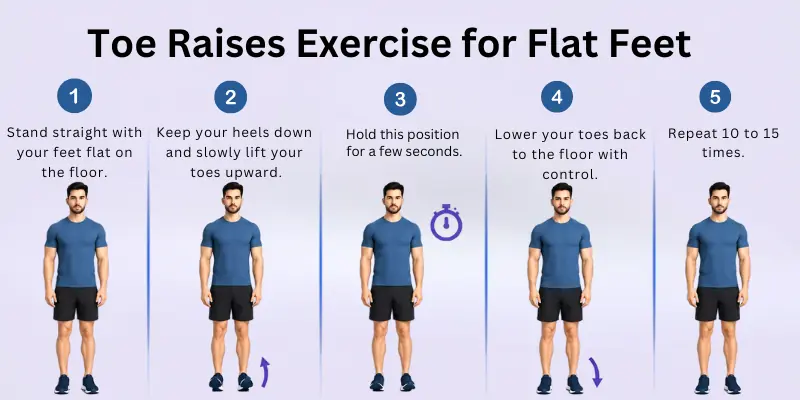
It also encourages better movement patterns by training the front part of your feet. Adding this exercise to your routine can help improve coordination and reduce extra pressure on other areas of your feet.
How to do it:
- Stand straight with your feet flat on the floor.
- Keep your heels down and slowly lift your toes upward.
- Hold this position for a few seconds.
- Lower your toes back to the floor with control.
- Repeat 10 to 15 times.
Tip: Do not lift your heels while raising your toes. Keep the movement slow and controlled for better results.
3. Heel Raises
Heel raises are a simple exercise that focuses on the calf muscles and the back of your feet. This movement helps improve ankle strength and control, which can support better balance and make standing and walking more comfortable.
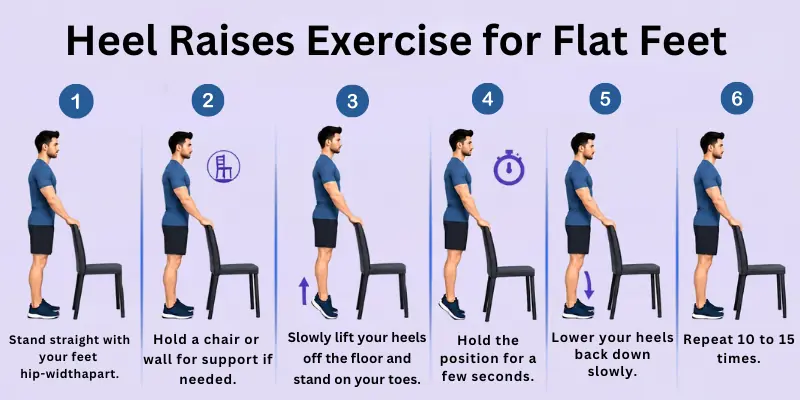
Regular practice improves the way your ankles and feet work together, making movements feel more stable and controlled.
How to do it:
- Stand straight with your feet hip-width apart.
- Hold a chair or wall for support if needed.
- Slowly lift your heels off the floor and stand on your toes.
- Hold the position for a few seconds.
- Lower your heels back down slowly.
- Repeat 10 to 15 times.
Tip: Avoid rushing the movement. Lift and lower your heels slowly to keep control and prevent extra strain on your feet.
4. Marble Pickups
Marble pickups are a simple foot exercise that improves toe movement and grip strength. This exercise trains the small muscles in your feet to work together, which can improve coordination and make foot movements more controlled.
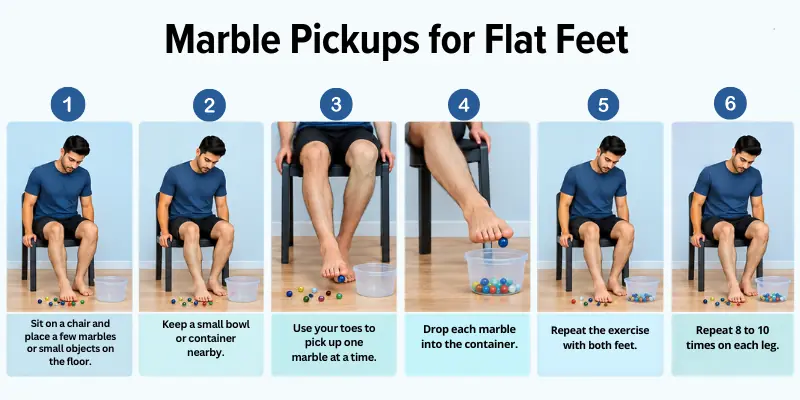
It also helps increase awareness of how your toes and feet move during daily activities. Practicing this exercise regularly can support better foot function and make movements like walking more comfortable.
How to do it:
- Sit on a chair and place a few marbles or small objects on the floor.
- Keep a small bowl or container nearby.
- Use your toes to pick up one marble at a time.
- Drop each marble into the container.
- Repeat the exercise with both feet.
Tip: Start with larger objects if you find it difficult. Focus on slow and controlled movements instead of picking up items quickly.
5. Arch Lifts (Short Foot Exercise)
Arch lifts, also known as the short foot exercise, focus on activating the muscles under your feet that help maintain your natural arch. This exercise teaches your feet to create better support while keeping your toes relaxed and flat on the floor.
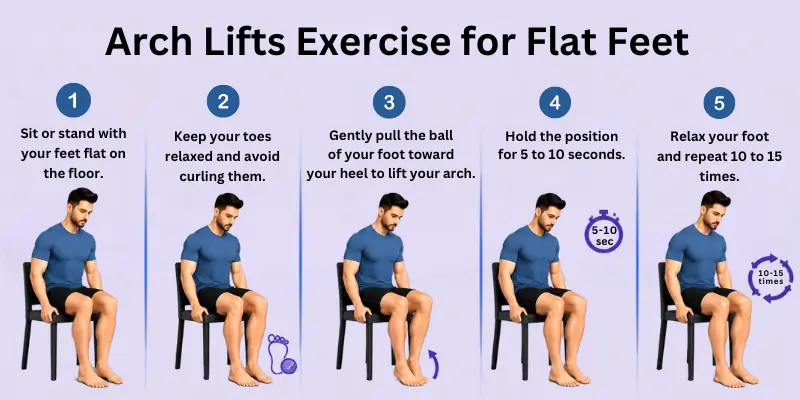
It improves foot awareness and trains the muscles to respond properly when you stand, walk, or put pressure on your feet. This makes it a useful exercise for people who want better control over their foot position.
How to do it:
- Sit or stand with your feet flat on the floor.
- Keep your toes relaxed and avoid curling them.
- Gently pull the ball of your foot toward your heel to lift your arch.
- Hold the position for 5 to 10 seconds.
- Relax your foot and repeat 10 to 15 times.
Tip: Focus on lifting the middle of your foot, not gripping the floor with your toes. Practice slowly to learn the correct movement.
6. Toe Spreads
Toe spreads are a simple exercise that focuses on improving toe movement and foot control. This exercise helps your toes become more flexible and active, which can improve the way your feet adjust when you stand, walk, or balance.
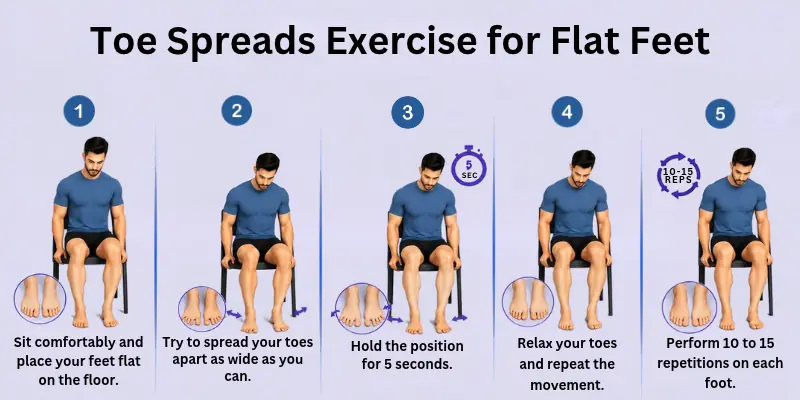
Regular practice can help reduce stiffness in your toes and improve coordination between different parts of your foot. It is especially useful for building better awareness of your foot movements during daily activities.
How to do it:
- Sit comfortably and place your feet flat on the floor.
- Try to spread your toes apart as wide as you can.
- Hold the position for 5 seconds.
- Relax your toes and repeat the movement.
- Perform 10 to 15 repetitions on each foot.
Tip: Do not force your toes to spread too far. Start with a small movement and gradually improve your control over time.
7. Big Toe Stretch
Big toe stretches are a gentle exercise that improves flexibility in the big toe and the front part of your foot. This movement helps maintain proper toe movement, which plays an important role in balance and walking.
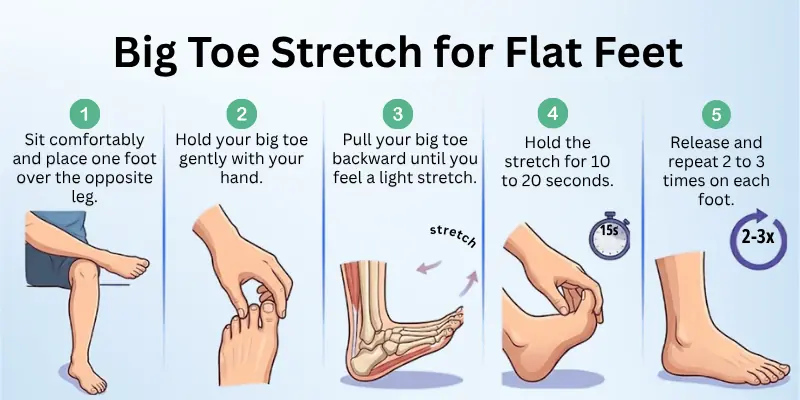
It can help reduce tightness in the big toe area and make foot movements smoother during daily activities. Keeping your toes flexible can also support better foot function when you stand or move.
How to do it:
- Sit comfortably and place one foot over the opposite leg.
- Hold your big toe gently with your hand.
- Pull your big toe backward until you feel a light stretch.
- Hold the stretch for 10 to 20 seconds.
- Release and repeat 2 to 3 times on each foot.
Tip: Stretch gently and avoid forcing your toe into an uncomfortable position. A mild stretch is enough to improve flexibility.
8. Calf Stretch
Calf stretches are a simple exercise that helps improve flexibility in the calf muscles and the back of the lower leg. Tight calf muscles can affect how your feet move, so keeping them flexible can support smoother walking and better foot movement.
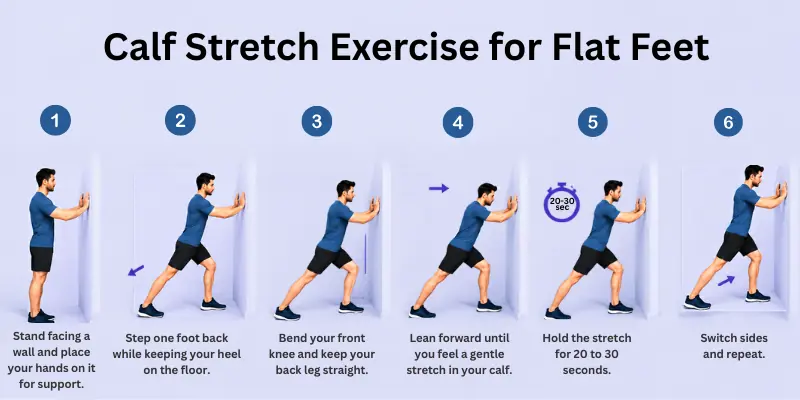
This stretch helps reduce tension around the ankle and allows your feet to move more freely during daily activities. It can be a helpful addition to a flat feet routine because flexible lower leg muscles can improve overall foot comfort.
How to do it:
- Stand facing a wall and place your hands on it for support.
- Step one foot back while keeping your heel on the floor.
- Bend your front knee and keep your back leg straight.
- Lean forward until you feel a gentle stretch in your calf.
- Hold the stretch for 20 to 30 seconds and switch sides.
Tip: Keep your back heel pressed into the floor and avoid bouncing while stretching. Move slowly to get a better stretch.
9. Plantar Fascia Stretch
Plantar fascia stretches focus on the thick band of tissue that runs along the bottom of your foot. This exercise helps improve flexibility in the sole of your foot and can reduce tightness that may affect comfort while walking or standing.
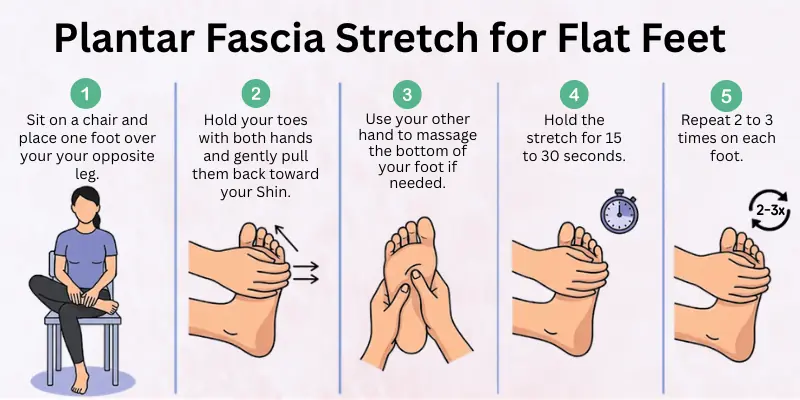
Regular stretching can help your feet move more easily and reduce stress on the bottom of your feet. It is especially helpful for people who feel stiffness or tension around the heel and arch area.
How to do it:
- Sit on a chair and place one foot over your opposite leg.
- Hold your toes with one hand and gently pull them back toward your shin.
- Use your other hand to massage the bottom of your foot if needed.
- Hold the stretch for 15 to 30 seconds.
- Repeat 2 to 3 times on each foot.
Tip: Stretch gently and avoid pulling too hard. A comfortable stretch is enough to improve flexibility without causing pain.
10. Tennis Ball Roll
Tennis ball rolls are a simple exercise that helps relax the muscles and tissues on the bottom of your feet. This movement gently massages the arch area, improves foot flexibility, and can reduce tightness caused by daily activities.
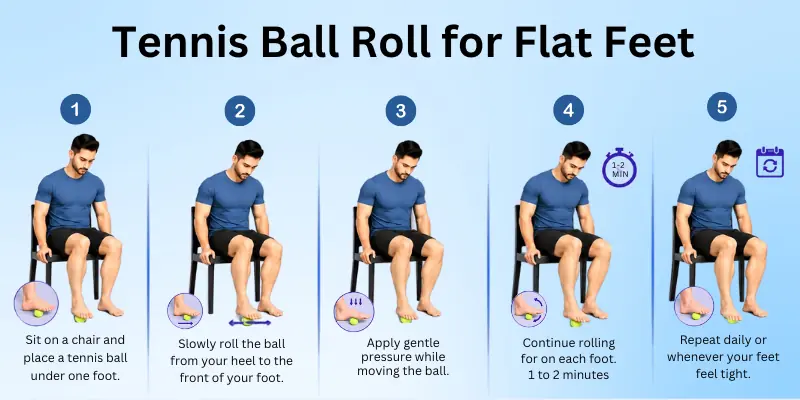
Rolling your foot over a tennis ball can also improve blood flow and help your feet feel less stiff after long periods of standing or walking. It is an easy exercise that you can do at home without any special equipment.
How to do it:
- Sit on a chair and place a tennis ball under one foot.
- Slowly roll the ball from your heel to the front of your foot.
- Apply gentle pressure while moving the ball under your arch.
- Continue rolling for 1 to 2 minutes on each foot.
- Repeat daily or whenever your feet feel tight.
Tip: Do not press too hard on painful areas. Use gentle pressure and stop if you feel sharp pain.
11. Single Leg Balance
Single leg balance is an exercise that improves your ability to control and stabilize your body while standing on one foot. This movement trains the muscles in your feet and ankles to work together, which can improve balance and coordination.
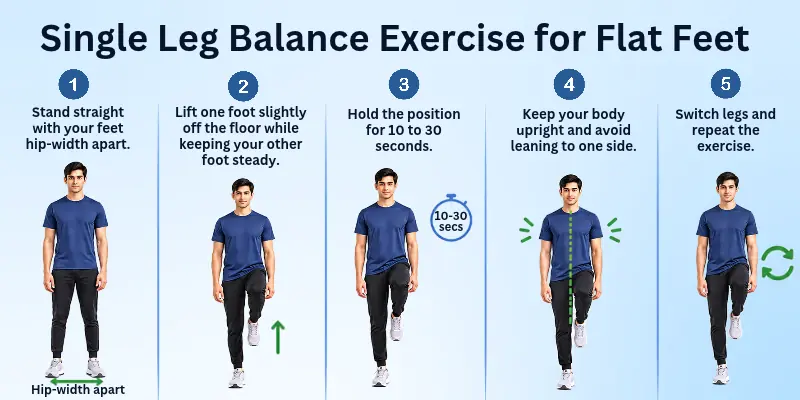
Practicing this exercise can help your feet adjust better to changes in position and pressure during daily movements. It is especially useful for improving stability while walking, standing, or changing directions.
How to do it:
- Stand straight with your feet hip-width apart.
- Lift one foot slightly off the floor while keeping your other foot steady.
- Hold the position for 10 to 30 seconds.
- Keep your body upright and avoid leaning to one side.
- Switch legs and repeat the exercise.
Tip: Start by holding onto a wall or chair if you need support. As your balance improves, try doing the exercise without support.
12. Resistance Band Foot Flexes
Resistance band foot flexes are a strengthening exercise that uses gentle resistance to train the muscles around your feet and ankles. This movement helps improve foot control and makes your feet better able to handle pressure during walking and other daily activities.
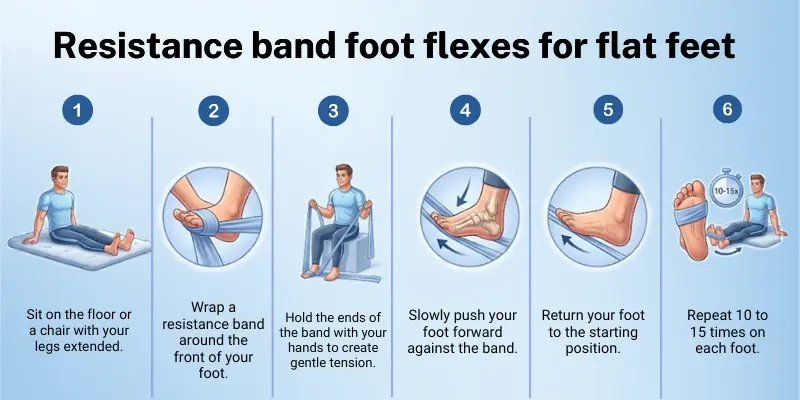
This exercise also improves ankle movement and builds strength in the muscles that help your feet stay stable. It is a useful option for people who want to add extra resistance to their flat feet routine.
How to do it:
- Sit on the floor or a chair with your legs extended.
- Wrap a resistance band around the front of your foot.
- Hold the ends of the band with your hands to create gentle tension.
- Slowly push your foot forward against the band.
- Return your foot to the starting position.
- Repeat 10 to 15 times on each foot.
Tip: Use light resistance at the beginning and keep your movements slow. Avoid forcing your foot if you feel pain or discomfort.
Benefits of Exercises for Flat Feet
Regular exercises for flat feet can help improve the strength and function of your feet. These exercises target the muscles that support your arches and help your feet handle daily activities with less stress.
Adding these movements to your routine can improve foot control, reduce discomfort, and support better movement.
Here are the main benefits of exercises for flat feet:
- Strengthen foot muscles: Helps build stronger muscles that support your feet and improve their function.
- Support the arch: Improves the strength of muscles that help maintain better arch support.
- Improve balance: Helps your feet and ankles control your body position more effectively.
- Reduce pain: May lower discomfort caused by weak foot muscles and poor support.
- Improve walking: Helps your feet move more naturally and comfortably during walking.
- Promote better posture: Supports proper body alignment by improving foot position.
- Increase flexibility: Keeps your feet and ankles flexible for easier movement.
- Lower injury risk: Stronger feet may reduce stress on joints and surrounding muscles.
- Improve stability: Helps your feet stay steady during standing and movement.
- Support better daily movement: Makes activities like walking, standing, and climbing stairs easier.
Exercises to Avoid If You Have Flat Feet
Some exercises can put extra pressure on your feet, especially if your arches do not get enough support. Avoiding or modifying these movements can help reduce stress on your feet and prevent discomfort during workouts.
Here are some exercises that may not be suitable for people with flat feet:
1. High-Impact Running
Running on hard surfaces or covering long distances can increase pressure on your feet and ankles. If you have flat feet, this high-impact activity may lead to more discomfort, especially if your foot muscles are weak.
2. Jumping Exercises
Jumping movements create repeated impact on your feet when you land. Exercises like jump squats or box jumps may increase stress on your arches and joints if your feet do not have enough support.
3. Barefoot Exercise on Hard Floors
Working out barefoot on hard surfaces can place more pressure on the bottom of your feet. Without proper cushioning or support, these exercises may cause foot fatigue or discomfort.
4. Heavy Weightlifting Without Support
Lifting heavy weights without proper foot support can put extra strain on your feet and ankles. Wearing supportive shoes and maintaining proper form can help reduce unnecessary pressure.
5. Plyometric Workouts
Plyometric exercises involve quick, powerful movements like jumping and explosive changes in direction. These activities can be challenging for flat feet because they place repeated stress on the arches and lower body joints.
Conclusion
In this guide, you learned what flat feet are, their common causes and symptoms, the best exercises for flat feet, their benefits, and exercises to avoid.
Regular exercises for flat feet can strengthen the muscles that support your arches, improve balance, and reduce discomfort during everyday activities. Start with simple exercises, stay consistent with your routine, and wear supportive footwear to get the best results over time.
If your foot pain is severe, keeps getting worse, or does not improve with regular exercise, consult a healthcare professional. They can identify the underlying cause and recommend the most suitable treatment for your condition.
Frequently Asked Questions
Below are answers to some of the most common questions about exercises for flat feet. These can help you understand how to exercise safely and support your feet more effectively.
1. What are the best exercises for flat feet?
Some of the best exercises for flat feet include:
- Towel Scrunches to strengthen the muscles under your feet.
- Toe Raises to improve toe strength and foot control.
- Heel Raises to build calf and ankle strength.
- Marble Pickups to improve toe coordination and grip.
- Arch Lifts (Short Foot Exercise) to activate the muscles that support the arch.
- Calf Stretches to improve flexibility in the lower legs.
- Plantar Fascia Stretches to reduce tightness in the bottom of the foot.
- Resistance Band Foot Flexes to strengthen the feet and ankles.
2. Can exercises help rebuild foot arches?
Exercises cannot change the structure of your bones, but they can strengthen the muscles that support your arches. This may improve foot function, balance, and reduce discomfort, especially if you have flexible flat feet.
3. How long does it take for flat feet exercises to work?
Many people notice improvements within a few weeks of regular practice. The results depend on the severity of your condition, how often you exercise, and whether you wear supportive footwear.
4. Should I exercise if my flat feet hurt?
Mild discomfort is common when starting new exercises, but you should not continue if you have sharp or severe pain. Stop the exercise and speak with a healthcare professional if the pain continues.
5. Are flat feet permanent?
Some people are born with flat feet, while others develop them later in life. Although exercises may not permanently restore the arch, they can improve foot strength, stability, and overall comfort.
6. Can walking improve flat feet?
Walking is a low-impact activity that can support overall foot health. When combined with exercises for flat feet and supportive shoes, it may help improve foot function and reduce discomfort.
7. Is it better to exercise barefoot or with shoes?
It depends on the exercise. Strengthening exercises are often performed barefoot to improve foot muscle activation, while high-impact activities are usually safer with supportive shoes that provide good cushioning and arch support.
8. How often should I do exercises for flat feet?
Most people can safely perform exercises for flat feet several times a week. Starting slowly and following a routine can help improve strength and foot function over time.
- Frequency: 3 to 5 days a week.
- Repetitions: About 10 to 15 repetitions for each exercise.
- Progress: Increase the intensity gradually as your feet become stronger.
- Consistency: Regular practice gives the best results.
9. Do children with flat feet need exercises?
Children with flat feet do not always need treatment if they have no symptoms. If they experience pain or difficulty walking, a healthcare professional may recommend specific exercises or other treatments.
10. Can flat feet cause knee, hip, or back pain?
Yes. Flat feet can affect the alignment of your legs and change the way you walk. This may place extra stress on the knees, hips, and lower back, leading to discomfort over time.




- Be Respectful
- Stay Relevant
- Stay Positive
- True Feedback
- Encourage Discussion
- Avoid Spamming
- No Fake News
- Don't Copy-Paste
- No Personal Attacks
- Be Respectful
- Stay Relevant
- Stay Positive
- True Feedback
- Encourage Discussion
- Avoid Spamming
- No Fake News
- Don't Copy-Paste
- No Personal Attacks
