Causes of Bulging Eyes: Why Your Eyes Protrude
Published: 10 Oct 2026
Bulging eyes happen when the eyeball moves forward from its normal position, making the eyes look more prominent than usual. Doctors also call this condition exophthalmos or proptosis. Some people naturally have more noticeable eyes, but sudden or unusual bulging can be a sign of an underlying health problem.
Thyroid problems, especially thyroid eye disease, are a common cause of bulging eyes. However, infections, injuries, tumors, and other health conditions can also lead to this problem. Bulging eyes may affect one eye or both eyes.
Understanding the causes of bulging eyes helps identify the right treatment. Early diagnosis can protect vision and reduce the risk of complications, especially when symptoms appear suddenly or become worse over time.
Causes of Bulging Eyes
Bulging eyes can develop for several reasons. Some causes are mild, while others may need prompt medical attention. Identifying the underlying cause is important because it helps guide the right treatment and lowers the risk of complications.
Here are the most common causes of bulging eyes:
- Thyroid Eye Disease (Graves’ Disease)
- Orbital Cellulitis
- Trauma and Bleeding
- Tumors and Masses
- Blood Vessel Problems
- Inflammatory Diseases
- Congenital Issues
- Cysts or Abnormal Growths
- Glaucoma (Especially in Children)
Let’s look at the most common causes of bulging eyes in more detail.
1. Thyroid Eye Disease (Graves’ Disease)
Thyroid eye disease is one of the most common causes of bulging eyes. It happens when your immune system attacks the muscles and fat tissue behind the eyes by mistake, causing swelling that pushes the eyeball forward.
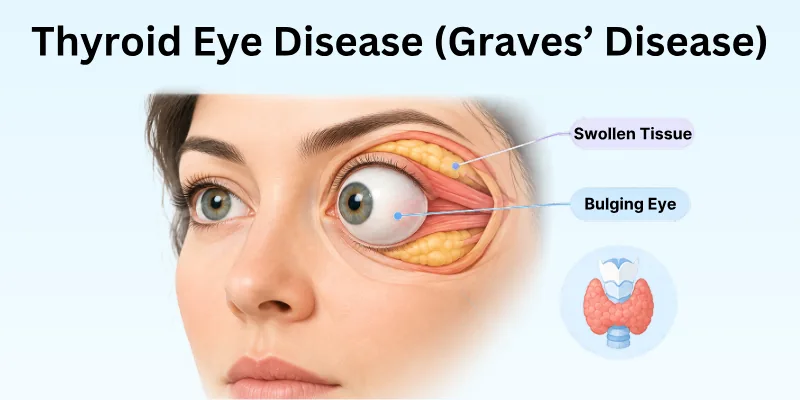
This condition is closely linked to Graves’ disease, an autoimmune disorder that also affects the thyroid gland. Not everyone with Graves’ disease develops this eye problem, but those who do often see it worsen due to certain risk factors.
The main factors behind this condition include:
- Immune system attacking eye tissue
- Strong link to Graves’ disease
- Smoking as a major risk factor
- High thyroid antibody levels
- Poor thyroid hormone control
Early diagnosis and proper thyroid management can help prevent the condition from getting worse.
2. Orbital Cellulitis
Orbital cellulitis is a serious infection in the tissues around your eye socket. It usually starts when a sinus infection spreads into the space behind the eye, causing swelling that pushes the eyeball forward.
This condition often affects children and can progress quickly. It needs urgent treatment because the infection can threaten vision and, in rare cases, spread to the brain.
The main factors behind this condition include:
- Bacterial infection spreading from the sinuses
- Trauma or skin infections near the eye
- Untreated eyelid infections
- Weakened immune system
- Uncontrolled diabetes
Anyone with sudden eye bulging, pain, and fever should seek emergency care right away.
3. Trauma and Bleeding
Trauma to the face or eye socket can cause bleeding behind the eyeball. This condition, called retrobulbar hemorrhage, builds pressure quickly and pushes the eye forward.
Since the eye socket has very little room to expand, even a small amount of blood can raise pressure fast. This makes trauma-related bulging a medical emergency.
The main factors behind this condition include:
- Blunt injury to the face or orbit
- Fractures in the orbital bones
- Bleeding from surgery or eyelid procedures
- Blood-thinning medications
- Straining, coughing, or vomiting after injury
Immediate treatment is needed to relieve pressure and protect vision.
4. Tumors and Masses
Tumors in the eye socket can slowly push the eye forward as they grow. These growths may be benign or cancerous, and they often affect only one eye.
Unlike trauma or infection, tumor-related bulging usually develops gradually. Vision changes or restricted eye movement often appear alongside it.
The main factors behind this condition include:
- Benign growths like cavernous hemangiomas
- Lymphoma
- Lacrimal gland tumors
- Dermoid cysts
- Cancer that has spread from elsewhere in the body
Imaging tests help doctors identify the tumor and plan the right treatment.
5. Blood Vessel Problems
Certain blood vessel disorders in the eye socket can cause the eye to bulge. These conditions change blood flow or pressure around the eye, forcing it forward.
A carotid-cavernous fistula is one example, where an abnormal connection forms between an artery and a vein. Orbital varices, or weakened veins, can also cause bulging that changes with position or straining.
The main factors behind this condition include:
- Carotid-cavernous fistula
- Orbital varices
- Arteriovenous malformations
- Increased pressure in the orbital veins
- Prior head or facial trauma
These conditions often need imaging and specialist treatment to manage safely.
6. Inflammatory Diseases
Certain inflammatory diseases can cause swelling in the tissues around the eye. This swelling takes up space in the eye socket and pushes the eyeball forward.

Sarcoidosis is one example, where small clusters of inflammatory cells form in the orbit and other body tissues. Idiopathic orbital inflammation, sometimes called orbital pseudotumor, can cause similar swelling without a clear known cause.
The main factors behind this condition include:
- Sarcoidosis affecting the orbit
- Idiopathic orbital inflammation
- Granulomatosis with polyangiitis
- IgG4-related disease
- Autoimmune reactions with no clear trigger
Treatment often involves steroids or other medications to reduce inflammation and protect vision.
7. Congenital Issues
Some children are born with structural differences in the eye socket that lead to bulging eyes. These differences affect how much space the eyeball has within the bony orbit.
A shallow eye socket can leave less room for the eyeball, making it appear more prominent from birth. Certain skull conditions can also affect orbit shape and depth.
The main factors behind this condition include:
- Shallow or underdeveloped eye sockets
- Craniosynostosis, a skull bone condition
- Genetic syndromes affecting facial structure
- Abnormal eyeball size present at birth
- Family history of similar eye or facial features
These cases are usually evaluated early to rule out other serious conditions and plan proper care.
8. Cysts or Abnormal Growths
Cysts in or around the eye socket can slowly push the eyeball forward as they grow. Many of these growths are present from birth, even if they aren’t noticed until later.
Dermoid cysts are the most common type found in children. They form during early development and often sit near the eyebrow or deeper within the orbit.
The main factors behind this condition include:
- Dermoid cysts from early fetal development
- Orbital cysts linked to eye malformations
- Slow, gradual growth over time
- Cysts located near the eyebrow or orbit
- Rupture risk if left untreated
Surgical removal is often recommended, especially if the cyst affects vision or keeps growing.
9. Glaucoma (Especially in Children)
Congenital glaucoma can cause the eyeball itself to enlarge, giving the appearance of bulging eyes. This happens because fluid inside the eye cannot drain properly.
The buildup of fluid raises pressure inside the eye. Since a baby’s eye tissue is still soft and stretchy, this pressure causes the eyeball to expand rather than resist, a condition called buphthalmos.
The main factors behind this condition include:
- Poor drainage of eye fluid from birth
- Increased pressure inside the eye
- Soft, stretchable eye tissue in infants
- Excess tearing and light sensitivity
- Cloudy or enlarged cornea
Early diagnosis and surgery are important to protect the child’s vision and prevent permanent damage.
Symptoms That May Occur With Bulging Eyes
Bulging eyes often come with other symptoms depending on the underlying cause. These signs can range from mild irritation to more serious changes that affect daily comfort and vision. Paying attention to them can help you know when to see a doctor.
Here are common symptoms of bulging eyes:
- Dry or irritated eyes
- Eye redness
- Swollen eyelids
- Difficulty closing the eyes
- Double vision
- Eye pain or pressure
- Light sensitivity
- Vision changes
When Should You See a Doctor for Bulging Eyes?
Bulging eyes should never be ignored, especially if the change happens quickly. Some causes are serious and can threaten your vision if left untreated. Getting checked early can prevent lasting damage.
Seek medical attention if you notice:
- Sudden Bulging: A quick change in eye position can signal bleeding or infection.
- Severe Pain: Intense pain often points to pressure building inside the eye socket.
- Vision Changes: Blurred or reduced vision may mean the optic nerve is affected.
- Fever with Swelling: This combination can indicate a serious infection like orbital cellulitis.
- Restricted Movement: Trouble moving the eye may mean swelling or a mass is pressing on eye muscles.
- Post-Injury Symptoms: Bulging following trauma could mean bleeding behind the eye.
How Are Bulging Eyes Treated?
Bulging eyes are treated by addressing the underlying cause. After identifying the reason for the condition, a doctor can recommend the most appropriate treatment. Early treatment may help reduce symptoms and protect your vision.
1. Treatment for Thyroid Eye Disease
Treatment focuses on controlling thyroid levels and reducing swelling around the eyes.
- Thyroid Management: Correcting hormone imbalance helps control the swelling behind the eyes.
- Anti-Inflammatories: These reduce swelling in the eye muscles and tissue.
- Lubricating Drops: Drops relieve dryness caused by incomplete eyelid closure.
- Surgery: Surgery can correct eye position when other treatments don’t work.
2. Treatment for Eye Infections
Infections need quick treatment to stop them from spreading and causing further damage.
- Antibiotics: These clear the bacterial infection causing the swelling.
- Source Treatment: Addressing the source, like a sinus infection, prevents it from returning.
- Hospital Care: Serious infections may need IV antibiotics and close monitoring.
3. Treatment for Injuries and Bleeding
An injury behind the eye needs fast evaluation to relieve pressure and protect vision.
- Medical Evaluation: Doctors assess the injury to check for bleeding or fractures.
- Swelling Medicines: These help ease pressure inside the eye socket.
- Surgery: Surgery may relieve pressure and prevent vision loss.
4. Treatment for Tumors or Growths
Treatment here depends on the size and type of growth found in the eye socket.
- Monitoring: Small, harmless growths may only need regular checkups.
- Surgical Removal: Larger or problematic growths are often removed surgically.
- Cancer Treatment: Cancerous tumors may need additional treatments like chemotherapy or radiation.
5. Treatment for Other Causes
Other conditions often need ongoing management rather than a single fix.
- Inflammatory Care: Managing the inflammatory condition helps reduce eye swelling.
- Vessel Management: Specialists treat abnormal blood vessels to relieve pressure on the eye.
- Regular Checkups: Ongoing checkups help catch changes early and guide long-term care.
Conclusion
In this guide, we covered the main causes of bulging eyes, the symptoms that often come with it, when to see a doctor, and how doctors treat this condition.
Bulging eyes can range from mild issues to serious conditions like thyroid disease, infections, or tumors. Watching for signs like pain, redness, or vision changes helps you know when medical care is needed.
If you notice any sudden change in your eyes, don’t wait. Early diagnosis makes treatment easier and protects your long-term eye health.
FAQs About Bulging Eyes
Here are answers to some of the most commonly asked questions about causes of bulging eyes.
1. What is the most common cause of bulging eyes?
The most common cause of bulging eyes in adults is thyroid eye disease (Graves’ eye disease).
- An autoimmune condition affecting the tissues around the eyes
- Swelling of the eye muscles and fatty tissue
- Reduced space inside the eye socket
- Forward movement of the eyeballs
2. Can thyroid problems cause bulging eyes?
Yes. Thyroid problems, especially Graves’ disease, can lead to thyroid eye disease. This condition causes inflammation behind the eyes, making them appear more prominent.
3. Why is one eye bulging more than the other?
One eye may bulge because of an injury, infection, tumor, or blood vessel problem affecting only one eye socket. A doctor can determine the exact cause through an eye examination and imaging tests if needed.
4. Are bulging eyes always a sign of a health problem?
Not always. Some people naturally have more prominent eyes. However, new or worsening bulging eyes can be a sign of an underlying medical condition and should be evaluated by a healthcare professional.
5. Can bulging eyes return to normal?
It depends on the cause. Some cases improve after treating the underlying condition, while others may require long-term treatment or surgery to improve the eye’s appearance and function.
6. Can stress cause bulging eyes?
No. Stress does not directly cause bulging eyes. However, stress may worsen symptoms in people who already have thyroid eye disease or other underlying conditions.
7. Are bulging eyes painful?
Bulging eyes are not always painful, but some people may experience eye pain, pressure, dryness, irritation, or discomfort, especially if the condition is caused by an infection or inflammation.
8. Can children have bulging eyes?
Yes. Although less common, children can develop bulging eyes because of congenital conditions, infections, glaucoma, or other medical problems. A child with bulging eyes should be examined by a doctor promptly.
9. What causes sudden bulging of one eye?
Sudden bulging of one eye can have several possible causes, and it should be evaluated by a doctor as soon as possible.
- Eye injury or trauma
- Bleeding behind the eye
- Orbital cellulitis (eye socket infection)
- Blood vessel problems around the eye
- Tumor or abnormal growth behind the eye
Seek immediate medical attention if sudden bulging is accompanied by severe pain, vision changes, or difficulty moving the eye.
10. When should I worry about bulging eyes?
You should seek medical attention if you notice any of the following:
- Sudden bulging of one or both eyes
- Vision changes or vision loss
- Severe eye pain or pressure
- Difficulty moving the eyes
- Fever with swelling around the eye
- Rapidly worsening symptoms





- Be Respectful
- Stay Relevant
- Stay Positive
- True Feedback
- Encourage Discussion
- Avoid Spamming
- No Fake News
- Don't Copy-Paste
- No Personal Attacks
- Be Respectful
- Stay Relevant
- Stay Positive
- True Feedback
- Encourage Discussion
- Avoid Spamming
- No Fake News
- Don't Copy-Paste
- No Personal Attacks
