How to Improve Fertility Naturally: Complete Guide
Published: 2 May 2026
Improving fertility naturally is possible with the right mix of diet, lifestyle, and daily habits. Your body responds to even small changes when you support it with balanced nutrition, gentle movement, and smart routines.
These methods work for both men and women and help create a healthier environment for conception. If you are trying to get pregnant, these natural steps can make the process easier and more predictable. Here is your complete guide to boosting fertility safely and naturally.
How To Improve Fertility Naturally
The following are the most effective natural methods for enhancing fertility:
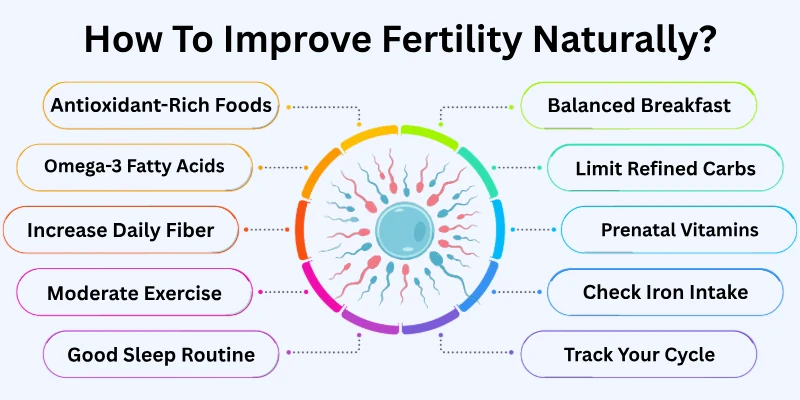
- Antioxidant-Rich Foods
- Balanced Breakfast
- Omega-3 Fatty Acids
- Lower Carbohydrate Intake
- Limit Refined Carbs
- Increase Daily Fiber
- Healthy Protein Sources
- Choose the Right Dairy
- Prenatal Vitamins
- Moderate Exercise
- Stress Relief
- Controlled Caffeine
- Healthy Weight Range
- Check Iron Intake
- Limit Alcohol
- Bee-Based Products
- Good Sleep Routine
- Hydration Habits
- Reduce Exposure to Toxins
- Track Your Cycle
Let us learn about each in detail.
1. Antioxidant-Rich Foods
Antioxidants protect both sperm and egg cells from damage caused by unstable molecules inside the body. Eating more fruits, vegetables, nuts, and seeds gives your body nutrients that support reproductive health. These foods also help reduce inflammation, which plays a major role in hormonal balance. Making antioxidants a daily habit can strengthen your fertility naturally. Try filling half your plate with colorful plant foods every day.
Quick Points:
- Supports egg and sperm quality
- Reduces inflammation
- Easy to add through fruits and vegetables
2. Balanced Breakfast
A balanced breakfast helps regulate hormones that control ovulation and energy levels. Eating enough early in the day keeps your blood sugar steady, which benefits people with conditions like PCOS. Choose high-protein meals to stay full and avoid carb-heavy morning cravings. A stable morning routine helps your reproductive system function more smoothly. This simple shift sets a healthier rhythm for the rest of your day.
Quick Points:
- Supports hormonal stability
- Helps PCOS symptoms
- Encourages better eating patterns
3. Omega-3 Fatty Acids
Omega-3 fats support hormone production, reduce inflammation, and improve blood flow to reproductive organs. You can get them from fish, flaxseed, walnuts, or chia seeds. These fats also help balance the ratio of good fats in your diet. A steady intake may support healthier menstrual cycles and sperm quality. Try adding omega-3 foods at least a few times per week.
Quick Points:
- Supports reproductive hormones
- Improves blood flow
- Easy to add through seafood or seeds
4. Lower Carbohydrate Intake
Lowering your carbohydrate intake can help improve insulin levels, especially for people with PCOS. Stable insulin helps regulate ovulation and reduces hormonal swings. You do not need to remove all carbs, but focus on slow-digesting ones. A balanced mix of protein, healthy fats, and complex carbs supports your fertility better. Eat meals that keep your blood sugar steady throughout the day.
Quick Points:
- Helps with insulin control
- Supports ovulation
- Works well for PCOS
5. Limit Refined Carbs
Refined carbs create rapid spikes in blood sugar, which can disrupt reproductive hormones. They appear in sugary snacks, soft drinks, white pasta, and white bread. Choosing whole grains instead supports hormone balance and steady energy. When your blood sugar stays stable, your body can focus on healthy reproductive function. Try replacing processed carbs with natural, fiber-rich options.
Quick Points:
- Prevents hormone disruption
- Reduces sugar spikes
- Supports long-term fertility health
6. Increase Daily Fiber
Fiber helps your body remove excess hormones naturally. It also supports healthy digestion, which impacts nutrient absorption. A fiber-rich diet includes beans, vegetables, whole grains, and fruits. Getting enough fiber each day may improve menstrual health and ovulation patterns. Aim for a steady intake instead of taking large amounts at once.
Quick Points:
- Helps remove excess hormones
- Supports regular cycles
- Improves digestive balance
7. Healthy Protein Sources
Choosing the right protein helps keep your body nourished without causing inflammation. Fish, eggs, beans, tofu, and nuts offer clean protein and beneficial fats. Replacing red and processed meat with lighter options may support better fertility outcomes. These sources also supply essential vitamins and minerals. Try spreading protein across all your meals for balanced energy.
Quick Points:
- Clean proteins support hormone health
- Reduces inflammation
- Works well with fertility-focused diets
8. Choose the Right Dairy
Dairy can offer nutrients like calcium and vitamin D, which support reproductive health. Full-fat dairy works well for many women because it may help hormone balance. Men may prefer low-fat options to protect sperm quality. Choose clean, minimally processed dairy whenever possible. Test how your body responds and adjust based on your comfort.
Quick Points:
- Supports vitamins and minerals
- Full-fat helps women
- Low-fat may support men’s fertility
9. Prenatal Vitamins
Prenatal vitamins help fill nutritional gaps and support your reproductive system. They contain folic acid, B vitamins, and other nutrients that prepare your body for pregnancy. Taking them before trying to conceive gives your body time to build healthy levels. These vitamins support cell growth and early fetal development once pregnancy begins. Choose a trusted brand and take them consistently.
Quick Points:
- Supports egg development
- Easy to take daily
- Builds nutrient reserves early
10. Moderate Exercise
Moderate exercise improves blood flow, hormone balance, and body strength. Activities like walking, swimming, or light strength training work well. Regular movement also lowers stress, which indirectly boosts fertility. Too much high-intensity exercise can create a hormonal imbalance, so keep your routine moderate. A steady workout plan supports long-term reproductive health.
Quick Points:
- Improves circulation
- Reduces stress
- Works best in moderation
11. Stress Relief
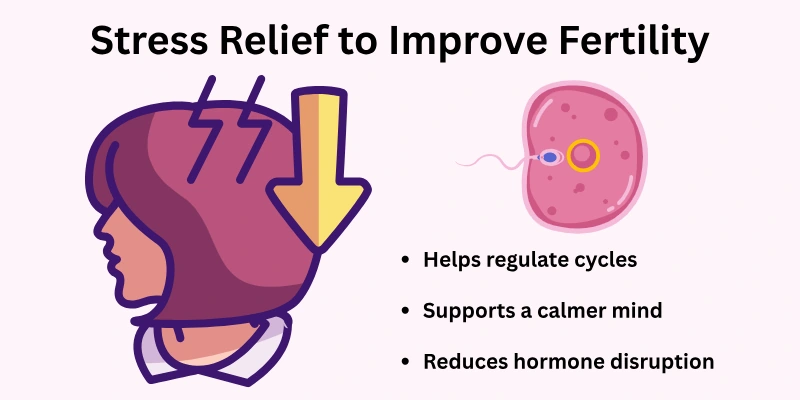
High stress affects your hormones and may disrupt regular ovulation. Taking time to relax helps your body return to a calmer state. Gentle activities like meditation, deep breathing, or hobbies can lower stress. Managing stress keeps your menstrual cycle more predictable. Make relaxation part of your daily routine.
Quick Points:
- Helps regulate cycles
- Supports a calmer mind
- Reduces hormone disruption
12. Controlled Caffeine
Too much caffeine may interfere with fertility for some people. Keeping your intake low helps your hormones stay steady. Try limiting coffee to one or two cups a day. If you feel sensitive to caffeine, try switching to herbal teas. The goal is to support balance and reduce overstimulation.
Quick Points:
- Prevents hormonal overstimulation
- Helps maintain stable cycles
- Easy to moderate
13. Healthy Weight Range
Weight can affect ovulation and hormone function. Being underweight or overweight can make cycles irregular. Reaching a moderate, healthy weight supports natural fertility. Focus on slow, steady changes instead of quick fixes. Your body responds best to sustainable habits.
Quick Points:
- Supports regular ovulation
- Improves hormone balance
- Works with long-term habits
14. Check Iron Intake
Low iron levels can affect fertility and energy. Adding iron-rich foods like spinach, beans, and fortified grains can help. Plant-based iron absorbs better when paired with vitamin C. Consider checking your levels if you feel weak or tired often. Balanced iron supports healthy cycles and overall wellness.
Quick Points:
- Prevents deficiency
- Helps energy and cycles
- Works well with vitamin C foods
15. Limit Alcohol
High alcohol intake can interfere with fertility in both men and women. It can impact hormones, egg quality, and sperm health. Limiting alcohol or avoiding it while trying to conceive may help your chances. Your body performs better when not processing alcohol daily. Keep drinks rare or completely avoid them during this phase.
Quick Points:
- Protects egg and sperm quality
- Supports hormonal balance
- Best avoided when trying to conceive
16. Bee-Based Products
Bee pollen, propolis, and royal jelly may support hormone balance for some people. These natural products may help with reproductive wellness. Research is still limited, but some people use them as gentle supplements. Always check for allergies before trying bee products. Use them consistently for best results.
Quick Points:
- Natural supplement option
- May support fertility
- Use only if safe for you
17. Good Sleep Routine
Sleep plays a direct role in hormone regulation and stress levels. A consistent sleep schedule helps your body repair and recharge. Poor sleep can disrupt ovulation and lower energy. Aim for seven to nine hours of quality sleep every night. Keep your room dark, quiet, and cool for better rest.
Quick Points:
- Supports hormone control
- Reduces stress naturally
- Helps predictable cycles
18. Hydration Habits
Proper hydration helps your body move nutrients and maintain healthy cervical mucus. Drinking enough water supports digestion and hormone balance. Dehydration can make your body feel stressed. Try drinking water regularly throughout the day instead of all at once. Hydration keeps your reproductive system functioning smoothly.
Quick Points:
- Supports cervical mucus
- Helps hormone balance
- Boosts overall energy
19. Reduce Exposure to Toxins
Daily chemicals from plastics, pesticides, and cleaners can affect hormones. Using cleaner, safer products lowers this exposure. Choose glass or stainless steel containers for food storage. Wash fruits and vegetables well to reduce pesticide residue. These small steps protect your fertility long term.
Quick Points:
- Lowers chemical load
- Supports hormone balance
- Simple lifestyle adjustments
20. Track Your Cycle
Tracking your cycle helps you understand when you are most fertile. Apps, calendars, or ovulation test kits can help. Knowing your fertile window improves your chances of conceiving naturally. Tracking also shows if your cycles are irregular. This information helps you take action early.
Quick Points:
- Identifies fertile days
- Helps detect irregular patterns
- Easy daily habit
Another Helpful Tip: When To See a Specialist
If you have tried natural methods for several months without success, consider speaking with a fertility specialist. Early medical guidance can help uncover hidden issues. A professional can suggest tailored steps based on your unique situation. You can mix natural methods with medical advice for better results. Acting early often leads to a smoother journey.
Final Note
In this guide, we have covered how to improve fertility naturally with practical, simple, and science-supported methods. These steps strengthen your reproductive health and support a balanced lifestyle.
My personal recommendation is to focus on balanced nutrition, stress management, and consistent daily habits. Combining several methods often gives better results than relying on just one.
Stay patient and give your body time to respond.
FAQs
Here are some of the most commonly asked questions related to how to improve fertility naturally:
You may notice small changes within a few weeks, but full results often take a few months. Your body needs time to adjust to new habits. Consistency is very important. Keep your routine steady for the best outcome.
Diet plays a major role, but it works best when combined with exercise, stress control, and good sleep. A healthy diet supports hormones and egg and sperm quality. It also helps maintain a balanced weight. Together, these factors improve your chances naturally.
Sleep affects hormones that control your cycle and stress levels. Poor sleep may cause irregular periods or lower energy. A good sleep routine supports your body’s natural rhythm. Aim for quality rest every night.
Yes, men benefit from these methods just as much. Antioxidants, clean eating, and exercise can improve sperm health. Reducing alcohol and stress also helps. Both partners contribute to fertility.
Caffeine does not affect everyone the same way, but heavy intake may cause hormonal imbalance. Keeping your consumption low is a safer choice. If you feel sensitive to caffeine, try switching to non-caffeinated drinks. Moderation is key.
Prenatal vitamins support the nutrients your body needs to prepare for pregnancy. They help balance hormones and support cell growth. Taking them early gives your body a strong foundation. Choose a trusted brand for best results.
Moderate exercise improves blood flow, reduces stress, and balances hormones. Too much intense training may have the opposite effect. Choose activities that feel comfortable and steady. Aim for regular movement instead of extreme routines.
Fruits, vegetables, whole grains, healthy fats, and protein-rich foods support fertility. These foods reduce inflammation and supply important nutrients. They also help regulate blood sugar. Build your meals around clean, natural ingredients.
Avoiding alcohol gives your body the best chance to function smoothly. Alcohol affects hormones and reproductive cells. If you choose to drink, keep it very limited. Stopping completely is the safest option.
If you have tried for several months without success, consider seeing a doctor. They can identify any hidden issues early. A specialist helps guide you with personalized steps. Early evaluation often saves time and stress.





- Be Respectful
- Stay Relevant
- Stay Positive
- True Feedback
- Encourage Discussion
- Avoid Spamming
- No Fake News
- Don't Copy-Paste
- No Personal Attacks
- Be Respectful
- Stay Relevant
- Stay Positive
- True Feedback
- Encourage Discussion
- Avoid Spamming
- No Fake News
- Don't Copy-Paste
- No Personal Attacks
