Signs Your Body Is Dehydrated: Symptoms, Causes & Prevention
Published: 13 May 2026
Your body needs enough water to function well every day. When you do not drink enough, your body shows warning signs that you are dehydrated. These signs can affect your energy, skin, mood, digestion, and even your heart. Knowing these signs helps you fix dehydration early before it gets serious.
In this guide we will cover all the signs that will tell you that your body is dehydrated.
Signs Your Body Is Dehydrated
Here are the common signs your body gives when it needs more water:
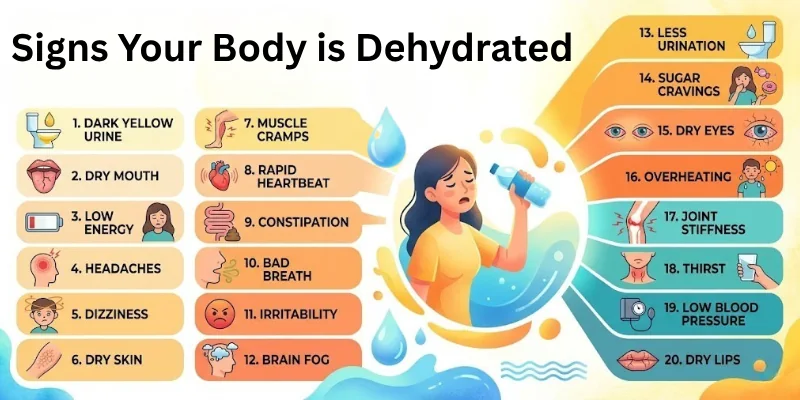
- Dark Yellow Urine
- Dry Mouth
- Fatigue And Low Energy
- Headaches
- Dizziness
- Dry Skin
- Muscle Cramps
- Rapid Heartbeat
- Constipation
- Bad Breath
- Irritability
- Brain Fog
- Less Urination
- Sugar Cravings
- Dry Eyes
- Overheating
- Joint Stiffness
- Thirst
- Low Blood Pressure
- Dry Lips
Let us cover all in detail.
1. Dark Yellow Urine
Dark yellow urine is a classic early sign of dehydration.
- What it means: Concentrated urine shows your kidneys are conserving water.
- Why it happens: When fluid is low, urine contains more waste and less water.
- How to spot it: Urine that is amber, tea-colored, or very strong smelling.
- What to do: Drink a glass of water now and monitor color over hours.
- When to see a doctor: If dark urine persists despite drinking or you have pain.
2. Dry Mouth
A dry, sticky mouth often appears early when fluid drops.
- What it means: Saliva production falls when your body lacks water.
- Why it happens: Dehydration reduces secretions in mouth and throat.
- How to spot it: Parched feeling, thick saliva, difficulty swallowing or speaking.
- What to do: Sip water slowly, chew sugar-free gum to stimulate saliva.
- When to see a doctor: If dry mouth is constant or causes swallowing trouble.
3. Fatigue and Low Energy
Low energy is a common effect of even mild dehydration.
- What it means: Without water your cells cannot make energy efficiently.
- Why it happens: Blood volume drops and circulation to muscles and brain falls.
- How to spot it: Feeling tired, heavy limbs, or unusually sleepy during day.
- What to do: Rest and drink water; include a light snack with some salt if active.
- When to see a doctor: If extreme fatigue does not improve after rehydration.
4. Headaches
Headache can come from reduced brain fluid and minor shrinkage due to dehydration.
- What it means: Your brain senses reduced fluid and reacts with pain signals.
- Why it happens: Lower blood volume and electrolyte shifts trigger headaches.
- How to spot it: Dull, persistent head pain that improves after fluids.
- What to do: Drink water slowly, rest in a cool, dark place.
- When to see a doctor: If headache is severe, sudden, or accompanied by confusion.
5. Dizziness
Dizziness or lightheadedness often signals low blood volume from dehydration.
- What it means: Less fluid lowers blood pressure and reduces brain perfusion.
- Why it happens: Standing up quickly or exertion can trigger a dizzy spell.
- How to spot it: Feeling faint, lightheaded, or unsteady on your feet.
- What to do: Sit or lie down, elevate legs, sip water and electrolytes.
- When to see a doctor: If fainting occurs, or dizziness is severe and persistent.
6. Dry Skin
Dry, less elastic skin shows your body lacks moisture for tissue health.
- What it means: Skin loses turgor and feels tight or rough without adequate fluid.
- Why it happens: Dehydration reduces fluid available to outer skin layers.
- How to spot it: Skin looks dull, feels rough, and springs back slowly when pinched.
- What to do: Hydrate, use a gentle moisturizer, avoid hot showers that dry skin.
- When to see a doctor: If skin becomes very dry, cracked, or shows infection.
7. Muscle Cramps
Cramps occur when muscles lose fluids and electrolytes needed for normal function.
- What it means: Imbalance of sodium, potassium, or magnesium triggers involuntary contractions.
- Why it happens: Sweating, exercise, or poor hydration lead to electrolyte loss.
- How to spot it: Sudden tightness or painful spasms in calf, thigh, or abdomen.
- What to do: Gently stretch the muscle, drink fluids with electrolytes, rest.
- When to see a doctor: If cramps are severe, frequent, or do not ease with rehydration.
8. Rapid Heartbeat
A fast heart rate may appear when blood volume falls from dehydration.
- What it means: Heart pumps faster to maintain blood pressure and oxygen delivery.
- Why it happens: Lower fluid volume forces compensatory cardiovascular responses.
- How to spot it: Noticeably fast or pounding heartbeat at rest or with minimal activity.
- What to do: Sit, rest, sip fluids and electrolytes slowly, avoid sudden exertion.
- When to see a doctor: If palpitations, chest pain, or breathlessness occur—seek urgent care.
9. Constipation
Dehydration thickens stool and slows bowel movements, causing constipation.
- What it means: Colon needs water to keep stool soft and passable.
- Why it happens: Lack of fluid causes the gut to absorb more water from stool.
- How to spot it: Infrequent bowel movements, hard stools, or straining.
- What to do: Increase water and fiber, gentle activity, consider a mild osmotic laxative if needed.
- When to see a doctor: If constipation is severe, prolonged, or accompanied by severe pain.
10. Bad Breath
Dry mouth and reduced saliva let bacteria grow, causing bad breath.
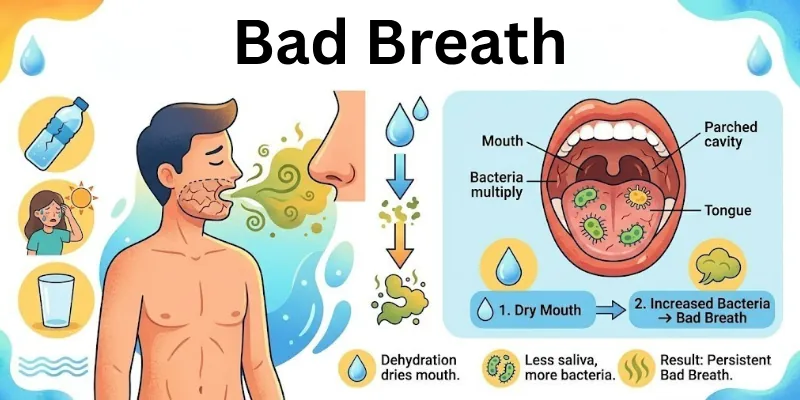
- What it means: Saliva normally washes food and bacteria away; less saliva means odor.
- Why it happens: Dehydration lowers saliva flow and increases bacterial buildup.
- How to spot it: Persistent unpleasant mouth odor that improves after drinking water.
- What to do: Drink water, use mouthwash and chew sugar-free gum, practice oral hygiene.
- When to see a doctor: If bad breath continues despite good hydration and oral care.
11. Irritability
Mood changes and irritability can be early signs of low fluid levels.
- What it means: Brain function and mood react quickly to small fluid drops.
- Why it happens: Reduced blood flow and electrolyte change affect neurotransmitters.
- How to spot it: Unusual short temper, impatience, or mood swings without clear cause.
- What to do: Rehydrate, rest, and take a short break from stressors.
- When to see a doctor: If mood swings are severe or linked to other symptoms.
12. Brain Fog
Poor concentration and confusion happen when the brain lacks optimal hydration.
- What it means: Cognitive sharpness falls as neuronal function depends on fluid balance.
- Why it happens: Dehydration reduces blood flow and nutrient delivery to the brain.
- How to spot it: Difficulty focusing, forgetfulness, slow thinking that improves after fluids.
- What to do: Drink water, rest, avoid multitasking until clarity returns.
- When to see a doctor: If confusion is severe, sudden, or comes with other alarm signs.
13. Less Urination
Fewer toilet trips and small amounts of urine show your body is conserving water.
- What it means: Kidneys reduce urine output to preserve fluid for vital organs.
- Why it happens: Low intake or excessive loss (sweat, vomiting, diarrhea) triggers conservation.
- How to spot it: Urinating much less often than usual and with small volumes.
- What to do: Increase fluid intake, monitor urine color and frequency closely.
- When to see a doctor: If urine output stays very low despite drinking, seek care.
14. Sugar Cravings
Craving sweets can be linked to dehydration and low blood sugar signals.
- What it means: Your body may misinterpret mild dehydration as hunger or sugar need.
- Why it happens: Low fluids can affect glucose regulation and appetite signals.
- How to spot it: Sudden urge for sugary snacks that sometimes eases after drinking water.
- What to do: Drink water first, choose a balanced snack with protein if needed.
- When to see a doctor: If cravings are persistent and paired with other metabolic symptoms.
15. Dry Eyes
Dry, gritty eyes can occur when tear production falls with dehydration.
- What it means: Tears contain water and electrolytes; low hydration reduces lubrication.
- Why it happens: Dehydration reduces body fluids available for tear film maintenance.
- How to spot it: Stinging, burning, gritty feeling, or increased blinking.
- What to do: Use lubricating eye drops and drink fluids; rest from screens.
- When to see a doctor: If vision blurs or discomfort persists despite rehydration.
16. Overheating
Dehydrated bodies struggle to cool down, increasing risk of heat illness.
- What it means: Sweating and evaporative cooling fail when fluids run low.
- Why it happens: Low blood volume reduces heat transfer and skin perfusion.
- How to spot it: Excessive body temperature, weakness, nausea, heavy sweating or lack of sweat.
- What to do: Move to shade or cool place, sip cool fluids slowly, wet skin.
- When to see a doctor: If you feel faint, very hot, confused, or stop sweating—seek emergency care.
17. Joint Stiffness
Low fluid reduces lubrication in joints, leading to stiffness and discomfort.
- What it means: Synovial fluid needs water to cushion joint movement.
- Why it happens: Dehydration thins joint fluids and increases friction during motion.
- How to spot it: Stiffness after rest, reduced range of motion, discomfort while moving.
- What to do: Hydrate, perform gentle stretching, and move to warm up joints.
- When to see a doctor: If joint pain is severe, swollen, or persistent.
18. Thirst
Thirst is your body’s conscious signal that you need to drink.
- What it means: The hypothalamus detects low fluid and triggers the urge to drink.
- Why it happens: Fluid deficit, salt intake, or heat exposure increase thirst drive.
- How to spot it: Dry or sticky mouth, strong desire to sip fluids frequently.
- What to do: Drink water steadily rather than gulping very large amounts.
- When to see a doctor: If extreme and unquenchable thirst occurs, especially with other symptoms.
19. Low Blood Pressure
Dehydration can cause a drop in blood pressure, especially on standing.
- What it means: Less circulating fluid reduces blood pressure and organ perfusion.
- Why it happens: Reduced blood volume leads to lower pressure and dizziness on standing.
- How to spot it: Lightheadedness when standing, weak pulse, or faint feeling.
- What to do: Sit or lie down, elevate legs, sip water with a pinch of salt if tolerated.
- When to see a doctor: If fainting occurs, persistent low readings, or collapse—seek immediate care.
20. Dry Lips
Chapped, cracked lips commonly reflect low hydration and environmental stress.
- What it means: Lips lack moisture and natural oils without adequate fluid intake.
- Why it happens: Dehydration and dry air cause the thin lip skin to crack.
- How to spot it: Flaky, painful, or split lips that do not heal quickly.
- What to do: Drink water, apply gentle lip balm, avoid licking lips which worsens dryness.
- When to see a doctor: If cracks bleed often, show signs of infection, or persist.
When to Seek Immediate Medical Help
Dehydration can usually be fixed by drinking enough water, but sometimes it becomes serious and needs urgent medical care. If you or someone around you shows the following signs, get help right away.
- Confusion, fainting, very low urine output, rapid heartbeat, or very low blood pressure.
- High body temperature, no sweating despite heat, seizures, or severe vomiting/diarrhea.
- Infants with sunken eyes or fontanelle, very lethargic, or not feeding.
- Elderly people who are dizzy, confused, or unable to drink enough at home.
Final Note
In this guide, we have covered the common signs your body shows when it is dehydrated. Your body sends many clear warnings such as dark urine, dry mouth, headaches, dizziness, muscle cramps, and low energy. By understanding these signs early, you can protect your health and prevent dehydration from turning serious.
My personal advice is simple: keep a water bottle with you during the day, drink small amounts frequently, and listen to your body when it feels dry, tired, or overheated. Add fruits like watermelon, oranges, and cucumbers to your meals, and reduce caffeine and salty snacks because they increase water loss. If you stay mindful, your hydration levels will stay stable and your body will function smoothly.
Stay hydrated, take care of your body, and reach out for medical help if severe symptoms appear. Drinking enough water every day is one of the easiest ways to support your overall health.
FAQs: Signs your Body is Dehydrated
Here are some of the most commonly asked questions:
The first signs include dark yellow urine, dry mouth, and feeling tired. Your body shows these signals early so you can drink water quickly. Paying attention helps you avoid severe dehydration.
Yes. When you are dehydrated, your brain temporarily shrinks and triggers pain. Drinking enough water helps restore normal function and reduces headache frequency. Staying hydrated prevents tension-related headaches.
Low water levels reduce blood flow to your brain. This drop can make you feel lightheaded or unsteady. Drinking fluids helps bring your blood pressure and circulation back to normal.
Yes, dry skin is a common sign of dehydration. When your body lacks water, your skin loses moisture and looks dull or flaky. Good hydration helps your skin stay soft and healthy.
Your muscles need water and electrolytes to function well. When you lose fluids, your muscles tighten and cramp easily. Drinking water and adding electrolytes helps relieve the issue.
Yes. A dry mouth reduces saliva, which normally helps clean bacteria. With less saliva, odor builds up and causes bad breath. Drinking more water helps keep your mouth fresh.
Often yes, but it can also be influenced by food or vitamins. Consistently dark urine usually means you need more water. Clear to light yellow urine shows good hydration.
Yes. Dehydration can make you irritable, unfocused, and tired. Your brain needs enough water to function properly. Drinking fluids helps improve mood and clarity.
Lack of water makes stool harder and slows digestion. This leads to constipation and discomfort. Drinking more water helps soften stool and keep digestion smooth.
You should worry if you have very little urine, confusion, rapid heartbeat, or fainting. These are serious signs and may need urgent care. Drink water early before dehydration worsens.




- Be Respectful
- Stay Relevant
- Stay Positive
- True Feedback
- Encourage Discussion
- Avoid Spamming
- No Fake News
- Don't Copy-Paste
- No Personal Attacks
- Be Respectful
- Stay Relevant
- Stay Positive
- True Feedback
- Encourage Discussion
- Avoid Spamming
- No Fake News
- Don't Copy-Paste
- No Personal Attacks
