How to Avoid Burnout: Practical Ways to Protect Your Mental Health
Published: 24 May 2026
Burnout does not happen in one day. It slowly builds when stress, pressure, and emotional overload continue for a long time. Many people ignore the warning signs until they feel mentally exhausted, emotionally drained, and physically weak.
In this guide, we will explain how to avoid burnout, why it happens, and what practical steps you can take to protect your mental and emotional health.
You will learn simple habits, daily strategies, and mindset changes that help you stay balanced and energised. By the end of this guide, you will know how to prevent burnout before it takes control of your life.
Let’s dig in!
How to Avoid Burnout: Best Ways
Burnout can affect your work, relationships, health, and happiness. Learning how to avoid burnout means understanding your limits and caring for your mind and body daily.
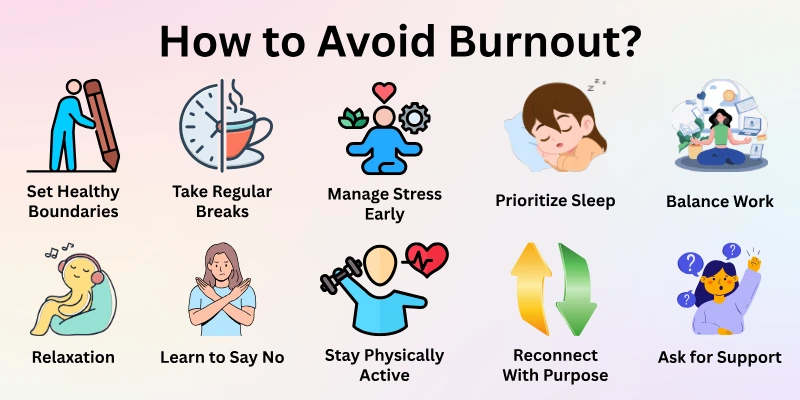
Below are proven and practical ways to prevent burnout early and maintain long-term emotional wellness:
- Set Healthy Boundaries
- Take Regular Breaks
- Manage Stress Early
- Prioritize Sleep and Rest
- Balance Work and Personal Life
- Learn to Say No
- Practice Mindfulness and Relaxation
- Stay Physically Active
- Ask for Support
- Reconnect With Purpose
Let’s cover all of these in detail.
1. Set Healthy Boundaries
One of the most effective ways to avoid burnout is setting clear boundaries in your personal and professional life. Without boundaries, stress easily takes over.
- Decide clear work hours and stick to them daily.
- Avoid checking emails or messages during rest time.
- Separate work stress from home life as much as possible.
- Protect your emotional energy from toxic situations.
- Respect your own limits, even if others do not.
Personal Advice: You are allowed to protect your peace. Saying no to overload is saying yes to your health.
2. Take Regular Breaks
Increasing mental exhaustion is the result of working nonstop without taking breaks. Your mind and body can be reset with the help of brief breaks.
- Step away from screens every 60–90 minutes.
- Take deep breaths or stretch during breaks.
- Short walks can refresh mental focus.
- Avoid using breaks only for social media.
- Allow your brain time to relax and recharge.
Personal Advice: Rest is not laziness. It is fuel for productivity.
3. Manage Stress Early
If you ignore stress today, you will experience burnout tomorrow. The key to avoiding burnout is to begin stress management early on.
- Identify stress triggers in your daily routine.
- Address small problems before they grow bigger.
- Avoid bottling emotions for long periods.
- Use journaling to release mental pressure.
- Practice calm responses instead of reacting emotionally.
Personal Advice: Stress is a signal, not a weakness. Listen to it early.
4. Prioritize Sleep and Rest
Insomnia is a major contributor to both mental and emotional exhaustion and burnout. Good sleep is beneficial to the recovery of your brain.
- Maintain a consistent sleep schedule.
- Avoid screens at least one hour before bed.
- Create a calm bedtime routine.
- Do not sacrifice sleep for extra work.
- Rest days are as important as workdays.
Personal Advice: Sleep is emotional repair, not wasted time.
5. Balance Work and Personal Life
A significant contributor to burnout is a work-life balance that is not healthy. Finding a balance helps keep stress under control.
- Schedule time for family, hobbies, and rest.
- Do not let work replace personal joy.
- Protect weekends or off-days whenever possible.
- Make time for activities that relax you.
- Separate identity from job performance.
Personal Advice: You are more than your productivity.
6. Learn to Say No
Taking on an excessive number of commitments is a surefire way to exhaust oneself. Saying “no” is good for your mental health and should be more common.
- Avoid taking on too many responsibilities.
- Say no without guilt or long explanations.
- Respect your energy level before agreeing.
- Understand that no is a complete answer.
- Choose quality commitments over quantity.
Personal Advice: Saying no today prevents burnout tomorrow.
7. Practice Mindfulness and Relaxation
Mindfulness is a stress-relieving practice that also helps prevent emotional exhaustion. You are able to maintain mental presence.
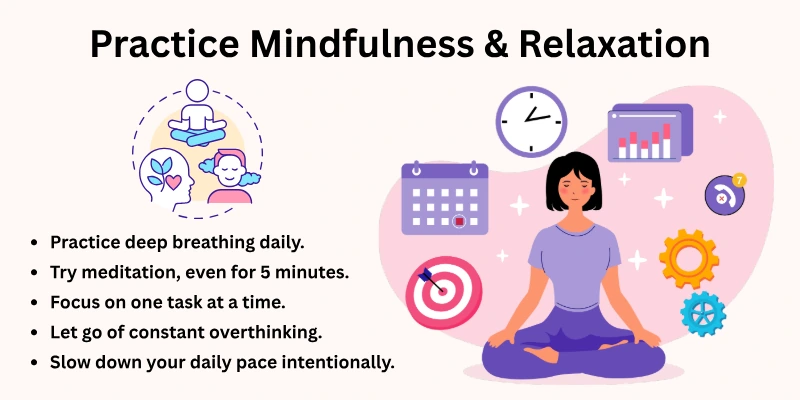
- Practice deep breathing daily.
- Try meditation, even for 5 minutes.
- Focus on one task at a time.
- Let go of constant overthinking.
- Slow down your daily pace intentionally.
Personal Advice: Calm moments rebuild emotional strength.
8. Stay Physically Active
Physical activity has been shown to improve mood and reduce the risk of burnout. It releases stress that has been building up.
- Walk daily, even for 15–20 minutes.
- Stretch to release muscle tension.
- Try light exercise instead of intense routines.
- Movement boosts mental clarity.
- Avoid sitting for long continuous hours.
Personal Advice: A moving body supports a calm mind.
9. Ask for Support
When you try to handle everything by yourself, you increase the risk of burnout. Having support lessens the emotional burden.
- Talk to trusted friends or family.
- Share feelings instead of hiding them.
- Seek professional help if stress feels overwhelming.
- Accept help without feeling weak.
- Emotional support speeds up recovery.
Personal Advice: Strength grows when you stop carrying everything alone.
10. Reconnect With Purpose
The feeling that one’s life has no meaning is a common cause of burnout. Purpose refreshes one’s energy and motivation levels.
- Reflect on why you started your journey.
- Set meaningful and realistic goals.
- Celebrate small achievements.
- Do things that align with your values.
- Reconnect with what brings fulfillment.
Personal Advice: Purpose turns pressure into progress.
Additional Habits That Help Avoid Burnout
Avoiding burnout is not only about big changes; small daily habits also play a powerful role in protecting your mental and emotional health.
When you stay consistent with simple routines, your mind feels safer, calmer, and more balanced. These habits help reduce daily stress, improve emotional control, and prevent long-term exhaustion.
By practicing them regularly, you create a healthier lifestyle that supports both productivity and well-being.
Here is a complete one-line explanation for each habit:
- Maintain a Healthy Daily Routine: A stable daily routine helps your brain feel organized, reduces stress, and creates a sense of control and predictability.
- Reduce Multitasking and Distractions: Focusing on one task at a time lowers mental pressure and prevents emotional overload caused by constant switching.
- Limit Negative News and Social Media Use: Reducing exposure to negative content protects your emotional energy and prevents unnecessary stress and anxiety.
- Practice Gratitude Daily: Gratitude shifts your focus from problems to positives, helping your mind stay calm and emotionally balanced.
- Take Vacations or Mental Health Days When Needed: Planned breaks give your mind time to recover, recharge, and reset from ongoing pressure.
- Focus on Progress, Not Perfection: Valuing progress over perfection reduces self-pressure and supports long-term mental well-being.
Final Note
In this guide, we have covered how to avoid burnout using practical, realistic, and healthy strategies.
Burnout is not a failure; it is a warning sign that your mind and body need care. By setting boundaries, managing stress early, resting properly, and seeking support, you can protect your emotional health and prevent long-term exhaustion. Always remember that your well-being matters more than constant pressure or unrealistic expectations.
Take care of yourself, stay emotionally aware, and choose balance over burnout. Goodbye, goodbye, goodbye.
FAQs: How to Avoid Burnout
Here are some of the most commonly asked questions related to ways to avoid burnout:
Burnout is a state of emotional, mental, and physical exhaustion caused by long-term stress. It often happens when pressure continues without proper rest or balance. Ignoring stress for too long increases burnout risk.
Early signs include constant tiredness, lack of motivation, irritability, and feeling overwhelmed. You may also notice reduced focus and emotional distance. Recognizing these signs early helps prevent burnout.
You can avoid burnout at work by setting clear boundaries, taking regular breaks, and managing workload realistically. Avoid overworking and prioritize tasks properly. Rest is essential for sustained productivity.
Burnout can often be prevented with healthy routines and stress management. While stress is unavoidable, how you respond to it matters. Consistent self-care reduces burnout risk.
Yes, poor sleep weakens emotional control and increases stress sensitivity. Lack of rest makes it harder for the brain to recover. Quality sleep is key to avoiding burnout.
Saying no protects your time and emotional energy. Overcommitting leads to stress overload. Healthy boundaries reduce pressure and prevent exhaustion.
Yes, regular physical activity reduces stress hormones and improves mood. Even light exercise helps release emotional tension. Movement supports mental resilience.
Yes, emotional exhaustion is a core part of burnout. It often appears before full burnout develops. Managing emotional exhaustion early helps prevent burnout.
Recovery time depends on stress level and lifestyle changes. With rest and support, improvement can begin within weeks. Ignoring burnout can extend recovery for months.
You should seek help if burnout affects daily life or lasts for several weeks. A mental health professional can provide guidance and coping strategies. Early support speeds recovery.





- Be Respectful
- Stay Relevant
- Stay Positive
- True Feedback
- Encourage Discussion
- Avoid Spamming
- No Fake News
- Don't Copy-Paste
- No Personal Attacks
- Be Respectful
- Stay Relevant
- Stay Positive
- True Feedback
- Encourage Discussion
- Avoid Spamming
- No Fake News
- Don't Copy-Paste
- No Personal Attacks
