Best Iron-Rich Foods to Boost Energy and Prevent Anemia
Published: 2 Jun 2026
Iron is an essential mineral that helps your body produce hemoglobin, which carries oxygen to all your cells. Low iron can cause fatigue, weakness, pale skin, and poor concentration.
Including iron-rich foods in your daily diet is important to maintain energy levels, support immunity, and promote overall health. This guide will explain the best iron-rich foods, how they benefit your body, and tips on how to include them in your meals.
Let us cover all the things in detail.
Why Iron Is Important
Iron plays a vital role in the body:
- It helps produce hemoglobin for oxygen transport.
- Supports metabolism and energy production.
- Strengthens the immune system.
- Prevents anemia and fatigue.
A balanced diet with iron-rich foods prevents iron deficiency and promotes better health.
Best Iron-Rich Foods
Guys, here are some of the best foods that are rich in iron and can help you cover up any iron deficiencies you may have. Iron is an essential mineral that helps your body produce healthy red blood cells and transport oxygen efficiently. Without enough iron, you may feel tired, weak, or have difficulty concentrating throughout the day.
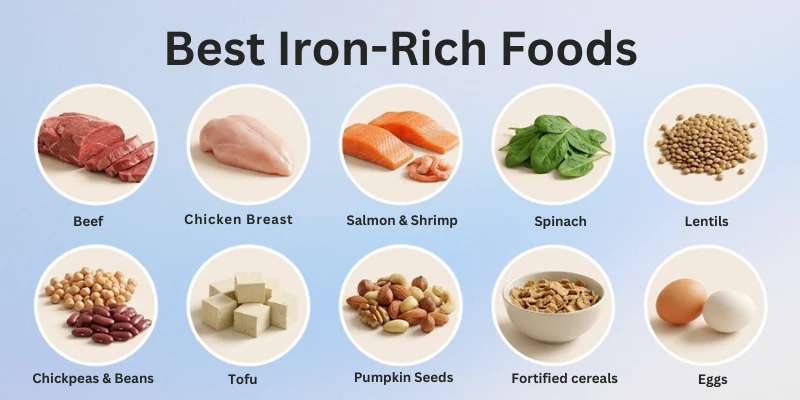
Including iron-rich foods in your daily meals is one of the best ways to maintain healthy iron levels naturally. The foods listed below provide valuable nutrients that support energy production, immune function, and overall well-being.
- Red Meat (Beef, Lamb)
- Poultry (Chicken, Turkey)
- Fish and Seafood (Salmon, Sardines, Shrimp)
- Spinach and Leafy Greens
- Lentils and Beans
- Chickpeas and Kidney Beans
- Tofu and Soy Products
- Pumpkin Seeds and Nuts
- Fortified Cereals
- Eggs
Here are the best iron-rich foods that you can easily include in your daily diet. Let’s explore each one in detail.
1. Red Meat (Beef, Lamb)
Red meat is one of the richest sources of heme iron, which is absorbed efficiently. It helps increase hemoglobin levels and prevent anemia. Red meat is also rich in protein, zinc, and B vitamins, supporting energy and metabolism.
Tips for Best Results:
- Choose lean cuts to reduce saturated fat.
- Cook with minimal oil and spices.
- Pair with vitamin C-rich vegetables to boost absorption.
2. Poultry (Chicken, Turkey)
Poultry contains heme iron and is lower in fat than red meat. It provides a moderate iron boost and supports muscle health. Chicken and turkey are easy to cook and versatile for salads, sandwiches, or stir-fries.
Tips for Best Results:
- Eat skinless chicken to reduce calories.
- Combine with leafy greens or tomatoes to improve iron absorption.
- Perfect for weight-conscious individuals needing iron.
3. Fish and Seafood (Salmon, Sardines, Shrimp)
There is a high concentration of heme iron and omega-3 fatty acids in fish and seafood. Foods like sardines and shrimp are especially rich in these nutrients. As well as supporting brain function and oxygen transport, they are beneficial to the heart.
Tips for Best Results:
- Grill, steam, or bake instead of frying.
- Pair with vitamin C foods like lemon or bell peppers.
- Include 2–3 servings per week for optimal benefits.
4. Spinach and Leafy Greens
Among the vegetables that are rich in non-heme iron and antioxidants are spinach, kale, and Swiss chard. Both the production of red blood cells and immunity are supported by them. The iron content of greens can be preserved by eating them raw or lightly cooked.
Tips for Best Results:
- Combine with vitamin C-rich foods for better absorption.
- Add to salads, smoothies, or stir-fries.
- Avoid overcooking to retain nutrients.
5. Lentils and Beans
Lentils, kidney beans, black beans, and chickpeas are all excellent sources of iron that can be found in plant-based foods. In addition, they contain protein and fiber, which allows you to feel full for longer and support digestion.
Tips for Best Results:
- Soak beans overnight to improve nutrient absorption.
- Pair with citrus fruits or tomatoes.
- Great for vegetarians and vegans.
6. Chickpeas and Kidney Beans
Because of their high iron, protein, and fiber content, these legumes are beneficial in preventing anemia and maintaining energy levels. Salads, soups, stews, and hummus are all possible applications for them.
Tips for Best Results:
- Cook thoroughly for easier digestion.
- Combine with whole grains for a complete protein.
- Sprinkle with seeds for extra nutrients.
7. Tofu and Soy Products
There is a high concentration of non-heme iron in soy milk, soybeans, and tofu. As well as being beneficial to the health of bones and muscles, they are an excellent choice for vegetarians. Because it can take on flavors, tofu is a versatile ingredient in the kitchen.
Tips for Best Results:
- Use calcium-fortified tofu or soy milk for extra benefits.
- Marinate and grill tofu for a tasty iron-rich meal.
- Pair with vegetables rich in vitamin C.
8. Pumpkin Seeds and Nuts
Pumpkin seeds, almonds, cashews, and pistachios provide iron, magnesium, and healthy fats. They make a great snack or salad topping. Seeds and nuts are calorie-dense, so portion control is important.
Tips for Best Results:
- Eat a small handful daily.
- Combine with fruits for a nutrient-rich snack.
- Avoid salted or roasted varieties to reduce sodium.
9. Fortified Cereals
There are a lot of breakfast cereals that have been fortified with iron and other vitamins that are necessary. For those who are pressed for time in the morning, they are a convenient and speedy source of iron. Choose options that are low in sugar or contain whole grains.
Tips for Best Results:
- Pair with milk or yogurt for extra protein and calcium.
- Add fruits like oranges or strawberries for vitamin C.
- Avoid high-sugar cereals that spike blood sugar.
10. Eggs
Eggs are an excellent source of protein and heme iron. Energy levels, brain function, and muscle health are all supported by them. Eggs are a versatile food that can be easily incorporated into any meal.
Tips for Best Results:
- Boil, poach, or scramble eggs without excess oil.
- Pair with spinach or tomatoes to enhance iron intake.
- Limit fried or creamy preparations.
Tips to Increase Iron Absorption
Getting enough iron is important, but your body also needs to absorb it efficiently to gain the full benefits. Simple dietary habits can significantly improve iron absorption and help maintain healthy iron levels.
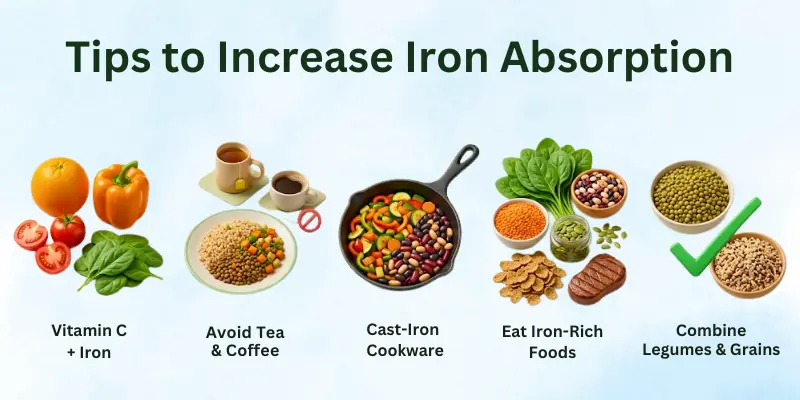
A few more suggestions to help you boost your body’s absorption of iron are as follows:
- Eat vitamin C-rich foods like oranges, bell peppers, and tomatoes with iron foods.
- Avoid drinking tea or coffee with meals, as they reduce iron absorption.
- Cook in cast-iron cookware to slightly boost iron content.
- Eat a variety of iron-rich foods daily for best results.
- Vegetarians should combine legumes and grains to improve absorption.
Final Note
In this guide, we covered the best iron-rich foods, their benefits, and tips to include them in your diet. Red meat, chicken, fish, leafy greens, legumes, tofu, seeds, cereals, and eggs support energy, immunity, and overall health.
My personal advice is to include a mix of heme and non-heme iron sources in your meals, and pair plant-based iron with vitamin C-rich foods for better absorption.
Goodbye and stay healthy.
FAQs: Best Iron-rich Foods
Here are some of the most commonly asked questions related to the best iron-rich foods:
The best iron-rich foods include red meat, chicken, fish, leafy greens, lentils, chickpeas, tofu, seeds, eggs, and fortified cereals. These foods prevent anemia and boost energy.
Vegetarians can get iron from spinach, kale, lentils, chickpeas, tofu, pumpkin seeds, and fortified cereals. Pairing them with vitamin C-rich foods improves absorption.
Hemoglobin, which transports oxygen to cells, is made in part by iron. It boosts immunity, energy, and guards against anemia and exhaustion.
Yes, iron-rich foods increase hemoglobin and oxygen delivery to the body. This helps reduce tiredness, improve focus, and support overall energy.
Consume foods high in vitamin C, such as bell peppers, tomatoes, or oranges, along with plant-based iron. Steer clear of coffee and tea during meals to improve absorption.
Eggs do, in fact, contain heme iron as well as protein. They contribute to the enhancement of hemoglobin levels and supply the body with energy that is sustained over time.
Red meat contains heme iron, which is absorbed more efficiently. Plant foods provide non-heme iron but are healthy and essential for vegetarians.
Yes, pumpkin seeds, almonds, and cashews are rich in iron, magnesium, and healthy fats. They make a great snack for boosting iron naturally.
Include iron-rich foods daily in meals. Combining different sources of iron ensures you meet your body’s needs and prevent deficiency.
Yes, fortified cereals provide added iron and essential vitamins. They are an easy and quick way to increase iron intake, especially for busy mornings.



- Be Respectful
- Stay Relevant
- Stay Positive
- True Feedback
- Encourage Discussion
- Avoid Spamming
- No Fake News
- Don't Copy-Paste
- No Personal Attacks
- Be Respectful
- Stay Relevant
- Stay Positive
- True Feedback
- Encourage Discussion
- Avoid Spamming
- No Fake News
- Don't Copy-Paste
- No Personal Attacks
