Causes of Seeing Double: Common Reasons and When to Seek Help
Published: 24 Oct 2026
Have you ever looked at something and noticed two images instead of one? Seeing double can feel confusing and even scary, especially when it happens suddenly. Doctors call this condition diplopia, or double vision. It can occur for many reasons, from simple eye problems to conditions that affect the nerves, muscles, or brain.
Some people see double only for a short time, while others may experience it often. The cause can depend on whether the problem affects one eye or both eyes.
Understanding the reason behind it can help you know when it is harmless and when you should seek medical advice. In this article, we will explain the common causes of seeing double and why this vision problem may happen.
Types of Seeing Double
Before looking at the specific causes, it is helpful to understand the two main types of double vision. Knowing whether the problem affects one eye or both eyes can help doctors identify the underlying cause.
| Type of Double Vision | What It Means | Common Causes |
|---|---|---|
| Monocular Double Vision | Double vision continues even when one eye is closed. It usually affects only one eye. | Refractive errors, dry eyes, cataracts, corneal problems |
| Binocular Double Vision | Double vision goes away when either eye is closed. It happens when both eyes do not work together properly. | Eye muscle problems, cranial nerve disorders, strabismus, diabetes, thyroid eye disease, stroke, brain disorders |
Causes of Seeing Double
Seeing double can happen for many different reasons. In some cases, the problem starts in the eyes, while in others it is linked to the nerves, muscles, or brain. Knowing the possible causes can help you understand why your vision has changed and when you should see a doctor.
Here are some of the most common causes of seeing double.
- Refractive Errors
- Dry Eyes
- Cataracts
- Eye Muscle Problems
- Cranial Nerve Disorders
- Strabismus (crossed eyes)
- Diabetes
- Thyroid Eye Disease
- Migraine
- Head Injury
- Stroke
- Brain Disorders
- Certain Medications
- Corneal Problems
Let’s look at each cause in more detail to understand how it can lead to seeing double.
1. Refractive Errors
Refractive errors happen when the eye cannot focus light correctly on the retina. As a result, objects may appear blurry, distorted, or sometimes doubled. This is one of the more common eye-related causes of seeing double.
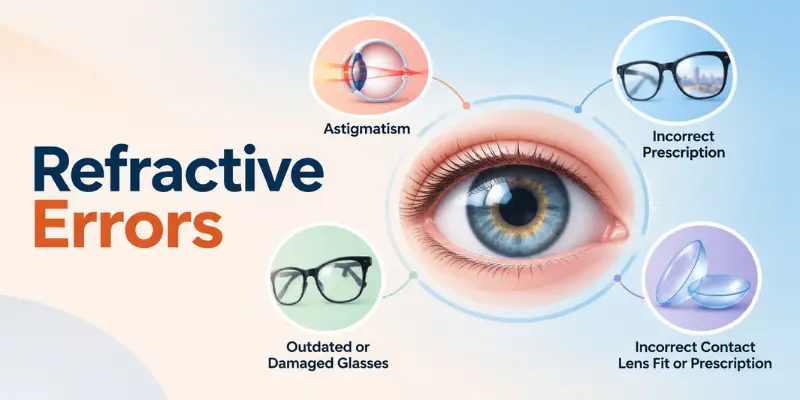
In many cases, refractive errors are easy to correct with the right glasses, contact lenses, or other vision treatments. However, if the problem is left uncorrected, it can make everyday activities like reading, driving, or using a computer more difficult.
Common refractive errors that may cause seeing double include:
- Astigmatism, which causes light to focus unevenly inside the eye
- An improper eyeglass prescription that does not match your current vision
- Wearing outdated or damaged glasses
- Incorrect contact lens fit or prescription
2. Dry Eyes
Dry eyes develop when your eyes do not produce enough tears or when the tears evaporate too quickly. Tears help keep the surface of the eye smooth and clear, which is important for sharp vision.
When the tear film becomes uneven, light cannot focus properly on the eye. This may cause temporary double vision, especially after reading, using digital screens for a long time, or spending time in dry or windy environments.
Dry eyes may cause seeing double because of:
- An unstable tear film that affects how light enters the eye
- Long hours of screen time that reduce blinking
- Aging, which can lower tear production
- Dry or windy environments
- Wearing contact lenses for long periods
- Certain medications that reduce tear production
If you also have irritation or burning, you may find our article on home remedies for itchy eyes helpful.
3. Cataracts
Cataracts develop when the clear lens inside the eye becomes cloudy. Instead of allowing light to pass through clearly, the cloudy lens scatters the light, making vision less sharp.
As cataracts become worse, they can cause blurry vision, glare, and sometimes double vision in one eye. The symptoms usually develop slowly, so many people may not notice the changes at first.
Cataracts may cause double vision because of:
- A cloudy lens that scatters light inside the eye
- Changes in how the eye focuses images
- Age-related changes that affect the lens
- Eye injuries that damage the lens
- Long-term use of steroid medications
- Certain health conditions, such as diabetes
4. Eye Muscle Problems
Your eye muscles help both eyes move together and stay focused on the same object. When one or more of these muscles become weak or do not work properly, the eyes can lose their normal alignment, causing double vision.
Eye muscle problems may happen because of an injury, certain health conditions, or disorders that affect the muscles or the nerves controlling them. The double vision is usually more noticeable when looking in a particular direction.
Eye muscle problems may cause double vision because of:
- Weak eye muscles that cannot keep both eyes aligned
- Muscle imbalance that makes each eye focus on a different point
- Damage to the muscles after an eye or head injury
- Health conditions that weaken the eye muscles over time
5. Cranial Nerve Disorders
The cranial nerves control the muscles that move your eyes. If one of these nerves becomes damaged or stops working properly, the eyes may no longer move together. This can lead to double vision, especially when looking in certain directions.
These nerve disorders may develop because of diabetes, infections, head injuries, stroke, or other neurological conditions. The symptoms can appear suddenly or develop over time, depending on the underlying cause.
Common cranial nerve disorders that may cause seeing double include:
- Third nerve palsy, which can limit eye movement and may also cause a drooping eyelid
- Fourth nerve palsy, which makes it difficult to look downward and may cause double vision when reading or walking downstairs
- Sixth nerve palsy, which affects the eye’s ability to move outward and often causes side-by-side double vision
- Reduced coordination between the eyes because the affected nerve cannot control the eye muscles properly
- Underlying conditions such as diabetes, stroke, or head injury that damage the cranial nerves
6. Strabismus (Crossed Eyes)
Strabismus, also called crossed eyes, is a condition in which the eyes do not point in the same direction at the same time. One eye may look straight ahead while the other turns inward, outward, upward, or downward.
When the eyes are not properly aligned, the brain receives two different images. This can cause double vision, especially in adults who develop strabismus later in life.
Strabismus may cause double vision because of:
- Eye misalignment that prevents both eyes from focusing on the same object
- Weakness or poor coordination of the eye muscles
- Nerve problems that affect eye movement
- Eye injuries or certain medical conditions that change eye alignment
7. Diabetes
Diabetes can affect many parts of the body, including the nerves that control eye movement. When blood sugar levels remain high for a long time, these nerves may become damaged, making it difficult for the eyes to move together.
Double vision caused by diabetes is often linked to nerve damage rather than a problem inside the eye itself. Managing blood sugar levels may help lower the risk of these complications over time. Following healthy habits can help lower the risk of diabetes-related eye complications. Read our guide on ways to prevent diabetes.
Diabetes may cause double vision because of:
- High blood sugar that damages the nerves controlling the eye muscles
- Reduced coordination between both eyes
- Diabetic nerve damage that affects normal eye movement
- Poorly controlled diabetes that increases the risk of vision problems
8. Thyroid Eye Disease
Thyroid eye disease is a condition in which the immune system causes inflammation in the tissues and muscles around the eyes. As these tissues swell, they can affect how the eyes move and work together.
The condition is most often linked to an overactive thyroid, but it can also occur in people with normal thyroid function. Double vision may develop as the eye muscles become stiff or enlarged, making it harder for both eyes to stay aligned. Some people with thyroid eye disease also develop bulging eyes. You can learn more in our article on causes of bulging eyes.
Thyroid eye disease may cause double vision because of:
- Swelling of the eye muscles that limits normal eye movement
- Enlarged muscles that prevent the eyes from staying aligned
- Bulging eyes that change the position of the eyeballs
- Inflammation around the eyes that affects muscle function
- Pressure on the nerves or tissues that help control eye movement
9. Migraine
A migraine is more than just a headache. Some people experience vision changes before or during a migraine, including temporary double vision. These changes usually go away after the migraine episode ends.
Not everyone with a migraine will have double vision. However, certain types of migraines can affect the nerves or parts of the brain that control vision, leading to short-term vision problems.
Migraine may cause double vision because of:
- Ocular or neurological changes that affect normal vision
- Temporary changes in the brain areas that process visual information
- Problems with the nerves that control eye movement
- Migraine attacks that briefly disrupt normal eye coordination
10. Head Injury
A head injury can affect the eyes, the nerves that control eye movement, or the brain. Depending on the severity of the injury, double vision may appear immediately or develop hours or days later.
Even a mild head injury can sometimes interfere with how the eyes work together. If double vision starts after a blow to the head, it should always be checked by a healthcare provider as soon as possible.
A head injury may cause double vision because of:
- Damage to the nerves that control the eye muscles
- Injury to the brain areas responsible for vision
- Swelling or bleeding that affects normal eye movement
- Fractures around the eye socket that change eye alignment
- Concussion that temporarily disrupts visual function
11. Stroke
A stroke happens when the blood supply to part of the brain is blocked, or a blood vessel bursts. If the areas that control vision or eye movement are affected, double vision can appear suddenly.
Sudden double vision should never be ignored. If it occurs along with symptoms such as weakness, trouble speaking, or facial drooping, it is a medical emergency and requires immediate treatment.
A stroke may cause double vision because of:
- Damage to the brain areas that control eye movement
- Disruption of the nerves that help both eyes work together
- Reduced coordination between the eyes
- Sudden changes in the brain’s ability to process visual information
12. Brain Disorders
Certain brain disorders can affect the parts of the brain that control vision and eye movement. When these areas do not work properly, the eyes may stop moving together, leading to double vision.
Double vision caused by a brain disorder may develop slowly or appear suddenly, depending on the condition. It is often accompanied by other neurological symptoms and should always be evaluated by a healthcare provider.
Brain disorders may cause double vision because of:
- Brain tumors that put pressure on the nerves or brain tissue
- Multiple sclerosis that damages the nerves controlling eye movement
- Brain aneurysms that affect nearby nerves
- Inflammation or damage to the areas of the brain responsible for vision
- Conditions that interfere with normal communication between the brain and the eye muscles
13. Certain Medications
Some medicines can affect the nervous system, eye muscles, or the way the brain processes visual information. As a result, some people may experience temporary double vision while taking these medications.
Double vision caused by medication often improves after the medicine is adjusted or stopped under a doctor’s guidance. Never stop taking a prescribed medicine without speaking to your healthcare provider first.
Certain medications may cause double vision because of:
- Anti-seizure medicines that can affect vision as a side effect
- Sedatives that slow the nervous system and interfere with eye coordination
- Alcohol intoxication that temporarily affects eye movement and focus
- High doses or interactions between certain medications that disrupt normal vision
14. Corneal Problems
The cornea is the clear, dome-shaped front surface of the eye that helps focus light. When it becomes damaged or changes shape, light cannot enter the eye properly, which may cause blurred or double vision.
Corneal problems usually affect one eye and may also cause pain, redness, or sensitivity to light. Early diagnosis and treatment can help prevent further vision problems.
Corneal problems may cause double vision because of:
- Corneal scarring that blocks or scatters light
- Keratoconus, which changes the shape of the cornea
- Eye infections that damage the corneal surface
- Swelling or irregularities that prevent light from focusing correctly
Symptoms That May Occur Along With Seeing Double
Seeing double is often not the only symptom you may notice. Depending on the underlying cause, it can appear with other eye or neurological symptoms that provide important clues about what is affecting your vision.
Some symptoms are mild and temporary, while others may point to a serious medical condition that needs prompt attention. Paying attention to these changes can help you know when to seek medical care.
Below are some common symptoms of seeing double.
- Blurred vision
- Eye pain
- Headache
- Dizziness
- Drooping eyelid
- Difficulty moving the eye
- Nausea
- Eye strain
- Bulging eyes
- Loss of balance
- Facial weakness
The following symptoms often occur with double vision and may help identify its underlying cause.
How Doctors Diagnose the Cause of Seeing Double
Diagnosing the cause of seeing double begins with understanding your symptoms and examining your eyes. Since double vision can result from many different conditions, your doctor may recommend one or more tests to find the exact cause.
Here are the common tests doctors use to diagnose the cause of seeing double.
- Medical history: Reviews your symptoms, medical conditions, medications, and recent injuries.
- Eye examination: Checks the health of your eyes and looks for eye diseases or abnormalities.
- Vision tests: Measure your eyesight and identify refractive errors such as astigmatism.
- Eye movement assessment: Evaluates how well both eyes move and work together.
- Blood tests: Detect conditions such as diabetes, thyroid disease, or infections.
- CT scan or MRI: Creates detailed images to identify problems affecting the brain, nerves, or eyes.
- Neurological examination: Assesses nerve function, muscle strength, balance, and coordination.
The following sections explain what each test involves and how it helps identify the cause of seeing double.
Factors That May Increase the Risk of Seeing Double
Anyone can experience double vision, but some health conditions and lifestyle habits can make it more likely. These factors do not always cause double vision directly, but they can increase your risk of developing the conditions that lead to it.
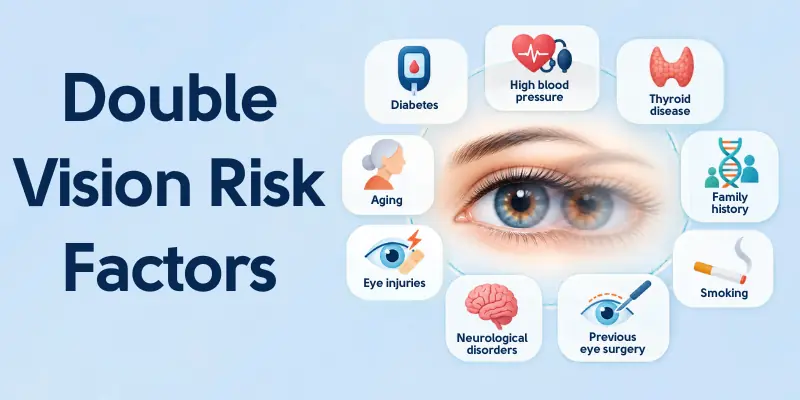
Knowing your risk factors can help you protect your eye health and seek medical care early if vision changes occur.
Below are some common factors that may increase the risk of seeing double.
- Diabetes: May damage the nerves that control eye movement.
- High blood pressure: Can affect blood flow to the eyes and brain.
- Thyroid disease: May lead to thyroid eye disease and muscle problems.
- Aging: Increases the risk of cataracts and other eye conditions.
- Eye injuries: Can damage the eyes, muscles, or nerves involved in vision.
- Neurological disorders: May interfere with normal eye movement and visual processing.
- Previous eye surgery: In some cases, it can affect eye alignment or vision.
- Family history of eye disorders: May increase the risk of inherited eye conditions.
- Smoking: Raises the risk of several eye diseases that can affect vision.
These risk factors do not guarantee that you will develop double vision, but understanding them can help you take better care of your eye health.
Conclusion
In this guide, we covered the common causes of seeing double, including eye conditions, nerve disorders, brain problems, and certain health conditions that can affect your vision. We also explained the symptoms that may occur with double vision, how doctors diagnose the underlying cause, and the factors that can increase your risk.
Seeing double is not something you should ignore. While some causes are temporary and easy to treat, others may require prompt medical attention. If your double vision appears suddenly, keeps coming back, or is accompanied by other concerning symptoms, make an appointment with a healthcare provider for a proper evaluation and diagnosis.
Frequently Asked Questions
If you still have questions about the causes of seeing double, the answers below may help you better understand this vision problem.
1. What is the most common cause of seeing double?
The most common cause depends on whether the double vision affects one eye or both eyes. Some of the most common causes include:
- Refractive errors, such as astigmatism
- Dry eyes
- Cataracts
- Eye muscle problems
- Cranial nerve disorders
2. Can stress cause double vision?
Stress does not usually cause double vision on its own. However, it can trigger migraines or make existing vision problems feel worse, which may lead to temporary double vision in some people.
3. Is seeing double always serious?
No, seeing double is not always serious. It can happen because of dry eyes or an outdated eyeglass prescription. However, sudden or persistent double vision should always be evaluated by a healthcare provider.
4. Can dehydration cause double vision?
Dehydration is not a common cause of double vision, but severe dehydration may affect how your eyes function. Drinking enough water and treating the underlying cause may help if dehydration is contributing to your symptoms.
5. Can high blood sugar cause seeing double?
Yes. High blood sugar can damage the nerves that control eye movement over time. This may lead to double vision, especially in people with poorly controlled diabetes.
6. Why do I see double in only one eye?
Double vision in one eye is often caused by problems affecting that eye, such as astigmatism, cataracts, or corneal disorders. An eye examination can help identify the exact cause.
7. Can lack of sleep cause double vision?
Lack of sleep does not usually cause double vision by itself, but it can lead to eye strain and make existing vision problems more noticeable.
8. When should I go to the emergency room for double vision?
Go to the emergency room immediately if double vision occurs with any of the following symptoms:
- Sudden onset of double vision
- Severe headache
- Weakness or numbness
- Trouble speaking
- Facial drooping
- Vision loss
- Loss of balance or coordination
These symptoms may be signs of a medical emergency and should not be ignored.
9. Can seeing double go away on its own?
Yes, temporary double vision caused by fatigue, dry eyes, or certain medications may improve on its own. If it lasts, returns frequently, or becomes worse, you should seek medical advice.
10. Which doctor should I see for double vision?
The right doctor depends on the underlying cause of your symptoms. You may need to see one of the following specialists:
- Optometrist: Performs eye exams and checks for common vision problems.
- Ophthalmologist: Diagnoses and treats eye diseases and vision disorders.
- Neurologist: Evaluates double visi





- Be Respectful
- Stay Relevant
- Stay Positive
- True Feedback
- Encourage Discussion
- Avoid Spamming
- No Fake News
- Don't Copy-Paste
- No Personal Attacks
- Be Respectful
- Stay Relevant
- Stay Positive
- True Feedback
- Encourage Discussion
- Avoid Spamming
- No Fake News
- Don't Copy-Paste
- No Personal Attacks
