Warning Signs of a Heart Attack: Early Detection Guide
Published: 2 Aug 2026
A heart attack can happen suddenly, but the warning signs often start much earlier than most people realize. The problem is that many of these early symptoms are mild, confusing, or mistaken for stress, fatigue, or indigestion.
Chest discomfort, shortness of breath, unusual tiredness, or even nausea can all be early signals that your heart is in danger. Recognizing these signs quickly can make the difference between life and death.
In this guide, you’ll learn the most important warning signs of a heart attack so you can act fast when it matters most.
Let’s explore the early warning signs of a heart attack.
Warning Signs of a Heart Attack
The heart attack symptoms often start slowly and may feel mild at first. Many people mistake them for stress, tiredness, or simple discomfort. But these signs can point to a serious heart problem and should never be ignored. Pay close attention to any unusual changes in your body. Acting early can protect your heart and save your life.
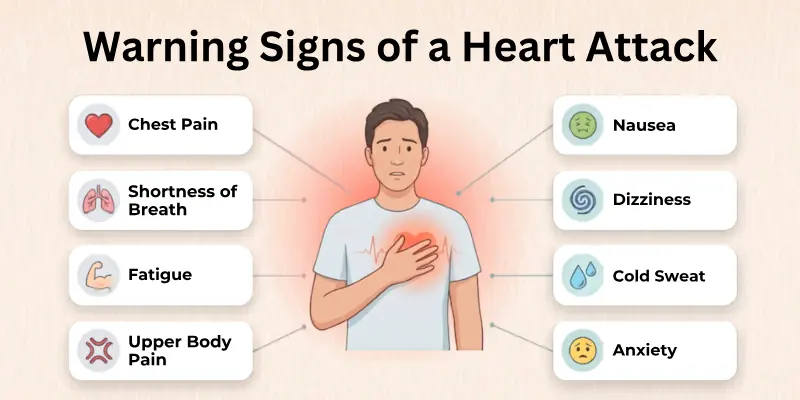
Here are the main heart attack signs
- Chest pain or pressure
- Shortness of breath
- Unusual fatigue or weakness
- Pain in Upper Body
- Nausea or indigestion feeling
- Dizziness or lightheadedness
- Cold sweat
- Anxiety or restlessness
Let’s take a closer look at each heart attack warning symptom and understand what it really means.
1. Chest Pain or Pressure
Chest pain is one of the most common warning signs of a heart attack. It often feels like tight pressure or heaviness in the chest.
Many people describe it as:
- Heavy pressure in the chest
- A squeezing feeling
- Pain that spreads to the arm or jaw
This is a sign that the heart is not getting enough oxygen.
Tip: Never ignore chest pain, even if it feels mild or comes and goes. Stop all activity and rest immediately.
2. Shortness of Breath
Shortness of breath is another important warning sign of a heart attack. It can happen with or without chest pain. Some people feel like they cannot take a full breath or they get out of breath even while resting.
Many people describe it as:
- Feeling like you cannot get enough air
- Breathing faster than normal
- Getting tired quickly with small activity
This is a sign that the heart is not pumping enough blood, so the body is not getting enough oxygen.
Tip: If this feeling starts suddenly or feels unusual, stop what you are doing and rest immediately. If it does not improve quickly, seek medical help right away.
3. Unusual Fatigue or Weakness
Unusual fatigue is a common but often ignored heart attack sign. It may appear days before a serious event. People feel extreme tiredness even after light activity or proper rest.
Many people describe it as:
- Feeling very weak without doing much work
- Sudden lack of energy
- Difficulty doing normal daily tasks
This happens when the heart is not pumping enough blood, so the body starts to feel low on energy and oxygen.
Tip: Do not ignore sudden or unusual fatigue, especially if it feels different from normal tiredness. Rest and monitor your symptoms closely.
4. Pain in Upper Body
Pain in the upper body is another strong warning sign of a heart attack. It often starts in the chest and then spreads to other areas like the arm, jaw, neck, or back.
Many people describe it as:
- Pain in the left arm or both arms
- Discomfort in the jaw or neck
- A dull ache in the upper back
This happens because the heart’s nerves send pain signals to other parts of the body when blood flow is reduced.
Tip: If this pain appears suddenly or along with chest discomfort, do not ignore it. Stop the activity and seek medical help immediately.
5. Nausea or Indigestion Feeling
Nausea or a feeling of indigestion can also be a warning sign of a heart attack. Many people mistake it for a stomach problem and ignore it.
Many people describe it as:
- Feeling sick to the stomach
- Burning or discomfort in the upper abdomen
- A feeling like gas or acidity
This happens when reduced blood flow to the heart affects how the body reacts, sometimes creating stomach-like symptoms.
Tip: Do not assume it is only acidity or food-related if it comes with chest discomfort, sweating, or weakness. Seek medical attention if it feels unusual or sudden.
6. Dizziness or Lightheadedness
Dizziness or lightheadedness can be an early warning sign of a heart attack. It may come suddenly and make you feel unsteady or like you might faint.
Many people describe it as:
- Feeling weak in the head
- A spinning or unsteady sensation
- Almost fainting while standing or moving
This happens when the heart cannot pump enough blood to the brain, reducing oxygen supply.
Tip: If you feel sudden dizziness along with chest discomfort, sweating, or shortness of breath, sit down immediately and seek medical help without delay.
7. Cold Sweats
Cold sweats can be a warning sign of a heart attack. It often appears suddenly, even when you are not doing any physical activity or feeling hot.
Many people describe it as:
- Sudden sweating without exercise
- Cold, clammy skin
- Feeling uneasy, along with sweating
This happens when the body reacts to stress on the heart and reduced oxygen supply.
Tip: If cold sweating appears with chest pain, weakness, or shortness of breath, treat it as an emergency and get medical help immediately.
8. Anxiety or Restlessness
Anxiety or restlessness can also appear as a warning sign of a heart attack. Some people feel an unusual sense of fear or uneasiness without any clear reason.
Many people describe it as:
- Sudden feeling of panic or fear
- Unable to stay calm or relaxed
- Feeling like something is wrong
This happens when the body reacts to reduced blood flow and stress on the heart.
Tip: Do not ignore sudden anxiety along with physical symptoms like chest discomfort or shortness of breath. Seek medical help immediately if it feels unusual.
Heart Attack Warning Signs in Men vs Women
The heart attack warning signs can look different in men and women. In many cases, men show more classic chest-related symptoms, while women may notice more subtle signs that are easy to ignore.
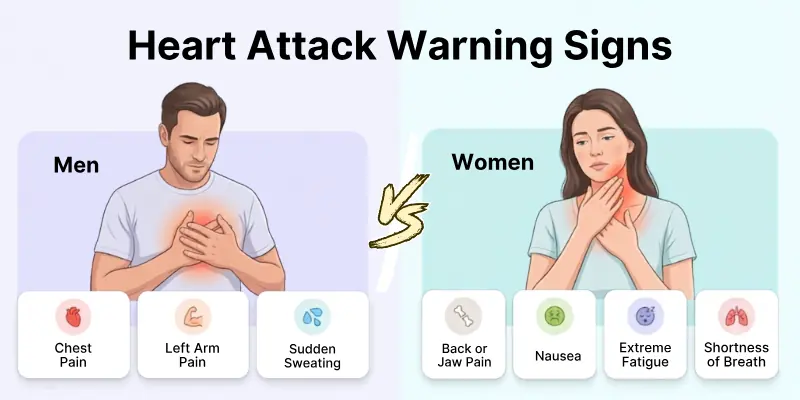
1. Warning Signs In Men
In men, heart attack symptoms are often more direct and easier to recognize.
- Chest pain is more common
- Pain in the left arm
- Sudden sweating
These are common symptoms of a heart attack in men and should never be ignored.
2. Warning Signs In Women
In women, symptoms can be less obvious and may feel like other health issues.
- Back or jaw pain
- Nausea or vomiting
- Extreme fatigue
- Shortness of breath
These are common symptoms of a heart attack in women, even if chest pain is not present.
What To Do If You Notice Warning Signs
If you notice any heart attack symptoms, do not wait or ignore them. Acting quickly can protect your heart and save your life.
- Call emergency: Contact medical help immediately without waiting.
- Do not ignore: Even mild symptoms can be serious.
- Stay calm: Keep yourself relaxed and avoid panic.
- Avoid driving: Do not try to reach the hospital yourself.
If symptoms continue or get worse, treat it as an emergency and get medical help right away.
Conclusion
In this guide, you learned about the warning signs of a heart attack. These signs can start mild, like tiredness, chest discomfort, or shortness of breath, but they should never be ignored.
Understanding these symptoms is only one part of heart health. It is also important to learn about the causes of heart attack, since many cases develop due to long-term lifestyle habits.
If you want to further improve your heart health, simple changes in diet and activity, such as foods for heart health and exercise for heart health, can make a big difference.
If you ever notice unusual changes in your body, do not wait or try to treat them at home. Call emergency help immediately and stay calm until assistance arrives.
Acting within minutes can make the difference between life and death.
FAQs: Warning Signs of a Heart Attack.
Here are some commonly asked questions about the warning signs of a heart attack.
The warning signs of a heart attack include:
- Chest pain or pressure
- Shortness of breath
- Sudden dizziness
- Cold sweats
- Nausea or weakness
Early symptoms can appear slowly and may feel mild at first. These include fatigue, chest discomfort, and mild breathing issues. Many people mistake them for stress or indigestion.
Chest symptoms often feel like pressure, tightness, or squeezing. It may feel like something heavy is sitting on the chest. This discomfort can last for a few minutes or come and go.
Yes, a heart attack can happen without chest pain. This is more common in women and older adults. Symptoms may include fatigue, nausea, or shortness of breath.
Silent heart attacks have very mild or no symptoms. People may feel tired, dizzy, or slightly uncomfortable in the chest. They often confuse it with minor health issues.
If you notice symptoms, call emergency help immediately. Do not ignore even mild warning signs. Rest and avoid any physical activity while waiting for help.
Heart attack symptoms in women may include:
- Nausea or vomiting
- Jaw or back pain
- Extreme fatigue
- Shortness of breath
- Chest discomfort (sometimes mild)
Heart attack symptoms in men often include:
- Strong chest pain
- Pain in the left arm
- Sudden sweating
- Shortness of breath
- Chest tightness or pressure
Symptoms can last for a few minutes or continue for longer periods. Sometimes they come and go before getting worse. Any lasting discomfort should be treated as an emergency.
Stress can trigger symptoms that feel similar to a heart attack. These include chest tightness, fast heartbeat, and shortness of breath. However, only a doctor can confirm the real cause.


- Be Respectful
- Stay Relevant
- Stay Positive
- True Feedback
- Encourage Discussion
- Avoid Spamming
- No Fake News
- Don't Copy-Paste
- No Personal Attacks
- Be Respectful
- Stay Relevant
- Stay Positive
- True Feedback
- Encourage Discussion
- Avoid Spamming
- No Fake News
- Don't Copy-Paste
- No Personal Attacks
