Exercises to Improve Posture & Strengthen Your Back
Published: 5 Jul 2026
Good posture is about more than looking confident; it affects your spine health, energy, breathing, and overall well-being. Sitting for long hours or hunching over screens can weaken your back and core muscles, leading to chronic pain. The right exercises strengthen weak muscles, stretch tight areas, and improve awareness of your body alignment.
Guys, many people don’t realize that poor posture can impact even digestion and mood. That’s why in this guide, I will share the best exercises to improve posture with detailed instructions, benefits, and tips.
Let’s dive in!
Exercises To Improve Posture
Here is a detailed list of the most effective exercises for improving posture:
- Cat-Cow Stretch
- Chest Opener Stretch
- Shoulder Blade Squeeze
- Wall Angels
- Plank
- Cobra Pose
- Seated Spinal Twist
- Reverse Dumbbell Fly
- Hip Flexor Stretch
- Child’s Pose
- Bridge Pose
- Standing Forward Fold
Let’s learn how each exercise works and how to do it properly.
1. Cat-Cow Stretch
The Cat-Cow stretch improves spine flexibility, relieves tension in the back, and warms up your core. It’s perfect for people who sit for long hours. This exercise also increases body awareness and teaches you to move your spine naturally, reducing stiffness.
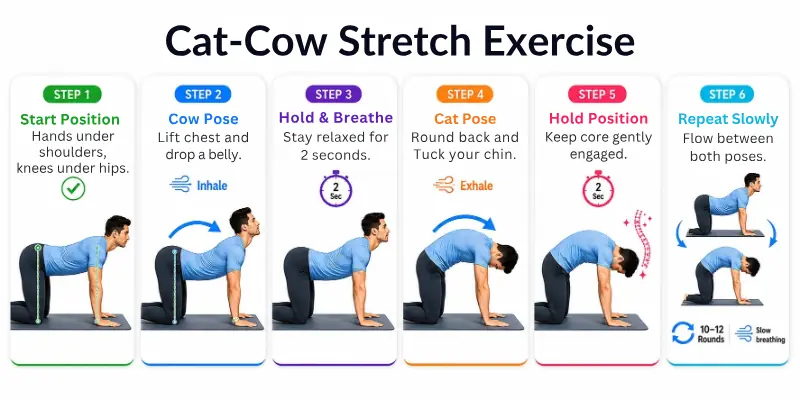
How To Perform:
- Start on your hands and knees, shoulders over wrists, hips over knees.
- Inhale and drop your belly toward the floor while lifting your head and tailbone (Cow Pose).
- Exhale and round your back, tucking your chin and pelvis (Cat Pose).
- Repeat slowly for 10–12 rounds, focusing on your breathing.
- Tip: Move gently, avoid forcing your spine, and engage your core throughout.
Benefits:
- Relieves tension in the neck, shoulders, and spine.
- Improves spinal flexibility and mobility.
- Encourages proper alignment while sitting or standing.
2. Chest Opener Stretch
Tight chest muscles are a major cause of slouched posture. Chest opener stretches help realign shoulders, open up the thoracic spine, and improve breathing. This exercise also counteracts the effects of prolonged sitting.
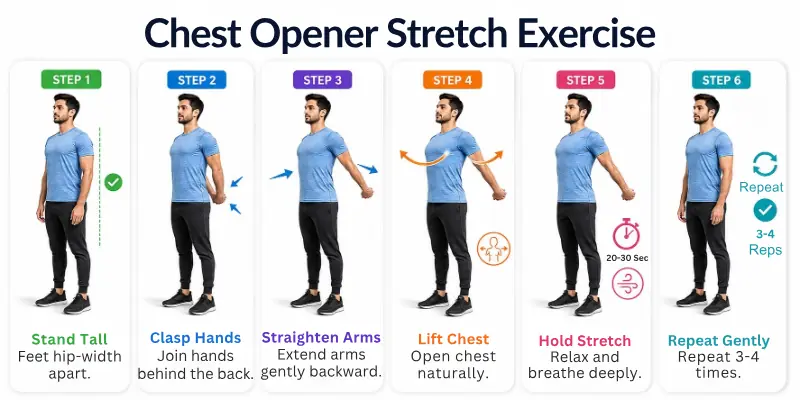
How To Perform:
- Stand tall with feet hip-width apart.
- Clasp your hands behind your back, and straighten your arms gently.
- Lift hands slightly and push chest forward, keeping shoulders relaxed.
- Hold for 20–30 seconds, repeat 3–4 times.
- Tip: Avoid shrugging your shoulders toward your ears. Keep your neck long.
Benefits:
- Opens tight chest and shoulder muscles.
- Improves alignment of the upper back.
- Enhances breathing and oxygen flow.
3. Shoulder Blade Squeeze
When it comes to preventing rounded shoulders, strengthening the muscles in the upper back is essential. Squeezing the shoulder blade requires the rhomboids and trapezius muscles to be activated, which helps to maintain correct posture.
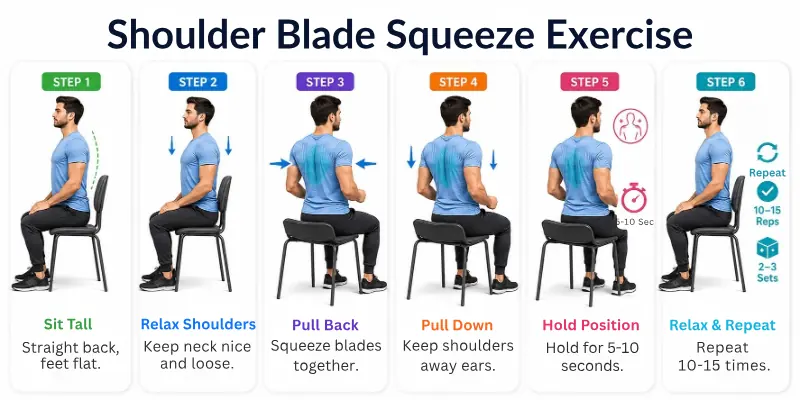
How To Perform:
- Sit or stand tall, keeping feet flat and spine straight.
- Pull your shoulder blades together and downward.
- Hold for 5–10 seconds, then relax.
- Repeat 10–15 times, 2–3 sets daily.
- Tip: Keep your shoulders away from your ears and engage your core for stability.
Benefits:
- Strengthens upper back muscles.
- Reduces hunching and forward shoulder posture.
- Supports neck and spine alignment.
4. Wall Angels
Wall Angels significantly improve upper back mobility, shoulder flexibility, and posture awareness. This exercise retrains muscles to maintain the correct alignment.
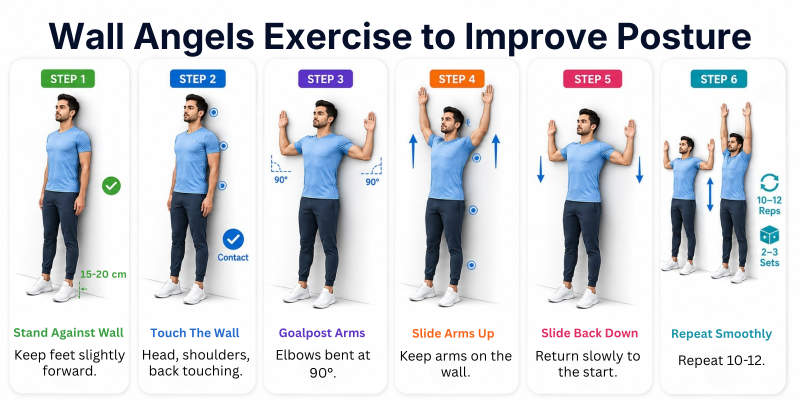
How To Perform:
- Stand with your back against a wall, feet slightly away.
- Press lower back, shoulders, and head into the wall.
- Raise your arms to form a goalpost (90-degree angle at elbows).
- Slowly slide arms up and down, keeping contact with the wall.
- Repeat 10–12 times, 2–3 sets.
- Tip: If your arms can’t reach the wall, start lower and gradually increase range.
Benefits:
- Improves shoulder mobility and upper back strength.
- Corrects rounded shoulders.
- Enhances posture awareness.
5. Plank
Planks are one of the best core-strengthening exercises. A strong core supports the spine, improves balance, and helps maintain proper posture throughout the day.
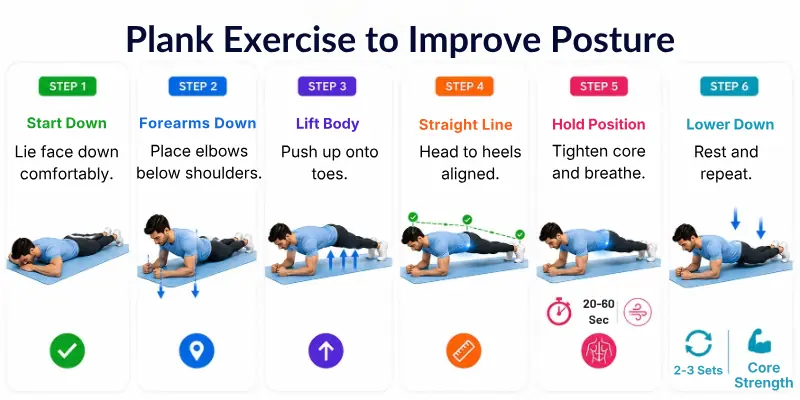
How To Perform:
- Lie face down, lift your body on forearms and toes.
- Maintain a straight line from head to heels.
- Engage core, glutes, and legs.
- Hold 20–60 seconds, gradually increasing time.
- Repeat 2–3 sets.
- Tip: Avoid sagging hips or raising them too high. Keep spine neutral.
Benefits:
- Strengthens core, back, and glutes.
- Reduces lower back pain.
- Improves overall stability and posture.
6. Cobra Pose
Cobra Pose stretches the spine, opens the chest, and strengthens back muscles. It counteracts slouching caused by desk work or prolonged sitting.
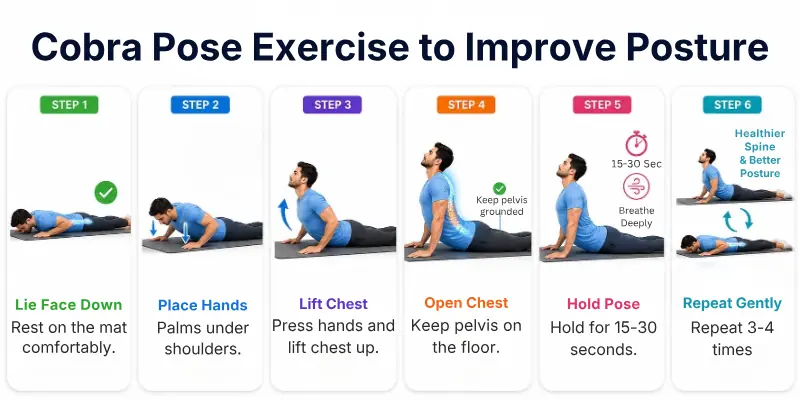
How To Perform:
- Lie face down, palms under shoulders, elbows slightly bent.
- Press hands into the floor and lift chest, keeping pelvis grounded.
- Hold 15–30 seconds, repeat 3–4 times.
- Tip: Keep your shoulders away from your ears and neck long. Avoid overextending the lower back.
Benefits:
- Stretches chest and spine muscles.
- Strengthens the lower back and glutes.
- Improves spinal flexibility and posture.
7. Seated Spinal Twist
Spinal twists improve mobility in the spine and release tension in the lower back and shoulders. They are especially useful after long periods of sitting.
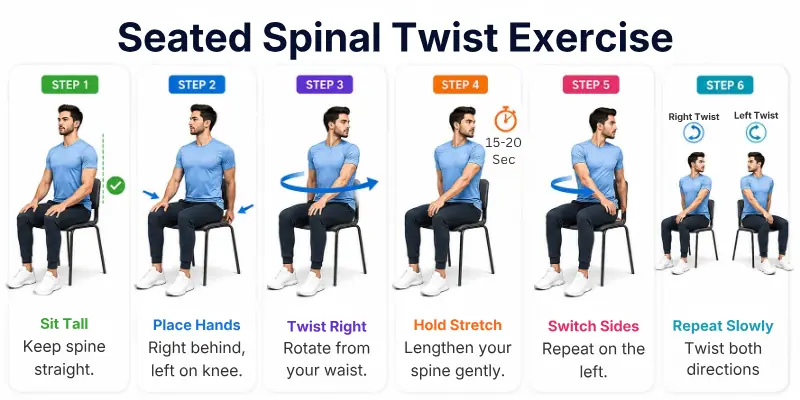
How To Perform:
- Sit tall on a chair or the floor.
- Place your right hand behind you, left hand on your right knee.
- Gently twist torso to the right, keeping spine long.
- Hold 15–20 seconds, then repeat on the left side.
- Tip: Keep your shoulders relaxed and avoid forcing the twist.
Benefits:
- Improves spinal rotation and mobility.
- Reduces stiffness in the lower back.
- Promotes better posture while sitting.
8. Reverse Dumbbell Fly
This exercise strengthens the upper back and shoulder muscles, helping prevent rounded shoulders. Strong muscles keep the shoulders back and the chest open.
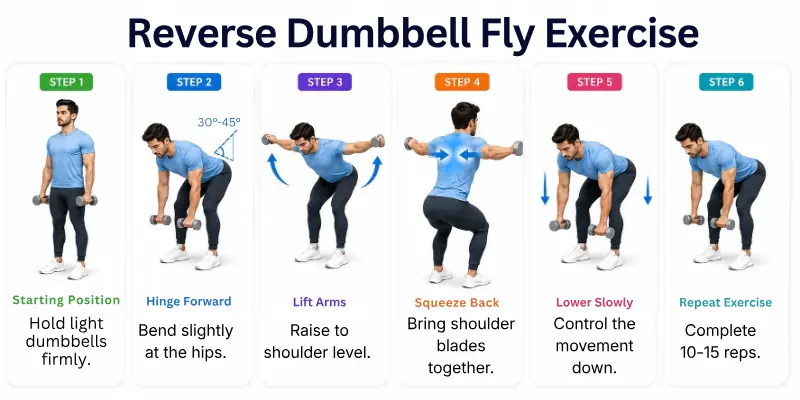
How To Perform:
- Hold light dumbbells in each hand, hinge slightly at the hips.
- Keep back straight, lift arms to the sides until level with shoulders.
- Squeeze shoulder blades together, then lower slowly.
- Repeat 10–15 times, 2–3 sets.
- Tip: Start with light weights to avoid strain.
Benefits:
- Strengthens the upper back and rear shoulders.
- Reduces slouching.
- Improves shoulder stability.
9. Hip Flexor Stretch
Tight hip flexors pull the pelvis forward, leading to poor posture. Stretching them improves alignment and relieves lower back stress.
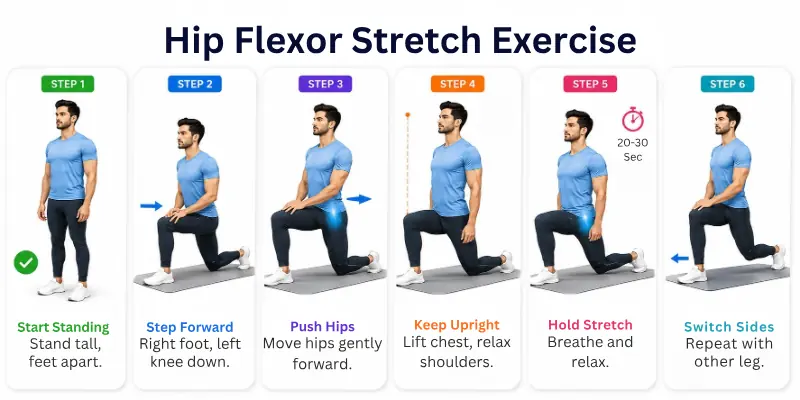
How To Perform:
- Step right foot forward into a lunge, left knee on the floor.
- Push hips forward gently, keeping chest upright.
- Hold 20–30 seconds, switch sides.
- Tip: Engage glutes and core to support the stretch.
Benefits:
- Opens tight hip flexors.
- Reduces anterior pelvic tilt.
- Supports upright posture and spinal alignment.
10. Child’s Pose
Child’s Pose is a yoga pose that stretches the neck, shoulders, and spine. After sitting for extended periods of time, it helps relieve tension and promotes relaxation instead.
How To Perform:
- Kneel on the floor, sit back on heels.
- Stretch arms forward, forehead toward the floor.
- Hold 30–60 seconds, repeat 2–3 times.
- Tip: Breathe deeply and relax muscles during the stretch.
Benefits:
- Stretches spine and shoulders.
- Reduces tension and stiffness.
- Enhances posture awareness and body alignment.
11. Bridge Pose
The glutes, lower back, and core are all strengthened by the bridge, which helps to support proper posture. Additionally, it stretches the flexors of the hips and chest.
How To Perform:
- Lie on your back, knees bent, feet flat.
- Lift hips, forming a straight line from knees to shoulders.
- Hold 15–30 seconds, lower slowly.
- Repeat 10–12 times.
- Tip: Engage glutes and core for maximum support.
Benefits:
- Strengthens posterior chain muscles.
- Improves hip and spine alignment.
- Supports upright posture while sitting or standing.
12. Standing Forward Fold
The tension in the neck, shoulders, and spine is helped to be released by this stretch. Furthermore, it enhances flexibility in the hamstrings, which helps to maintain proper pelvic alignment.
How To Perform:
- Stand tall, feet hip-width apart.
- Hinge at the hips, fold forward with knees slightly bent.
- Let head and arms hang naturally.
- Hold 20–30 seconds, repeat 2–3 times.
- Tip: Relax neck and shoulders completely.
Benefits:
- Stretches spine, shoulders, and hamstrings.
- Reduces stiffness from sitting.
- Encourages posture awareness and spinal elongation.
Tips To Improve Posture
When exercise is combined with healthy posture habits, the results are most beneficial. Patterns of movement, including sitting, standing, and movement, make a significant difference.
Helpful Tips:
- Keep feet flat on the floor and spine straight while sitting.
- Avoid hunching over phones or computers.
- Take short stretch breaks every 30–60 minutes.
- Strengthen core, upper back, and glutes regularly.
- Consider ergonomic chairs and desks for long-term support.
Final Note
In this guide, we have covered the best exercises to improve posture, including stretches, strengthening moves, and mobility exercises. As a posture expert, I emphasize consistency and awareness; practicing these daily gradually strengthens muscles and retrains your body for upright alignment.
Stay connected and explore more guides on this site for tips on spinal health, posture correction, and overall fitness.
FAQs
Here are some of the most commonly asked questions related to the best exercises to improve posture:
You can improve posture with daily stretches and strengthening exercises. Planks, wall angels, and chest openers are very effective. Paying attention to your body alignment also helps.
Yes, slouching or hunching can cause neck, shoulder, and back pain. Correcting your posture reduces stress on muscles and joints. Good posture helps your body feel better overall.
Daily practice of 15–30 minutes works best. Consistent effort gives noticeable results in 4–6 weeks. Short, frequent sessions are better than long, rare ones.
Stretching helps improve flexibility, but it is not enough. Strengthening your back and core muscles is essential for lasting posture improvement. Combining both gives the best results.
Yes, standing tall and keeping your body aligned improves your appearance. It also boosts confidence and helps you breathe better.
Yes, posture exercises are safe for beginners. Start slowly and increase time and intensity gradually. Listening to your body prevents strain or injury.
Most people notice improvements in 4–6 weeks with regular practice. Consistency is key. Progress may be faster if you combine strengthening, stretching, and awareness exercises.
Yes, using proper chair support and keeping correct alignment helps. Regular breaks to stretch and adjust your posture are important. Small changes during the day make a big difference.
Yes, yoga is great for posture. It improves flexibility, core strength, and body awareness. Combining yoga with posture exercises gives better results.
Yes, strengthening muscles that support the spine and stretching tight areas helps prevent back and neck pain. Regular practice reduces chronic pain and improves overall body comfort.






- Be Respectful
- Stay Relevant
- Stay Positive
- True Feedback
- Encourage Discussion
- Avoid Spamming
- No Fake News
- Don't Copy-Paste
- No Personal Attacks
- Be Respectful
- Stay Relevant
- Stay Positive
- True Feedback
- Encourage Discussion
- Avoid Spamming
- No Fake News
- Don't Copy-Paste
- No Personal Attacks
