Best Exercises for Diabetes: Natural Ways to Control Blood Sugar
Published: 20 Jul 2026
The best exercises for diabetes help control blood sugar naturally. Many people with diabetes find it hard to keep their sugar levels stable even with treatment. This often leads to tiredness and low energy in daily life.
Regular physical activity helps the body use insulin better and keeps glucose levels under control. Simple exercises like walking, cycling, and strength training can improve health without complicated routines.
In this article, you will learn easy and practical exercises that you can add to your daily life.
Best Exercises for Diabetes
Choosing the right exercises can help manage diabetes more effectively. Some workouts support better blood sugar control, while others improve strength, balance, and daily energy levels. The key is to stay active with exercises that fit your body and routine.
Below are some of the best workouts for diabetes you can start with.
- Walking
- Cycling
- Swimming
- Strength Training
- Yoga
- Pilates
- Tai Chi
- Interval Walking
- Stair Climbing
- Resistance Band Training
1. Walking
Walking is one of the simplest exercises for blood sugar control for people with diabetes. It keeps the body active, supports better circulation, and improves overall health without putting too much pressure on the joints. Regular walking may also help improve insulin sensitivity, making it easier for the body to use glucose efficiently.
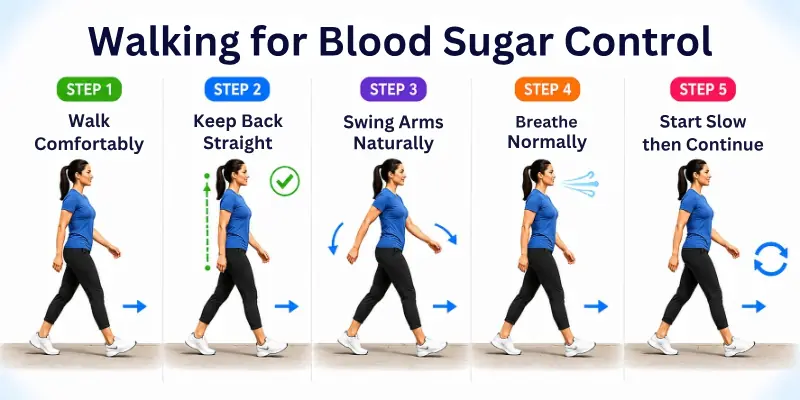
How to do it:
- Walk at a comfortable and steady pace
- Keep your back straight and shoulders relaxed
- Swing your arms naturally while walking
- Breathe normally during the walk
- Start slowly if you are new to a diabetes exercise routine
Benefits:
- Helps lower blood sugar levels
- Supports better insulin response
- Improves heart health
- Helps with weight management
- Increases daily energy levels
- A useful form of physical activity for diabetes
Duration: Walk for 20 to 40 minutes daily, at least 5 to 6 days a week. Beginners can start with shorter sessions and increase time gradually.
Tips: Wear comfortable shoes with proper support and stay hydrated during walks. Check your blood sugar before and after walking if needed.
2. Cycling
Cycling is a low-impact blood sugar control exercise that helps improve fitness and supports diabetes management. It is gentle on the joints and works mainly on the lower body. Regular cycling may help your muscles use glucose more efficiently, which can support healthy blood sugar levels. It is suitable for people of different fitness levels and can be done indoors or outdoors.
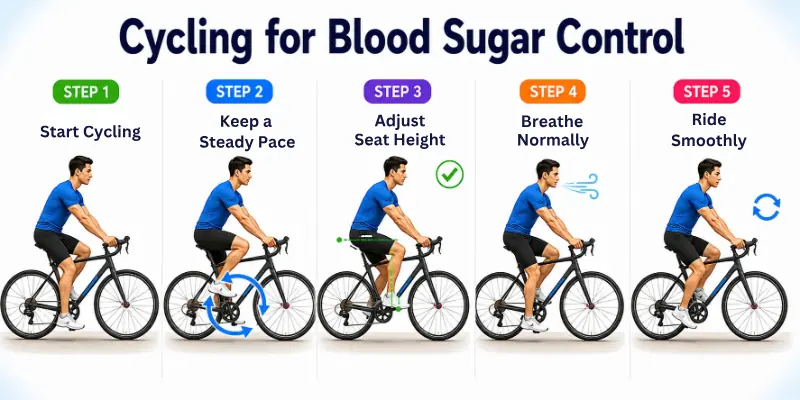
How to do it:
- Ride a bicycle on flat and safe roads or use a stationary bike
- Keep a steady and comfortable pace
- Adjust seat height for proper posture
- Keep breathing normally during cycling
- Start slow if you are new to a diabetes exercise routine
Benefits:
- Improves insulin response
- Helps control blood sugar levels
- Strengthens leg muscles
- Supports heart health
- Helps with weight management
Duration: Cycle for 20 to 30 minutes, 4 to 5 days a week. Beginners can start with shorter sessions.
Tips: Wear a helmet for safety and avoid uneven or crowded roads.
3. Swimming
Swimming is a full-body physical activity for diabetes that helps improve overall fitness without putting stress on joints. It is especially helpful for people who need low-impact exercise. The natural resistance of water allows you to work multiple muscle groups during each session. It is also a comfortable option for people with joint pain or excess body weight.
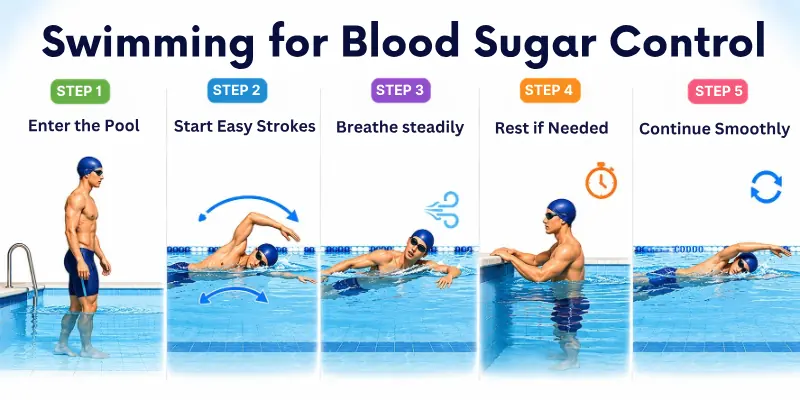
How to do it:
- Swim at a comfortable pace in a safe pool
- Use steady breathing while swimming
- Start with simple strokes like freestyle or backstroke
- Rest between sets if needed
- Begin slowly if you are following a diabetes exercise routine
Benefits:
- Helps lower blood sugar levels
- Improves full-body strength
- Supports heart and lung health
- Reduces pressure on joints
- Helps with weight control
Duration: Swim for 20 to 30 minutes, 3 to 4 days a week.
Tips: Do not swim alone and stay hydrated even if you are in water.
4. Strength Training
Strength training is a blood sugar control exercise that builds muscle and improves how the body uses insulin. It includes simple resistance movements with light weights or bands. As muscle mass increases, the body can use glucose more efficiently to produce energy. This type of exercise can be adjusted to match different fitness levels and gradually increased over time.
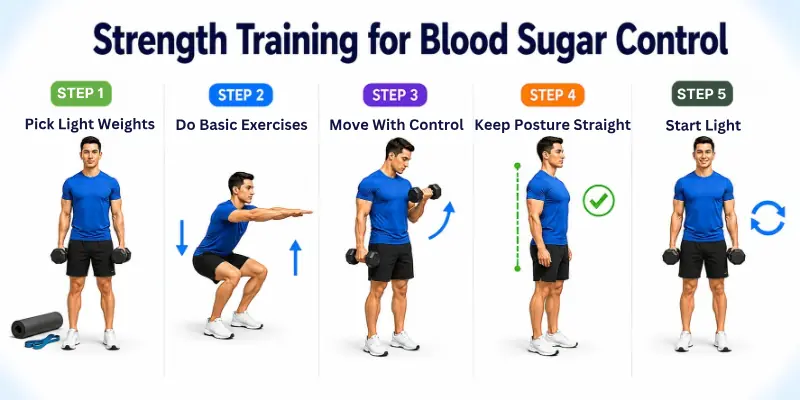
How to do it:
- Use light dumbbells or resistance bands
- Do basic moves like squats, wall push-ups, and bicep curls
- Keep movements slow and controlled
- Maintain proper posture during each exercise
- Start light if you are new to a diabetes exercise routine
Benefits:
- Improves insulin sensitivity
- Helps control blood sugar levels
- Builds muscle strength
- Supports weight management
- Improves metabolism
Duration: Do strength training for 20 to 30 minutes, 3 days a week.
Tips: Do not lift heavy weights in the beginning, and focus on correct form.
5. Yoga
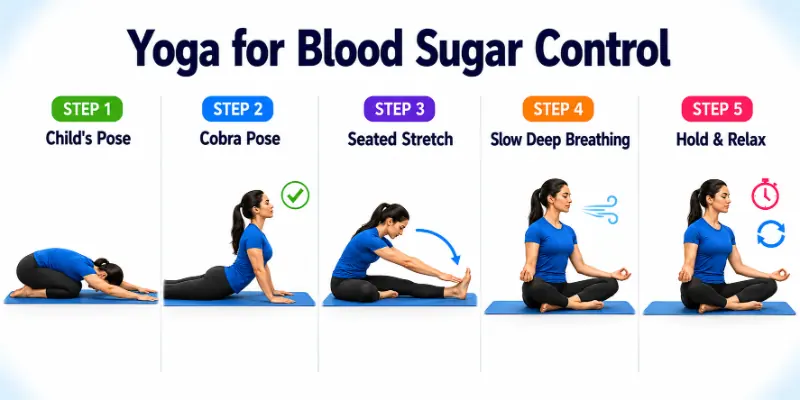
Yoga is a mind and body practice that works as a physical activity for diabetes. It combines body postures, breathing, and relaxation to support overall health. Regular yoga practice may help improve body awareness and encourage healthier daily habits. It is a gentle form of exercise that can be adapted to suit different ages and fitness levels.
How to do it:
- Practice simple yoga poses like the child’s pose, the cobra pose, and seated stretches
- Focus on slow and deep breathing
- Hold each pose for a few seconds
- Practice in a calm and quiet space
- Start with basic poses if you are new to a diabetes exercise routine
Benefits:
- Helps reduce stress levels
- Supports better blood sugar control
- Improves flexibility
- Boosts mental calmness
- Improves overall body balance
Duration: Practice yoga for 20 to 30 minutes daily or at least 4 to 5 days a week.
Tips: Do yoga on an empty stomach and avoid forcing your body into difficult poses.
6. Pilates
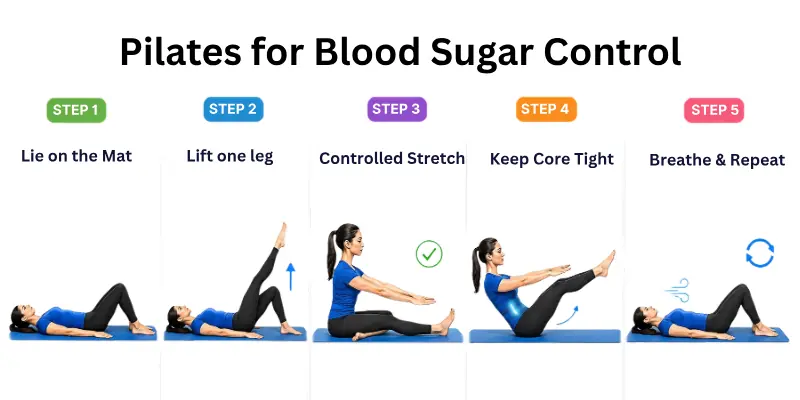
Pilates is a low-impact physical activity for diabetes that focuses on controlled movements. It strengthens the core and improves body control. Each movement is performed with careful technique, making it easier to develop better coordination over time. It is suitable for beginners and can be modified to match different fitness levels.
How to do it:
- Follow simple Pilates moves like leg lifts and controlled stretches
- Move slowly with focus on breathing
- Keep your core engaged during exercises
- Use a mat for support
- Start with a beginner-level routine if you are new to a diabetes exercise routine
Benefits:
- Improves core strength
- Supports better posture
- Helps with body balance
- Improves muscle control
- Supports overall fitness
Duration: Do Pilates for 20 to 30 minutes, 3 to 4 days a week.
Tips: Focus on slow movement and avoid rushing through exercises.
7. Tai Chi
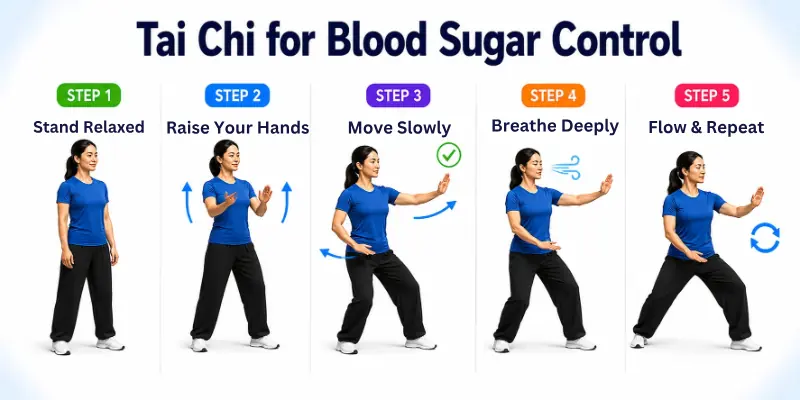
Tai Chi is a slow and gentle blood sugar control exercise that uses flowing movements. It helps improve balance and relax the body. The smooth movements place very little stress on the joints, making it a comfortable option for many adults. Regular practice may also improve coordination and make everyday movements feel easier.
How to do it:
- Stand in a relaxed position
- Perform slow, controlled hand and body movements
- Focus on deep breathing
- Move smoothly from one position to another
- Start with basic steps if you are new to a diabetes exercise routine
Benefits:
- Reduces stress levels
- Improves balance and stability
- Supports better blood sugar control
- Improves mental focus
- Helps relaxation
Duration: Practice Tai Chi for 15 to 30 minutes daily.
Tips: Practice in a quiet place and keep your movements slow and steady.
8. Interval Walking
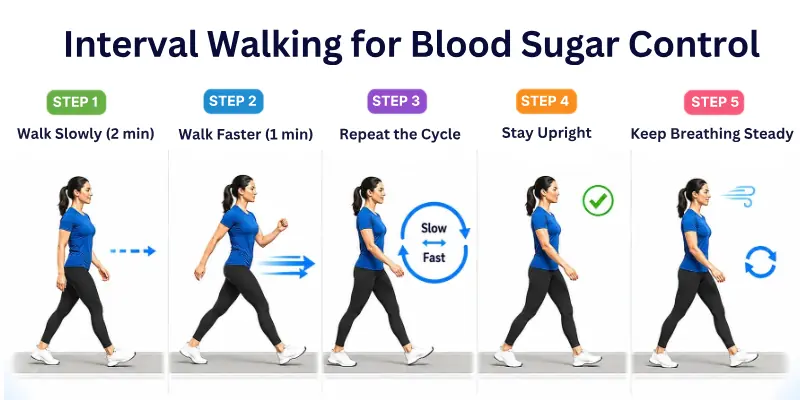
Interval walking is a blood sugar control exercise where you switch between slow and fast walking. It helps the body respond better to glucose. Changing your walking speed keeps the workout more engaging than walking at the same pace throughout. You can easily adjust the pace and intervals to match your fitness level and comfort.
How to do it:
- Start with slow walking for 2 minutes
- Increase to a fast walking pace for 1 minute
- Repeat this cycle throughout the session
- Keep your posture straight and your breathing steady
- Begin slowly if you are new to a diabetes exercise routine
Benefits:
- Improves blood sugar control
- Boosts metabolism
- Increases stamina
- Helps burn more calories
- Improves heart health
Duration: Do interval walking for 20 to 30 minutes, 4 to 5 days a week.
Tips: Do not rush into a fast pace. Increase intensity gradually.
9. Stair Climbing
Stair climbing is a simple physical activity for diabetes that uses body weight to improve strength and fitness. It can be done almost anywhere without the need for special equipment. The movement works several lower-body muscles at the same time, making it a practical choice for everyday physical activity.
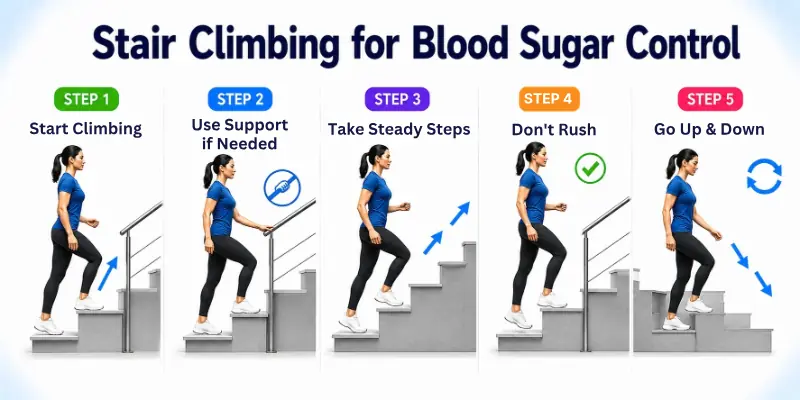
How to do it:
- Walk up and down stairs at a steady pace
- Hold support if needed for balance
- Keep steps controlled and safe
- Avoid rushing while climbing
- Start slow if you are following a diabetes exercise routine
Benefits:
- Strengthens leg muscles
- Improves heart health
- Helps control blood sugar levels
- Boosts stamina
- Supports weight management
Duration: Do stair climbing for 10 to 15 minutes daily.
Tips: Use hand support if needed and avoid slippery stairs.
10. Resistance Band Training
Resistance band training is a blood sugar control exercise that uses elastic bands to build strength safely at home. The bands provide steady resistance throughout each movement, helping muscles work effectively without placing excessive stress on the joints. They are lightweight, portable, and suitable for people with different fitness levels.
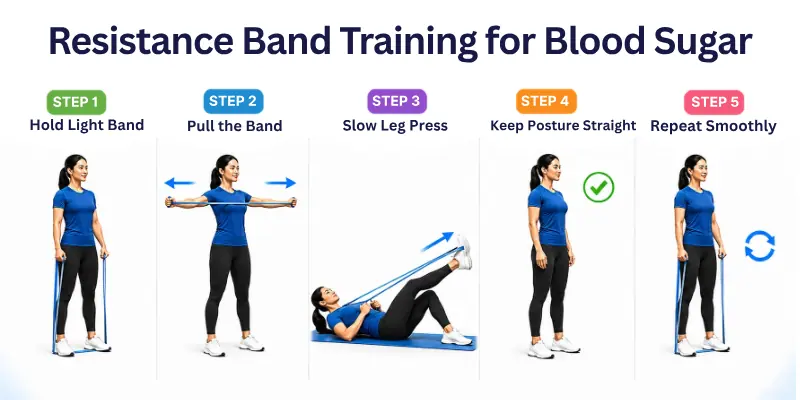
How to do it:
- Use a light resistance band
- Perform simple exercises like arm pulls and leg presses
- Keep movements slow and controlled
- Maintain proper posture
- Start with light resistance if you are new to a diabetes exercise routine
Benefits:
- Builds muscle strength
- Improves insulin sensitivity
- Supports metabolism
- Helps with weight control
- Improves overall fitness
Duration: Do resistance band training for 20 minutes, 3 days a week.
Tips: Do not use heavy resistance at the start and focus on form.
How Exercise Helps Diabetes
Exercise plays an important role in managing diabetes. It helps the body naturally control blood sugar and improves how insulin works. Regular movement also supports overall health and daily energy levels.
Let’s understand how exercise helps your body manage diabetes better.
- Lowers blood sugar levels: It helps the body use glucose as energy, which reduces sugar in the blood.
- Improves insulin sensitivity: It makes the body respond better to insulin, so sugar stays more balanced.
- Helps with weight control: It burns extra calories and helps maintain a healthy body weight.
- Supports heart health: It improves blood flow and reduces strain on the heart.
- Increases energy levels: It reduces tiredness and helps you feel more active during the day.
Conclusion
In this guide, we covered the best exercises for diabetes and how they help control blood sugar in a simple and natural way. Regular physical activity supports better insulin use, improves energy levels, and helps protect overall health.
The key is consistency. Small daily movement can bring real improvement over time. Choose simple exercises that fit your routine and stay active every day.
Next, check the FAQs section. It answers common questions that can help you understand diabetes exercise better.
FAQs
Here are some common questions people ask about exercises for diabetes. These answers will help you understand how to manage blood sugar with simple daily activities.
Here are the best exercises for diabetes to control blood sugar:
- Walking
- Cycling
- Swimming
- Strength training
These exercises help the body use glucose better. They also support long-term insulin sensitivity.
Yes, walking is one of the most effective physical activities for diabetes. It helps lower blood sugar naturally and supports heart health. A daily walk can improve overall energy levels.
Exercise plays a major role in diabetes management, but it works best with a healthy diet. Regular movement helps control blood sugar levels. Medical advice is also important for proper care.
The best time depends on your body, but morning and after-meal walks work well. After-meal activity helps reduce blood sugar spikes. Consistency matters more than timing.
Yes, strength training improves the use of glucose. It supports a better insulin response in the body. This makes blood sugar control easier over time.
Yes, home exercises for diabetes, like bodyweight workouts and resistance bands, are very effective. They improve fitness without needing a gym. They also help maintain a daily routine.
Most people benefit from 20 to 40 minutes of activity daily. This can include walking, cycling, or yoga. Regular movement supports stable blood sugar levels.
Yes, yoga helps reduce stress and supports better blood sugar control. It improves breathing and body flexibility. It is a gentle option for beginners.
No, exercise cannot fully replace medication. It supports treatment and improves overall health. Always follow your doctor’s advice.
Here are the key safety tips for diabetics during exercise:
- Check blood sugar before exercise
- Stay hydrated
- Wear proper footwear
- Avoid overexertion
- Stop if you feel dizzy or weak
Always listen to your body during physical activity.






- Be Respectful
- Stay Relevant
- Stay Positive
- True Feedback
- Encourage Discussion
- Avoid Spamming
- No Fake News
- Don't Copy-Paste
- No Personal Attacks
- Be Respectful
- Stay Relevant
- Stay Positive
- True Feedback
- Encourage Discussion
- Avoid Spamming
- No Fake News
- Don't Copy-Paste
- No Personal Attacks
