How Exercise Improves Mental Health: Boost Mood and Reduce Stress
Published: 21 Mar 2026
Exercise is not only good for your body but also powerful for your mind. When you work out, your brain releases chemicals that reduce stress, boost mood, and improve focus. From my experience, even a short daily walk or simple home exercise routine can lift your spirits and clear your mind. Exercise makes you feel more confident, energetic, and balanced in life.
In this guide, we will look at the mental health benefits of exercise and explain how regular activity can make your mind stronger and happier.
Let’s dig in!
How Exercise Improves Mental Health
So guys, here are the benefits listed for doing exercise to keep your mental health better:
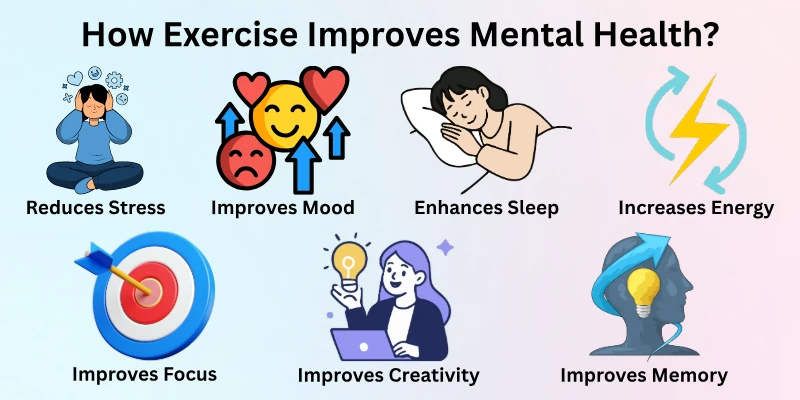
- Reduces Stress
- Improves Mood
- Boosts Self-Esteem
- Enhances Sleep
- Increases Energy
- Improves Focus
- Reduces Anxiety
- Reduces Depression
- Improves Memory
- Promotes Brain Health
- Encourages Social Interaction
- Boosts Motivation
- Enhances Resilience
- Improves Emotional Regulation
- Reduces Fatigue
- Increases Happiness
- Supports Cognitive Function
- Reduces Symptoms of ADHD
- Improves Creativity
- Increases Mindfulness
Let us go over all in detail.
1. Reduces Stress
Exercise helps your body release tension and relax muscles. It lowers stress hormones and makes you feel calmer. Regular activity reduces the effects of daily stress. Even light exercises like walking or stretching help.
- Take short breaks for quick exercises
- Try deep breathing with exercise
- Include stretching after workouts
2. Improves Mood
Working out triggers chemicals in your brain called endorphins. They make you feel happier and more positive. Exercise can lift your mood even on bad days. Daily activity helps keep your mind balanced.
- Try fun exercises like dancing
- Listen to music while working out
- Mix cardio and strength for variety
3. Boosts Self-Esteem
Exercise gives you a sense of achievement. Seeing your progress builds confidence. Strength training and completing goals improve self-worth. Regular activity makes you feel proud of your body and mind.
- Track small goals
- Celebrate milestones
- Focus on improvements, not perfection
4. Enhances Sleep
Exercise helps your body fall asleep faster and sleep better. Being active regulates your sleep cycle naturally. Better sleep improves mood and focus the next day. Regular exercise reduces insomnia and restlessness.
- Avoid heavy workouts right before bed
- Try morning or afternoon sessions
- Combine cardio with light stretching
5. Increases Energy
Exercise boosts blood flow and oxygen to your body and brain. You feel more energetic and alert. Even short workouts increase stamina. Being active daily keeps fatigue away.
- Take brisk walks during breaks
- Do light exercise to recharge
- Stay consistent for long-term energy
6. Improves Focus
Exercise improves blood flow to your brain. It sharpens attention and decision-making. Regular workouts help you concentrate on tasks better. Your memory and learning also improve.
- Do short focus workouts before study/work
- Mix cardio and strength for brain stimulation
- Take mini breaks to stay sharp
7. Reduces Anxiety
Working out helps calm your mind and reduce worry. Physical activity releases chemicals that ease nervous tension. It can reduce panic attacks and anxious thoughts. Exercise gives a sense of control over your body.
- Try yoga or breathing exercises
- Combine cardio with meditation
- Start slow and build gradually
8. Reduces Depression
Exercise releases feel-good hormones. It helps reduce symptoms of depression. Daily activity gives structure and positivity. It improves mood naturally over time.
- Start with light exercises
- Gradually increase intensity
- Pair workouts with social activities
9. Improves Memory
Exercise increases blood flow to the brain. It helps form new brain cells and connections. Memory, learning, and mental sharpness improve. Regular workouts can slow age-related cognitive decline.
- Include cardio for brain health
- Try coordination exercises
- Mix strength training for focus
10. Promotes Brain Health
Exercise supports overall brain function. It reduces inflammation and protects against diseases. Physical activity improves clarity and reaction time. Being active keeps your mind sharp.
- Include daily walks
- Do aerobic workouts
- Challenge your mind with learning exercises
11. Encourages Social Interaction
Group workouts or classes improve social connections. Meeting people while exercising reduces loneliness. Social support boosts mental health. Feeling connected improves mood.
- Join fitness classes
- Exercise with friends
- Participate in online fitness communities
12. Boosts Motivation
Exercise creates a sense of achievement. Completing workouts makes you motivated to tackle other tasks. Consistency in exercise builds discipline. Daily activity fuels goal-setting and focus.
- Set achievable goals
- Reward yourself for progress
- Keep a workout journal
13. Enhances Resilience
Regular activity helps you handle challenges better. Your mind becomes stronger against stress. Exercise teaches persistence. It builds mental toughness over time.
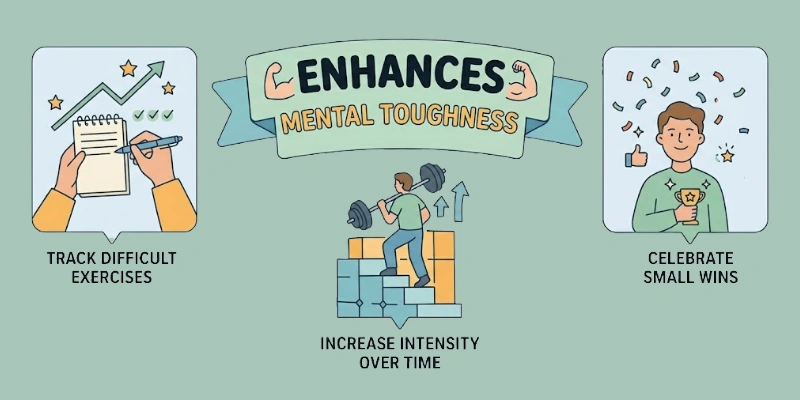
- Track difficult exercises
- Gradually increase intensity
- Focus on small wins
14. Improves Emotional Regulation
Exercise helps control mood swings. Physical activity balances chemicals in the brain. It reduces impulsive reactions. You feel calmer and more composed.
- Practice mindfulness while exercising
- Include stretching or yoga
- Pair with deep breathing
15. Reduces Fatigue
Exercise may seem tiring, but it actually increases stamina. Daily activity boosts overall energy levels. Less fatigue means more productivity. Active lifestyle keeps you awake and alert.
- Start with light workouts
- Gradually increase duration
- Stay consistent for long-term effect
16. Increases Happiness
Working out releases endorphins and dopamine. You feel naturally happier. Small achievements in exercise improve mood. Daily activity makes life more enjoyable.
- Try fun workouts
- Exercise outdoors
- Mix cardio and strength
17. Supports Cognitive Function
Exercise improves decision-making, problem-solving, and focus. Your brain works faster and better. It helps you stay sharp and alert. Physical activity supports mental clarity.
- Include aerobic exercises
- Do coordination drills
- Combine strength with cardio
18. Reduces Symptoms of ADHD
Exercise can improve attention and reduce restlessness. Physical activity helps manage energy levels. It can make daily tasks easier to handle. Exercise provides structure and routine.
- Short, frequent sessions work best
- Include movement breaks
- Mix fun and structured exercises
19. Improves Creativity
Exercise increases blood flow to the brain. You think more clearly and creatively. Regular workouts stimulate new ideas. It helps solve problems faster.
- Go for walks or runs
- Include dynamic movements
- Try new exercises for inspiration
20. Increases Mindfulness
Exercise helps you focus on the present moment. Mindful workouts reduce overthinking. You connect your body and mind. Daily practice improves awareness and calmness.
- Try yoga or tai chi
- Focus on breathing
- Avoid distractions during workouts
Final Note
In this guide, we have covered how exercise improves mental health, all the mental benefits, and ways to track progress. My advice is to start small, stay consistent, and enjoy the process. Even 20 minutes daily can make a big difference.
Stay active, keep your mind healthy, and enjoy your journey!
FAQs: Mental Health Benefits of Exercise
Here are some of the most commonly asked questions related to the mental benefits of exercise:
Yes, it can help. Exercise relaxes your mind. It makes your body feel lighter. It also answers can working out help anxiety in a simple way.
Yes, it can make you feel better. Daily movement reduces stress. It helps your brain release happy chemicals. This is one of the emotional and mental benefits of exercise.
Yes, you can. Simple home workouts burn calories. You only need consistency. This also supports working out and mental health because it improves confidence.
Many people feel fresh in the morning. Your body has more energy. It helps you start the day strong. It fits into mental health and physical exercise goals too.
You can start with 20 to 30 minutes. Even short sessions work. Just keep moving daily. This routine brings strong exercise psychological benefits.
Yes, they can help you sleep better. Exercise relaxes your body. It reduces stress at night. It is a simple form of gym for mental health without needing a real gym.
Yes, walking is great. It is easy for beginners. It is good for the heart. It also explains why is exercising good for mental health in a simple way.
Yes, you can. You do not need much space. Just use simple movements. It still supports working out and mental health.
No, not at all. You can use your body weight. Start slow and stay steady. This brings simple exercise psychological benefits.
Yes, it can. Exercise releases tension. It calms your mind. It improves mental health and physical exercise together.
Start with small goals. Track your progress. Celebrate little wins. This helps gym for mental health benefits too.
Yes, they can. Moving your body boosts blood flow. You feel active through the day. It also adds to your emotional and mental benefits of exercise.
Yes, short workouts work well. Even 10 minutes is helpful. Just stay consistent. It supports why is exercising good for mental health.
Yes, you can if you go easy. Choose light workouts on tired days. Listen to your body. It is good for working out and mental health routines.
Yes, stretching helps your muscles. It prevents pain. It makes your body flexible. It also brings simple exercise psychological benefits.
Yes, they can. You feel strong inside and outside. You see progress over time. This is part of mental health and physical exercise.
Yes, yoga is great. It is slow and calming. It improves balance. It works well for gym for mental health needs.
Yes, do light exercise. Try walking or stretching. It can refresh you. It builds emotional and mental benefits of exercise.
Yes, very much. Exercise reduces stress. It clears your thoughts. It clearly shows why is exercising good for mental health.
Yes, you can. Many beginner workouts are simple. You can follow videos. It still helps with working out and mental health improvement.






- Be Respectful
- Stay Relevant
- Stay Positive
- True Feedback
- Encourage Discussion
- Avoid Spamming
- No Fake News
- Don't Copy-Paste
- No Personal Attacks
- Be Respectful
- Stay Relevant
- Stay Positive
- True Feedback
- Encourage Discussion
- Avoid Spamming
- No Fake News
- Don't Copy-Paste
- No Personal Attacks
