Causes of Kidney Stones: Main Triggers, Risks & Prevention Guide
Published: 2 Oct 2026
Have you ever wondered why some people develop kidney stones while others do not? Kidney stones are hard deposits of minerals and salts that form inside the kidneys and can cause severe pain when they move through the urinary tract.
Although anyone can develop kidney stones, certain lifestyle habits, dietary choices, and medical conditions can increase the risk. Understanding what causes kidney stones is the first step toward preventing them.
In this article, we will explore the common causes of kidney stones and the factors that may increase the risk of developing them. After reading this article, you will have a better understanding of the factors that contribute to kidney stone formation and what may increase your risk.
Common Causes of Kidney Stone
Kidney stones can develop for many different reasons, and in most cases, more than one factor is involved. Certain lifestyle habits, dietary choices, and health conditions can increase the likelihood of stone formation. Understanding these causes can help you identify potential risk factors and take steps to protect your kidney health.
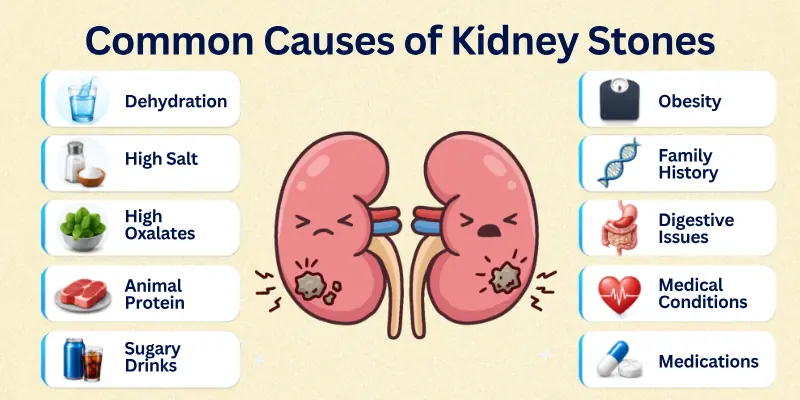
Here are some of the most common causes of kidney stones:
- Dehydration
- High Salt Intake
- Oxalate-Rich Foods
- Excess Animal Protein
- Sugary Foods and Drinks
- Obesity
- Family History
- Digestive Disorders
- Medical Conditions
- Medications and Supplements
Let’s explore each of these causes in more detail and understand how they can contribute to kidney stone formation.
1. Dehydration
Dehydration is one of the most common causes of kidney stones. It happens when the body does not get enough fluids to replace the water lost throughout the day.
When the body is dehydrated, the kidneys produce less urine. This makes it easier for minerals and salts to build up and form crystals. Over time, these crystals can grow into kidney stones.
- Reduces urine production
- Makes urine more concentrated
- Allows minerals to form crystals
- Supports stone growth
2. High Salt Intake
A diet high in salt can increase the risk of kidney stones. Many processed foods, fast foods, and packaged snacks contain large amounts of sodium, which can affect how the kidneys handle certain minerals.
When sodium intake is too high, the kidneys release more calcium into the urine. This extra calcium can combine with other substances and contribute to kidney stone formation over time.
- Excess sodium in the diet
- More calcium released into urine
- Common in processed foods
- Found in fast food meals
3. Oxalate-Rich Foods
Certain foods contain high amounts of oxalates, a natural compound found in plants. Common examples include spinach, beets, nuts, chocolate, and sweet potatoes.
Oxalates can combine with calcium in the urine and form crystals. Over time, these crystals may grow into kidney stones, especially calcium oxalate stones, which are the most common type.
- High levels of natural oxalates
- Common in several plant foods
- Found in spinach and beets
- Present in nuts and chocolate
- May increase stone risk
4. Excess Animal Protein
Eating too much animal protein may increase the risk of kidney stones. Common sources include red meat, poultry, fish, and eggs. Regularly consuming these foods in large amounts can affect the balance of certain substances in the urine.
A high intake of animal protein can increase uric acid levels and make urine more acidic. It may also lower citrate levels, which help prevent kidney stone formation.
- High levels of natural oxalates
- Found in spinach and nuts
- Present in chocolate and beets
- Can combine with calcium
- May increase stone risk
5. Sugary Foods and Drinks
Consuming large amounts of sugary foods and beverages may increase the risk of kidney stones. Soft drinks, energy drinks, sweetened juices, and foods high in added sugar are common sources of excess sugar in the diet.
High sugar intake can affect the way the body processes minerals and may increase the amount of certain substances in the urine that contribute to stone formation. Regular consumption of sugary drinks has also been linked to a higher risk of kidney stones.
- High intake of added sugars
- Common in sugary beverages
- Found in many processed foods
- Affects the body’s mineral balance
- May increase stone risk over time
6. Obesity
Obesity is a major risk factor for kidney stones. Excess body weight can affect how the body processes and removes waste products, which may increase the likelihood of stone formation.
People with obesity often experience changes in urine composition that create a favorable environment for kidney stones. The risk may be even higher when obesity is combined with other health conditions.
- Excess body weight and fat
- Changes normal urine composition
- Often linked to metabolic problems
- Can increase stone formation risk
7. Family History
Kidney stones can run in families. If a parent, sibling, or close relative has had kidney stones, your risk of developing them may be higher.
Certain genetic factors can affect how the body handles minerals and other substances in the urine. As a result, some people are naturally more likely to develop kidney stones.
- Kidney stones may run in families
- Family history increases the risk
- Genetic factors can play a role
- Risk may be inherited from relatives
8. Digestive Disorders
Certain digestive disorders can increase the risk of kidney stones. Conditions that affect digestion and nutrient absorption may change how the body processes minerals.
These changes can increase the amount of oxalate absorbed into the bloodstream and passed into the urine. As a result, the chances of kidney stone formation may increase.
- Affects nutrient absorption in the gut
- Can increase oxalate absorption
- Changes the balance of minerals
- May increase stone formation risk
9. Medical Conditions
Some health conditions can make kidney stones more likely to develop. These conditions may affect the levels of minerals, acids, or other substances in the urine.
Examples include gout, hyperparathyroidism, diabetes, and recurrent urinary tract infections. Each of these conditions can create an environment that supports kidney stone formation.
- Gout can raise uric acid
- Diabetes may increase stone risk
- Hyperparathyroidism affects calcium levels
- Recurrent infections can trigger stones
10. Medications and Supplements
Certain medications and supplements may increase the risk of kidney stones in some people. The risk depends on the type of medication, dosage, and how long it is used.
Some drugs can increase the amount of stone-forming substances in the urine, while certain supplements may affect mineral levels in the body.
- Calcium supplements in high amounts
- Excess vitamin D supplementation
- Some diuretic medications
- Certain antiviral drugs
- May increase stone-forming substances in urine
Risk Factors That Increase the Chance of Kidney Stones
Some factors can increase the likelihood of developing kidney stones even if they do not directly cause them. These risk factors can affect urine composition, increase mineral buildup, or make stone formation more likely over time.
Knowing these risk factors can help you understand your personal risk and take steps to reduce it. People with multiple risk factors may be more likely to develop kidney stones than others.
Here are some common risk factors for kidney stones:
- Age and Gender: Kidney stones are more common in adults and tend to affect men more often than women.
- Hot Climate and Excessive Sweating: Fluid loss through sweating can lead to more concentrated urine.
- Low Urine Output: Producing less urine allows minerals and salts to build up more easily.
- Previous History of Kidney Stones: People who have had kidney stones before are at a higher risk of developing them again.
- Poor Dietary Habits: Diets high in salt, sugar, and processed foods may increase the risk of stone formation.
Symptoms That May Occur With Kidney Stones
Kidney stones do not always cause symptoms, especially when they are small. In many cases, symptoms appear when a stone moves within the kidney or travels through the urinary tract.
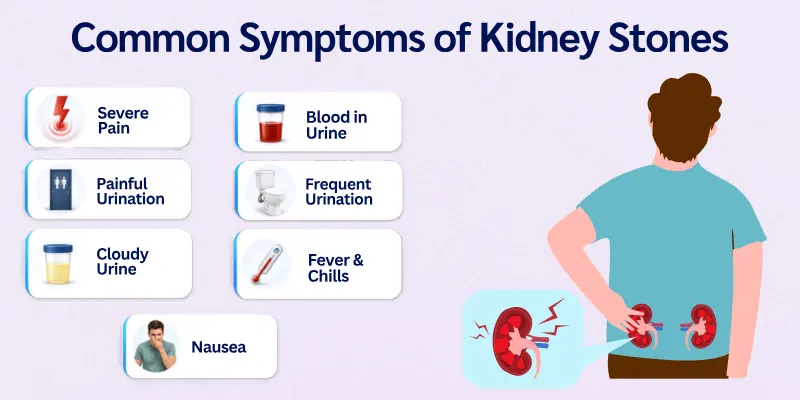
The signs can range from mild discomfort to severe pain, depending on the size and location of the stone. Recognizing these symptoms early can help you seek timely medical care.
Here are some common symptoms of kidney stones:
- Severe side or back pain
- Pain during urination
- Blood in urine
- Frequent urge to urinate
- Cloudy or foul-smelling urine
- Nausea and vomiting
- Fever and chills
For a complete guide, read our article on symptoms of kidney stones.
How to Prevent Kidney Stones
Making healthy lifestyle changes can help reduce the risk of kidney stones. Simple habits like drinking enough water, following a balanced diet, and staying active can support kidney health and prevent stone formation.
Prevention becomes even more important for people who have had kidney stones before or have other risk factors. A healthy routine, including proper hydration and nutritious food choices, can help protect kidney function and lower the chances of future stones.
Here are some effective ways to help prevent kidney stones:
- Stay Hydrated: Drinking enough water helps keep urine diluted and reduces mineral buildup.
- Limit Salt Intake: Reducing salty foods can help maintain healthy calcium levels in urine and lower stone risk.
- Eat Calcium-Rich Foods: Including the right amount of calcium-rich foods can help prevent excess oxalate buildup. Choosing the best foods for kidney health can support better kidney function.
- Reduce Animal Protein: Limiting high amounts of animal protein may help maintain a healthy urine balance.
- Maintain Healthy Weight: Keeping a healthy weight can reduce the risk of kidney stones.
- Manage Health Conditions: Proper management of health conditions can help prevent complications and reduce stone risk.
When Should You See a Doctor?
Most small kidney stones can pass on their own, but some cases need medical attention. Certain symptoms may indicate a larger stone, an infection, or a blockage in the urinary tract.
Seeking timely medical care can help prevent complications and ensure proper treatment. You should contact a healthcare professional if symptoms become severe or do not improve.
Here are some situations when you should see a doctor:
- Severe or Persistent Pain: Intense pain that does not improve or continues for a long time may require medical evaluation.
- Blood in Urine: Blood in the urine can be a sign that a stone is irritating the urinary tract.
- Fever or Chills: These symptoms may indicate an infection that needs prompt treatment.
- Difficulty Urinating: Trouble passing urine can happen when a stone blocks the urinary tract.
- Recurrent Kidney Stones: Recurrent kidney stones may require further evaluation to identify the underlying cause.
Conclusion
In this guide, we covered common causes of kidney stones, the factors that increase the risk, common symptoms, when to see a doctor, and practical ways to help prevent them. Understanding these factors can help you take better care of your kidney health.
Kidney stones can often be prevented by staying hydrated, following a balanced diet, and making healthy lifestyle choices. If you experience severe pain, blood in urine, or recurring stones, consult a healthcare professional for proper evaluation and treatment.
Frequently Asked Questions
Here are some common questions about the common causes of kidney stones and the factors that can increase the risk of stone formation.
Here are the main causes of kidney stones:
- Dehydration
- High Salt Intake
- Oxalate-Rich Foods
- Excess Animal Protein
- Certain Health Conditions
Yes, dehydration can increase the risk of kidney stones. Less water intake makes urine more concentrated. This allows minerals to form crystals more easily.
Here are some foods that may increase the risk:
- Salty snacks
- Spinach
- Nuts
- Chocolate
- Sugary drinks
- Red meat
- Processed foods
Yes, kidney stones can run in families. A family history of stones may increase your risk. Certain genetic factors can affect how your body handles minerals.
Stress does not directly cause kidney stones. However, it may affect habits like hydration and diet. These changes can increase the risk over time.
Frequent consumption of sugary sodas may increase the risk of kidney stones. High sugar content can affect urine composition. Drinking water is a better choice for kidney health.
People with low water intake, poor diet, or a family history are more likely to develop stones. Certain medical conditions can also increase the risk. Previous kidney stones make recurrence more likely.
Small kidney stones may pass naturally without treatment. Drinking enough fluids can help support this process. Larger stones may need medical treatment.
Here are some natural ways to prevent kidney stones:
- Drink enough water
- Limit salt intake
- Reduce excess sugar
- Avoid too much animal protein
- Maintain a healthy weight
- Eat a balanced diet
Seek medical help for severe pain, blood in urine, fever, or difficulty urinating. These symptoms may indicate complications. Repeated kidney stones also require medical evaluation.




- Be Respectful
- Stay Relevant
- Stay Positive
- True Feedback
- Encourage Discussion
- Avoid Spamming
- No Fake News
- Don't Copy-Paste
- No Personal Attacks
- Be Respectful
- Stay Relevant
- Stay Positive
- True Feedback
- Encourage Discussion
- Avoid Spamming
- No Fake News
- Don't Copy-Paste
- No Personal Attacks
