Home Remedies for Swollen Lips: Natural Ways to Reduce Swelling
Published: 25 Oct 2026
Have you woken up with a swollen lip and had no idea what caused it? Or maybe your lip became puffy after eating, getting injured, or using a new lip product. It can be uncomfortable and even a little worrying, especially if the swelling appears without warning.
In many cases, swollen lips are caused by a minor problem that can be managed at home. A cold compress, staying hydrated, and a few simple remedies may help reduce the swelling and ease discomfort. However, some cases need medical attention, especially if the swelling is severe or affects your breathing.
In this article, you will learn about the best home remedies for swollen lips, when they may help, and when it is time to see a doctor.
Best Home Remedies for Swollen Lips
Mild lip swelling often gets better with simple care at home. These swollen lip remedies may help reduce swelling, ease discomfort, and support healing. However, if you have trouble breathing, swelling of your tongue or throat, or signs of a severe allergic reaction, seek emergency medical care instead of trying home treatment.
Here are some effective remedies for swollen lips:
- Apply a Cold Compress
- Use Aloe Vera Gel
- Apply Honey
- Stay Hydrated
- Avoid Allergens and Irritating Products
- Apply Coconut Oil
- Use Petroleum Jelly
- Rinse With Salt Water for Minor Injuries
- Eat Soft, Cool Foods
- Use a Gentle, Fragrance-Free Lip Balm
- Protect Your Lips From Sun Exposure
- Stop Using Irritating Lip Products
- Use Baking Soda Paste
Let’s take a closer look at how each remedy may help reduce swollen lips and how to use it safely.
1. Apply a Cold Compress
A cold compress is one of the easiest ways to help reduce swollen lips. The cold temperature may help narrow blood vessels, lower inflammation, and provide relief from discomfort. It can also numb the area and reduce feelings of pain or tightness around the lips.
This remedy works best when swelling happens because of a minor injury, irritation, or insect bite. Using a cold compress soon after swelling starts may help prevent it from getting worse.
How to use it:
- Wrap a few ice cubes in a clean cloth or use a cold pack.
- Place it gently on the swollen area for 10 to 15 minutes.
- Repeat several times a day as needed.
- Avoid applying ice directly to your lips because it may irritate or damage the sensitive skin.
Tip: Use a clean cloth every time to prevent irritation or infection.
2. Use Aloe Vera Gel
Aloe vera gel may help soothe swollen lips by calming irritation and providing moisture to dry or irritated skin. Its cooling effect can reduce discomfort and make your lips feel more comfortable.
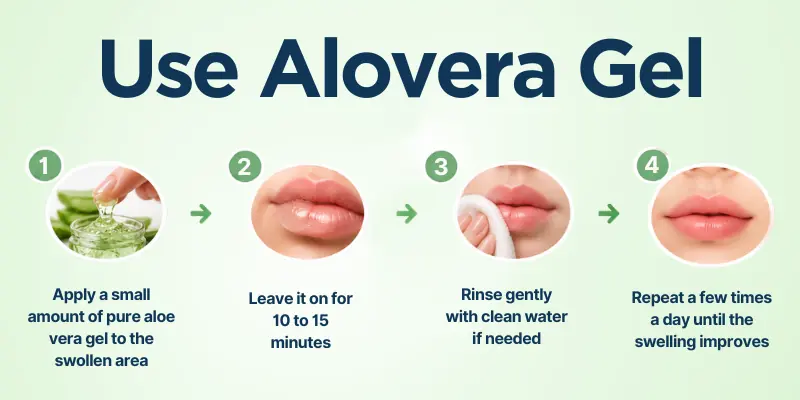
This remedy may work well when lip swelling happens because of dryness, mild irritation, or sun exposure. Use pure aloe vera gel without added fragrances or chemicals to avoid further irritation.
How to use it:
- Apply a small amount of pure aloe vera gel to the swollen area.
- Leave it on for 10 to 15 minutes.
- Rinse gently with clean water if needed.
- Repeat a few times a day until the swelling improves.
Tip: Do a small patch test before applying aloe vera if you have sensitive skin or have never used it before.
3. Apply Honey
Honey may help soothe swollen lips by reducing dryness and calming irritation. Its moisturizing properties can help keep the lips soft and may provide comfort when swelling happens because of chapping or mild irritation.
This remedy works best for dry, cracked, or irritated lips. Applying a small amount of pure honey can create a protective layer that helps lock in moisture and support the healing process.
How to use it:
- Apply a thin layer of pure honey to your swollen lips.
- Leave it on for 15 to 20 minutes.
- Rinse gently with clean water.
Tip: Choose plain honey without added flavors or ingredients. Avoid using honey if you have an allergy to honey or bee products.
4. Stay Hydrated
Dehydration can make your lips dry, cracked, and more prone to irritation, which may contribute to swelling. Drinking enough water helps keep your body hydrated and supports healthy skin, including the delicate skin on your lips.
Staying hydrated may be especially helpful if your swollen lips feel dry, tight, or uncomfortable. It also supports your body’s natural healing process and helps maintain moisture levels.
How to stay hydrated:
- Drink enough water throughout the day.
- Increase your fluid intake during hot weather or after exercise.
- Eat water-rich foods like watermelon, cucumber, and oranges.
Tip: Limit drinks that can contribute to dehydration, such as too much caffeine, when your lips feel dry or irritated.
5. Avoid Allergens and Irritating Products
Allergens and irritants can trigger lip swelling by causing an allergic reaction or skin irritation. Removing these triggers can help your lips recover and may prevent swelling from returning.
Common triggers include new lip products, certain foods, toothpaste, cosmetics, and skincare products. Avoiding these items can give your lips time to heal and reduce further irritation.
How to avoid allergens and irritants:
- Stop using any new product that may have caused lip swelling.
- Avoid foods or ingredients that trigger allergic reactions.
- Choose gentle, fragrance-free products for your lips.
Tip: If you cannot identify the cause, try changing one product at a time to find the possible trigger.
6. Apply Coconut Oil
Coconut oil may help soothe swollen lips by providing moisture and reducing dryness. Its moisturizing properties can help repair dry, cracked lips and make them feel softer and more comfortable.
This remedy may be useful when swelling happens because of dryness, chapping, or mild irritation. Coconut oil can create a protective barrier that helps prevent further moisture loss.
How to use it:
- Apply a small amount of pure coconut oil to your swollen lips.
- Leave it on and reapply when your lips feel dry.
Tip: Use plain coconut oil without added fragrances or ingredients to reduce the risk of irritation. Avoid using it if you have a coconut allergy.
7. Use Petroleum Jelly
Petroleum jelly can help swollen lips by locking in moisture and protecting the skin barrier. It may reduce dryness, cracking, and irritation that can make lips feel more swollen or uncomfortable.
This remedy works well when lip swelling is linked to dry or chapped lips. Applying petroleum jelly can keep the lips soft and prevent further moisture loss while they heal.
How to use it:
- Apply a thin layer of petroleum jelly to your swollen lips.
- Reapply when your lips feel dry or after eating and drinking.
Tip: Choose plain, fragrance-free petroleum jelly to avoid irritating sensitive lips.
8. Rinse With Salt Water for Minor Injuries
Salt water rinses may help keep the lips clean and reduce irritation when swelling happens because of a minor cut, bite, or small injury. Salt can help remove bacteria from the affected area and support a cleaner healing environment.
This remedy is only suitable for minor injuries inside or around the lips. It may not help swelling caused by allergies, severe irritation, or infections that need medical treatment.
How to use it:
- Mix a small amount of salt with warm water to make a mild solution.
- Gently rinse your mouth or affected area with the salt water.
- Repeat the rinse once or twice a day if needed.
Tip: Do not use a strong salt solution because it may cause more irritation to sensitive lips.
9. Eat Soft, Cool Foods
Eating soft and cool foods may help reduce discomfort when swollen lips feel painful, tender, or irritated. Cool foods can provide a soothing effect, while soft textures prevent extra pressure on swollen lips.
This remedy can be helpful after a minor lip injury, irritation, or when chewing feels uncomfortable because of swelling.
Foods to choose:
- Eat cool foods like yogurt, smoothies, and soft fruits.
- Choose soft meals that are easy to chew and do not irritate your lips.
- Avoid spicy, hot, or hard foods that may increase irritation.
Tip: Take small bites and avoid stretching your lips too much while eating.
10. Use a Gentle, Fragrance-Free Lip Balm
A gentle, fragrance-free lip balm can help soothe swollen lips by reducing dryness and protecting the skin from further irritation. Keeping your lips moisturized may help prevent cracking and discomfort while they heal.
This remedy is useful when swelling happens because of dry, chapped, or sensitive lips. Choosing the right lip balm can provide moisture without adding ingredients that may irritate your skin.
How to use it:
- Apply a thin layer of fragrance-free lip balm to your lips.
- Reapply throughout the day when your lips feel dry.
- Use it regularly to keep your lips moisturized and protected.
Tip: Avoid lip balms with fragrances, flavors, or irritating ingredients that may worsen swelling.
11. Protect Your Lips From Sun Exposure
Sun exposure can dry out and irritate the lips, which may make swelling and discomfort worse. Protecting your lips from harsh sunlight can help prevent dryness, peeling, and further irritation.
This remedy may be helpful if swollen lips are linked to sunburn or prolonged outdoor exposure. Keeping your lips protected helps maintain moisture and supports the healing process.
How to protect your lips:
- Apply a lip balm with SPF before going outdoors.
- Reapply sunscreen lip balm after eating, drinking, or spending long hours in the sun.
- Cover your lips with a scarf or seek shade during strong sunlight.
Tip: Choose a lip product made for sensitive skin and avoid products with fragrances if your lips are already irritated.
12. Stop Using Irritating Lip Products
Some lip products can trigger irritation, dryness, or allergic reactions that may cause swollen lips. Stopping the use of products that contain harsh ingredients can help your lips recover and prevent further discomfort.
Lipsticks, lip glosses, flavored lip balms, and other cosmetic products may contain fragrances or ingredients that irritate sensitive lips. Giving your lips a break allows the skin to heal naturally.
How to avoid irritation:
- Stop using new lip products if swelling appears after applying them.
- Choose fragrance-free and gentle lip products.
- Check product ingredients and avoid anything that has irritated you before.
Tip: Introduce new lip products one at a time so you can identify which product may be causing a reaction.
13. Use Baking Soda Paste
Baking soda paste may help soothe mild irritation or itching caused by minor insect bites or skin reactions around the lips. It can provide temporary relief, but it should be used carefully because baking soda may dry out or irritate sensitive lip skin.
This remedy is not suitable for all types of swollen lips. Avoid using it on cracked lips, open cuts, or if it causes burning or discomfort.
How to use it:
- Mix a small amount of baking soda with water to make a thin paste.
- Apply a small amount to the affected area for a short time.
- Rinse it off gently with clean water.
Tip: Stop using baking soda if your lips feel more irritated or dry after application.
Home Remedies to Avoid
Not every home remedy is safe for swollen lips. Some popular methods may irritate your lips, increase dryness, or make swelling worse, especially when your skin is already sensitive.
Using harsh ingredients or applying remedies incorrectly can delay healing and cause more discomfort. It is better to avoid these methods and choose gentle care options instead.
Here are some remedies you should avoid:
- Direct Ice: Applying ice directly can irritate or damage sensitive lip skin.
- Toothpaste: Toothpaste may contain ingredients that cause dryness, burning, or irritation.
- Lemon Juice: Lemon juice can increase dryness and make sensitive lips more irritated.
- Baking Soda: Frequent use can dry out lips and cause further irritation.
- Essential Oils: Undiluted oils may trigger skin reactions or worsen swelling.
- Hot Foods: Very hot foods and drinks can increase discomfort and irritation.
- Lip Picking: Picking or biting swollen lips can slow healing and increase infection risk.
Tips to Prevent Swollen Lips
Taking simple steps can help protect your lips from irritation, dryness, and other common causes of swelling. Good lip care habits can lower the chances of developing swollen lips and help keep your lips healthy.
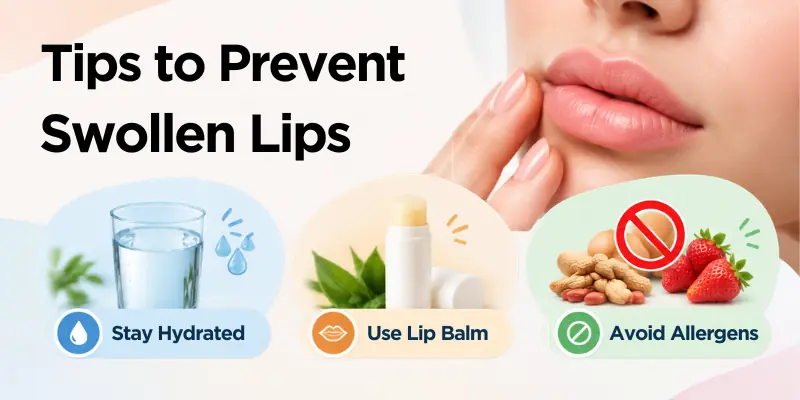
Small changes in your daily routine can make a big difference. Here are some simple ways to prevent swollen lips:
- Stay Hydrated: Drink enough water to prevent dry and cracked lips.
- Use Lip Balm: Apply a gentle lip balm to keep your lips moisturized.
- Avoid Allergens: Stay away from foods or products that trigger lip reactions.
- Use SPF Lip Balm: Protect your lips from sun damage and dryness.
- Check Ingredients: Read cosmetic labels to avoid irritating ingredients.
- Avoid Lip Licking: Frequent licking can dry out and irritate your lips.
- Maintain Oral Hygiene: Keep your mouth clean to reduce the risk of infections.
- Protect Lips During Sports: Use proper protection to prevent lip injuries.
- Treat Cold Sores Early: Early care can help reduce discomfort and prevent worsening symptoms.
When to See a Doctor
Most cases of swollen lips improve with simple home care, especially when caused by minor irritation, dryness, or small injuries. However, some symptoms may point to a more serious problem that needs medical attention.
Seek medical help if your swelling is severe, does not improve, or appears with other concerning symptoms. Getting treatment at the right time can help prevent complications.
See a doctor if you experience:
- Difficulty Breathing: Swelling that affects breathing may be a sign of a serious allergic reaction.
- Fast-Spreading Swelling: Rapidly increasing swelling needs prompt medical evaluation.
- Tongue or Throat Swelling: Swelling in these areas can affect your airway.
- Severe Pain: Intense pain may indicate a deeper injury or infection.
- Fever: Fever with lip swelling may suggest an infection.
- Pus: Pus or discharge can be a sign of a bacterial infection.
- Deep Lip Injury: Cuts that may need stitches require professional care.
- Long-Lasting Swelling: Swelling that lasts more than 48 to 72 hours should be checked by a doctor.
- Repeated Swelling: Frequent unexplained episodes may need further evaluation.
Conclusion
In this guide, we covered the common home remedies for swollen lips, including using a cold compress, aloe vera gel, honey, hydration, and other simple care methods that may help reduce swelling and discomfort. We also discussed remedies to avoid, ways to prevent swollen lips, and signs that show when you should seek medical help.
Most mild cases of swollen lips improve with gentle care and avoiding possible triggers. However, if swelling becomes severe, spreads quickly, or comes with breathing problems, tongue or throat swelling, it is important to get medical attention.
Taking care of your lips with proper hydration, gentle products, and healthy habits can help prevent future irritation and swelling.
Frequently Asked Questions
If you still have questions about home remedies for swollen lips, these answers may help clear up common concerns.
1. Can swollen lips heal on their own?
Yes, mild swollen lips can often heal on their own, especially when caused by minor irritation, dryness, or a small injury. Avoiding triggers and using gentle care can help the swelling improve. Most cases start getting better within a short time when the cause is removed.
2. What is the fastest home remedy for swollen lips?
A cold compress is one of the quickest ways to help reduce swollen lips. It can provide fast relief by calming irritation and lowering discomfort.
- Apply a cold compress to the swollen area.
- Wrap ice in a clean cloth before using it on your lips.
- Use it for 10 to 15 minutes at a time.
- Repeat a few times a day as needed.
- Use it soon after swelling begins for better relief.
3. Can dehydration cause swollen lips?
Yes, dehydration can make your lips dry, cracked, and irritated, which may contribute to swelling. Drinking enough water helps maintain moisture and supports healthy lips. Keeping your body hydrated may also prevent future dryness and irritation.
4. Is ice good for swollen lips?
Ice can help reduce swelling, but it should not be applied directly to the lips. Wrap ice in a clean cloth before using it to avoid skin irritation. A cold compress is a safer option because it protects the sensitive skin of your lips.
5. Should I pop a swollen lip?
No, you should not pop or squeeze a swollen lip. Doing so can cause more irritation, delay healing, and increase the risk of infection. Allow your lips to heal naturally and avoid touching the swollen area.
6. Which foods should I avoid with swollen lips?
Certain foods can irritate swollen lips and increase discomfort, especially when your lips are sensitive or inflamed. Avoiding these foods can help your lips heal more comfortably.
- Spicy Foods: May cause burning and increase irritation.
- Very Hot Foods and Drinks: Can worsen discomfort and sensitivity.
- Salty Foods: May dry out lips and cause more irritation.
- Acidic Foods: Foods like citrus fruits may sting sensitive lips.
- Allergy-Triggering Foods: Avoid any food that you know causes an allergic reaction.
7. Can allergies cause swollen lips overnight?
Yes, allergic reactions can cause swollen lips that appear suddenly, including during the night. Common triggers include certain foods, medications, or products. If swelling happens with breathing problems or throat swelling, seek medical help immediately.
8. How do I know if my swollen lip is serious?
A swollen lip may need medical attention if it appears with other warning signs. These symptoms can indicate a more serious condition that requires prompt care.
- Difficulty Breathing: May indicate a severe allergic reaction that affects your airway.
- Tongue or Throat Swelling: Can make breathing difficult and needs urgent medical attention.
- Severe Pain: May point to a serious injury or infection.
- Fever: Can be a sign of an infection.
- Pus or Discharge: May indicate a bacterial infection.
- Rapid Swelling: Swelling that spreads quickly needs medical evaluation.





- Be Respectful
- Stay Relevant
- Stay Positive
- True Feedback
- Encourage Discussion
- Avoid Spamming
- No Fake News
- Don't Copy-Paste
- No Personal Attacks
- Be Respectful
- Stay Relevant
- Stay Positive
- True Feedback
- Encourage Discussion
- Avoid Spamming
- No Fake News
- Don't Copy-Paste
- No Personal Attacks
