Causes of Eyelash Loss: Why Are Your Lashes Falling Out
Published: 30 Oct 2026
You wake up, look in the mirror, and notice something odd. A few extra lashes on your pillow. A spot near your lash line that looks thinner than last month. You start to wonder if this is normal or if something is wrong. Why are my eyelashes falling out? Is this a normal part of the cycle, or a sign of something else?
Eyelash loss confuses a lot of people because lashes are small and easy to miss. Most people talk about hair loss on the head, but not about lashes. Losing lashes can happen for many reasons, from small daily habits like rubbing your eyes to health problems you might not expect.
In this guide, we will cover causes of eyelash loss, whether lashes grow back, when to see a doctor, and answers to the most common questions people ask about this topic.
Let’s start by looking at why lashes fall out in the first place.
Causes of Eyelash Loss
Eyelash loss can happen for many reasons. Some causes are simple habits that you can fix on your own. Others are health problems that need a doctor’s help. Knowing which one fits your case helps you know what to do next.
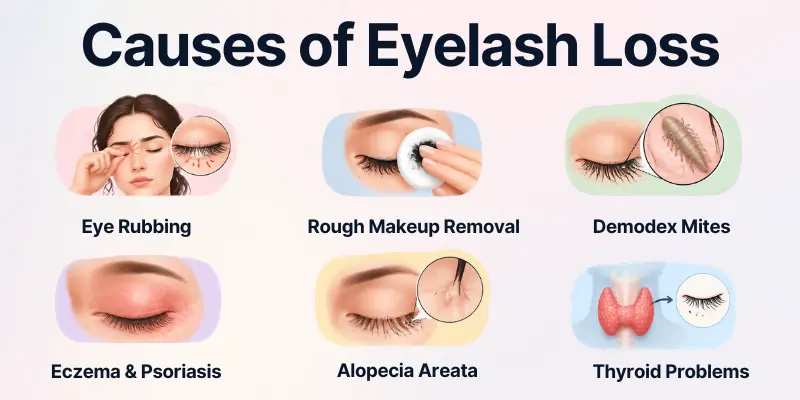
Below is a full list of the most common and less common reasons for eyelash loss. Keep reading to see which one matches what you’re going through.
- Eye Rubbing
- Rough Makeup Removal
- Eyelash Extensions and Curlers
- Allergic Reactions
- Blepharitis
- Demodex Mites
- Eczema and Psoriasis
- Styes and Chalazia
- Trichotillomania
- Alopecia Areata
- Thyroid Problems
- Hormone Changes
- Chemotherapy and Medicines
- Nutrient Deficiencies
- Ongoing Stress
- Aging
- Rare Causes
Now let’s look at each of these causes one by one.
1. Eye Rubbing
Rubbing your eyes feels harmless, but it puts real strain on your lash roots. If you deal with allergies, tiredness, or dry eyes, you might rub your eyes many times a day without even noticing. Over time, that rubbing pulls lashes out before they are ready to fall out on their own.
This habit is often linked to other problems too. People who deal with common causes of eye strain tend to rub their eyes more, and that turns into a cycle.
Common triggers that lead to a lot of eye rubbing include:
- Allergies that happen all year or in certain seasons
- Dry eyes from too much screen time
- Feeling tired or not getting enough sleep
- Irritation from contact lenses
- Dust or things in the air that bother your eyes
2. Rough Makeup Removal
Scrubbing your eyes to remove mascara or eyeliner does more harm than most people think. Waterproof makeup is the biggest problem since it needs more force to take off. That extra pulling and rubbing weakens your lash roots.
Using a gentle, oil-based remover with a light touch protects your lashes. This is one of the easiest causes of eyelashes falling out to fix, since it’s fully in your control.
Common habits that damage lashes while removing makeup include:
- Scrubbing with dry cotton pads
- Pulling hard to remove waterproof mascara
- Sleeping without taking off eye makeup
- Rubbing the eyes to get rid of smudged liner
- Using harsh removers with alcohol in them
3. Eyelash Extensions and Curlers
Extensions look nice, but the glue used to put them on can weaken your natural lashes over time. The bigger problem happens when you take them off. Peeling extensions off instead of letting them come off on their own often pulls out healthy lashes too.
Curlers cause the same kind of harm when used too often or with too much force. Heated curlers make it worse, since heat adds even more stress to lashes that are already weak.
Common risk factors linked to extensions and curlers include:
- Peeling off extensions instead of letting them fall on their own
- Using heated curlers too often
- Pressing too hard while curling
- Using cheap or low-quality lash glue
- Wearing extensions for too long without a break
4. Allergic Reactions
Your eyes are sensitive, and eye makeup or lash glue can cause an allergic reaction without warning. Mascara, eyeliner, and false lash glue all have ingredients that some people react to, even after using the same product for years.
If you see redness, itching, or swelling along with a lot of eyelash loss, an allergy might be the cause.
Common symptoms of an eye allergy include:
- Redness around the eyelid
- Itching or a burning feeling
- Swelling near the lash line
- Watery or irritated eyes
- Flaky skin close to the lashes
5. Blepharitis
Blepharitis happens when the oil glands near your lash line get blocked, which causes ongoing swelling. Blepharitis is a common eyelid condition that can contribute to eyelash loss.
This condition tends to keep coming back, even after treatment. Taking care of it usually means keeping your eyelids clean and sometimes using drops or ointments from a doctor.
Common symptoms of blepharitis include:
- Crusting at the base of the lashes
- Redness along the edge of the eyelid
- Itching or a gritty feeling in the eye
- Flaky skin near the lash line
- Eyelids that stick together after sleep
6. Demodex Mites
Tiny mites live naturally in your hair roots, including your eyelashes. In most people, they cause no problems at all. But when there are too many of them, they cause swelling that leads to lash loss and irritation.
This cause often overlaps with blepharitis, since both affect the same part of the eyelid. A doctor can check for mites during an eye exam if home care isn’t helping.
Common symptoms of a mite overgrowth include:
- Itching at the base of the lashes
- Redness along the eyelid
- A gritty or irritated feeling in the eye
- Flaky or crusty skin near the roots
7. Eczema and Psoriasis
When eczema or psoriasis flares up on your eyelids, the dryness and flaking that follows can seriously harm your lash line. These conditions cause the skin to swell up, which affects the roots underneath. People with ongoing skin conditions may notice eyelid swelling and lash thinning at the same time.
Common symptoms of eczema or psoriasis on the eyelid include:
- Dry, flaky skin near the lash line
- Redness or swelling on the eyelid
- Itching or a burning feeling
- Thick or scaly patches of skin
8. Styes and Chalazia
A stye is a painful bump caused by a blocked oil gland, while a chalazion is a similar bump that usually doesn’t hurt. Both can form right at the base of your lashes, which affects the roots in that spot.
Most styes and chalazia go away on their own within a few weeks. During that time, you may notice sudden eyelash loss in that one area.
Common signs of a stye or chalazion include:
- A visible bump on the eyelid
- Pain or soreness near the bump (stye)
- Mild swelling with little or no pain (chalazion)
- Redness around the area
9. Trichotillomania
Trichotillomania is a condition where a person feels the urge to pull out their own hair, including eyelashes, often without fully realizing they’re doing it. It’s a mental health condition that’s often linked to stress, worry, or tension.
Unlike other causes on this list, this one isn’t about damage from an outside source. The pulling itself is the direct cause. Treatment usually means talking to a therapist rather than changing a skincare routine.
Common triggers linked to trichotillomania include:
- Anxiety or emotional stress
- Boredom or feeling restless
- Tension that builds up during the day
- Certain routines, like reading or watching TV
10. Alopecia Areata
Alopecia areata is a condition where your body’s immune system mistakenly attacks your own hair roots. It can cause patchy hair loss anywhere on the body, including sudden and complete loss of eyelashes on one or both eyes.
This condition is hard to predict. Some people’s hair grows back within months, while others deal with it for longer. There’s no cure, but some treatments can help hair grow back faster.
Types of alopecia that can affect eyelashes include:
- Alopecia areata, which causes patchy hair loss
- Alopecia totalis, which affects the whole scalp
- Alopecia universalis, which affects hair all over the body
11. Thyroid Problems
Your thyroid controls a lot more than most people realize, including how your hair grows. Both an underactive thyroid and an overactive thyroid can throw off your normal lash growth, which is one of the common causes of thinning eyelashes that often goes unnoticed for months.
Doctors sometimes find a thyroid problem before the patient even realizes their thyroid is the cause. If you’re dealing with tiredness, weight changes, or dry skin along with thinning lashes, it’s worth asking your doctor for a thyroid test.
Common symptoms that show up along with thyroid-related lash loss include:
- Feeling tired all the time
- Weight changes you can’t explain
- Dry skin
- Feeling too hot or too cold easily
- Thinning hair on the scalp
12. Hormone Changes
Pregnancy, menopause, and other big hormone changes can shift your hair growth in ways you don’t expect. Some people notice thicker lashes during pregnancy, while others notice shedding once hormone levels change again after giving birth.
Menopause works similarly, since lower estrogen levels affect hair growth all over the body, not just on the head.
Common life stages linked to hormone-related lash shedding include:
- Pregnancy
- The time right after giving birth
- Perimenopause and menopause
- Starting or stopping birth control
13. Chemotherapy and Medicines
Chemotherapy targets fast-growing cells in the body, and hair roots are one of them. This is why cancer treatment often causes eyelash loss along with hair loss on the head, though lashes usually grow back once treatment ends.
Some everyday medicines can cause a similar side effect. Blood thinners, some cholesterol medicines, and certain retinoid treatments have all been linked to thinning lashes in a small number of people.
Common medicines linked to eyelash thinning include:
- Chemotherapy drugs
- Blood thinners
- Certain cholesterol medicines
- Some retinoid-based treatments
14. Nutrient Deficiencies
Your lashes need the same nutrients as the rest of your hair to grow well. Low levels of biotin, zinc, protein, or iron can weaken hair roots all over your body, including the ones that grow your lashes.
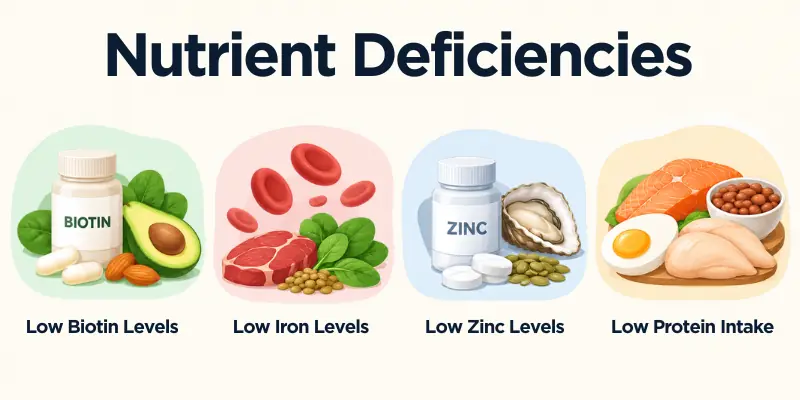
Eating foods that support healthy hair, including the best foods for healthy hair, gives your hair roots what they need to stay strong. A blood test can check if a deficiency is really the cause before you start taking any supplements.
Common nutrient deficiencies linked to lash loss include:
- Low biotin levels
- Low iron levels
- Low zinc levels
- Low protein intake
15. Ongoing Stress
Long periods of stress can push hair roots into a resting phase earlier than normal. This is called telogen effluvium. It doesn’t just affect the hair on your head. Eyelashes follow the same cycle and can shed more than usual during stressful times.
The tricky part is timing. Stress-related shedding often shows up weeks or months after the stressful time has already passed, so it’s easy to miss the connection. Managing stress and cutting down on common causes of eye strain can help your lashes return to their normal cycle.
Common causes of stress that may contribute to eyelash loss include:
- Emotional stress
- Ongoing anxiety
- Big life changes
- Illness or surgery
- Lack of sleep
- Stress from work or family
16. Aging
Just like the hair on your head, eyelashes naturally slow down as you get older. Lashes may become thinner, shorter, and more spread out over the years, even without any health problem involved.
This happens slowly, so most people don’t notice it until they compare old photos to how their lashes look now.
Common age-related changes to eyelashes include:
- Thinner lash strands
- Slower regrowth after normal shedding
- Shorter lash length overall
- A slow, steady rate of thinning
17. Rare Causes
A small number of eyelash loss cases come from more serious or rare problems. Skin cancer on the eyelid can affect nearby hair roots, and lash loss in one spot is sometimes the first sign patients notice.
Fungal infections along the lash line, though rare, can also look like blepharitis, which sometimes delays the right diagnosis. Any sudden, unexplained, or one-sided lash loss should be checked by a doctor to rule these out.
Rare but serious causes of eyelash loss include:
- Skin cancer on the eyelid
- Fungal infections along the lash line
- Injury or burns near the eyelid
- Scarring that damages the hair root
How the Eyelash Growth Cycle Works
Knowing how your lashes grow makes it easier to tell normal shedding apart from a real problem. Every lash goes through clear stages before it falls out and gets replaced by a new one. This cycle repeats every six to ten weeks on average.
Knowing which stage a lash is in helps explain why some causes lead to slow thinning while others cause sudden, noticeable loss. Here’s a quick look at each stage.
- Anagen (growth stage): The active phase when the eyelash grows and becomes longer.
- Catagen (transition stage): A short phase when eyelash growth slows and then stops.
- Telogen (resting stage): The phase when the eyelash rests before it eventually sheds.
- Shedding: The old eyelash falls out, allowing the growth cycle to begin again.
Do Eyelashes Grow Back?
Once you know what’s causing your lash loss, the next question is almost always whether they’ll grow back. The answer depends a lot on the cause, and most cases are temporary, not permanent. The chances of regrowth depend mainly on the cause and whether the eyelash follicle has been damaged.
Here’s a simple breakdown based on the most common types of causes.
- Habit-Related Damage: Grows back once the habit, like rubbing or rough removal, stops
- Medical Treatment: Grows back a few weeks after chemotherapy or medicine changes end
- Immune System Conditions: Regrowth varies and may need treatment to help it along
- Root Damage: Loss may be permanent if the hair root itself was destroyed by injury or scarring
When to See a Doctor
Not every case of lash loss needs a doctor’s visit, but some signs should not be ignored. Catching a problem early usually means a faster and easier recovery.
Book an appointment if you notice any of the following along with your lash loss.
- Sudden Loss: Lashes disappearing quickly instead of thinning slowly
- Bald Patches: Missing spots along the lash line instead of even shedding
- Redness or Swelling: Signs of infection or irritation at the base of the lashes
- No Regrowth: Lashes that stay missing for several weeks with no sign of coming back
- Other Symptoms: Tiredness, weight changes, or bulging eyes happening at the same time
Final Thought
In this guide, we covered the main causes of eyelash loss, from everyday habits and eyelid conditions to health problems, medications, and aging. We also looked at how eyelashes grow, whether they can grow back, and when lash loss may need medical attention.
Understanding the possible cause can help you take the right steps to protect your lashes and support healthy regrowth. If your eyelash loss is sudden, patchy, or persistent, talk to a doctor to find the underlying cause and get the right treatment.
FAQs About Reasons for Eyelash Loss
Here are answers to some of the most common questions people ask about causes of eyelash loss.
1. Why do my eyelashes keep falling out?
Ongoing eyelash loss is usually caused by a repeated habit, like eye rubbing or rough makeup removal, or a health condition like blepharitis or a thyroid problem. If the shedding keeps going for more than a few weeks, it’s worth getting checked.
2. What causes eyelash loss suddenly?
Common causes of sudden eyelash loss include:
- Alopecia areata
- A severe allergic reaction
- An infection near the lash line
- A stye or chalazion
- Trichotillomania
3. Can stress cause eyelash loss?
Yes. Ongoing stress can push hair roots, including eyelashes, into a resting stage earlier than normal. This often shows up as shedding weeks after a stressful time has already passed.
4. Do eyelashes grow back after falling out?
In most cases, yes. As long as the hair root itself isn’t damaged, eyelashes can grow back after temporary loss, but the timing varies depending on the cause and the condition of the follicle.
5. Is a lot of eyelash loss a sign of a health problem?
It can be. Conditions like thyroid problems, alopecia areata, and nutrient deficiencies often show up as a lot of eyelash loss before any other signs appear. A doctor can help confirm if a health problem is behind it.
6. Can vitamin deficiency cause eyelash loss?
Yes. Low levels of biotin, iron, zinc, or protein can weaken hair roots throughout your body, including the ones that grow your eyelashes. A blood test can check if a deficiency is the real cause before you start taking supplements.
7. Is eyelash loss normal during pregnancy?
It can be. Hormone changes during pregnancy and after giving birth often affect hair growth all over the body, including the eyelashes. This type of shedding is usually temporary and settles down once hormone levels stabilize.
8. What causes eyelashes to thin out slowly over time?
Slow, gradual thinning is usually linked to aging, mild nutrient deficiencies, or long-term habits like rough makeup removal. Unlike sudden lash loss, this type of thinning happens over months or years rather than all at once.
9. How do I know if my eyelash loss needs medical attention?
It’s not always easy to tell on your own, but a few clear signs point to seeing a doctor. Signs that your eyelash loss needs medical attention include:
- Sudden loss instead of slow thinning
- Bald patches along the lash line
- Redness or swelling near the lashes
- No regrowth after several weeks
- Other symptoms, like fatigue or weight changes




- Be Respectful
- Stay Relevant
- Stay Positive
- True Feedback
- Encourage Discussion
- Avoid Spamming
- No Fake News
- Don't Copy-Paste
- No Personal Attacks
- Be Respectful
- Stay Relevant
- Stay Positive
- True Feedback
- Encourage Discussion
- Avoid Spamming
- No Fake News
- Don't Copy-Paste
- No Personal Attacks
