How to Stay Healthy While Traveling: Wellness Tips for Travelers
Published: 24 Apr 2026
Traveling is fun and adventurous, but it often disrupts your routines. Long flights, car rides, different cuisines, time zone changes, and stress can impact your health.
Staying healthy while traveling requires planning, discipline, and simple daily habits. You don’t need to follow a strict routine, but small, consistent actions can make a huge difference.
In this guide, I share expert-backed tips, step-by-step strategies, and practical hacks to stay energized, fit, and mentally alert during any trip. By following these, you can enjoy your travel without sacrificing your well-being.
How to Stay Healthy While Traveling
Here are the 15 key strategies to maintain your health while traveling:
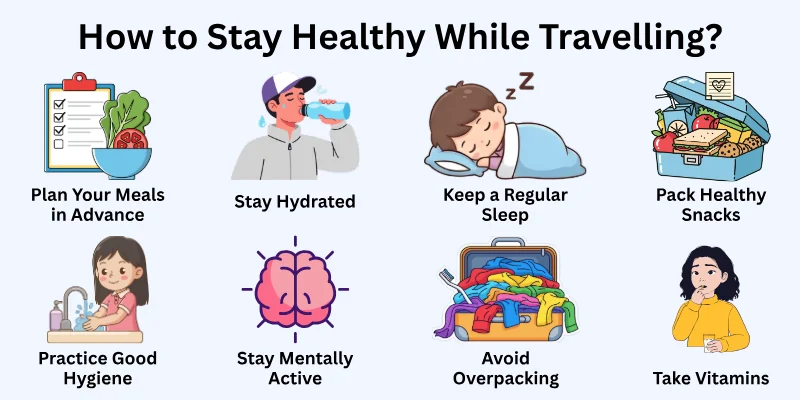
- Plan Your Meals in Advance
- Stay Hydrated at All Times
- Keep a Regular Sleep Schedule
- Move Your Body Daily
- Pack Healthy Snacks
- Practice Good Hygiene
- Manage Stress and Relax
- Limit Alcohol and Caffeine
- Take Vitamins and Supplements
- Protect Your Skin from Sun
- Choose Safe and Clean Food Options
- Avoid Overpacking and Stay Organized
- Stay Mentally Active
- Include Outdoor Activities
- Listen to Your Body
Let’s cover each point in detail.
1. Plan Your Meals in Advance
Planning meals prevents last-minute unhealthy choices. Before traveling, check the availability of restaurants, grocery stores, or hotel options. Include high-protein meals, fiber-rich foods, and fresh vegetables.
Avoid processed foods, heavily fried items, and sugary snacks. Meal planning reduces stress and maintains energy throughout the day.
For long trips, pack simple ingredients or pre-cooked meals that stay fresh. Planning also helps you manage your budget and timing efficiently.
Tips:
- Use apps like Yelp or TripAdvisor to find healthy restaurants
- Pack easy-to-carry foods like boiled eggs, fruits, or salads
- Avoid skipping meals to prevent fatigue and overeating later
2. Stay Hydrated at All Times
Travel, especially by air, can dehydrate your body quickly. Drinking enough water improves digestion, circulation, and skin health.
Dehydration also causes fatigue, headaches, and poor focus. Carry a reusable water bottle and refill it frequently. Include hydrating foods like watermelon, cucumbers, and oranges. Avoid sugary drinks and limit sodas, which can increase dehydration.
Tips:
- Drink 8–10 glasses of water daily, more if traveling in hot climates
- Use electrolyte drinks if you sweat a lot during travel
- Set reminders to drink water if you tend to forget
3. Keep a Regular Sleep Schedule
Sleep is essential for immunity, focus, and energy. Traveling often disrupts sleep due to time zone changes or uncomfortable sleeping conditions. Stick to your regular sleep hours as much as possible.
Use eye masks, earplugs, and neck pillows for better sleep. Avoid caffeine or heavy meals before bed. Short naps during the day help if nighttime sleep is limited. Proper rest ensures your body can handle travel stress effectively.
Tips:
- Maintain a consistent sleep and wake-up time
- Practice relaxing bedtime routines like reading or meditation
- Keep your sleeping environment dark and quiet
4. Move Your Body Daily
Long flights, car rides, and hotel stays often mean prolonged sitting. Sitting too long reduces circulation, energy, and metabolism. Take regular walks, stretch, or perform simple bodyweight exercises.
Even 10–30 minutes of movement daily prevents stiffness and fatigue. Walking around airports, exploring new cities, or hiking trails is a great way to stay active. Stretching also reduces muscle tension and improves posture.
Tips:
- Take short walks every 1–2 hours during long flights or drives
- Use hotel gyms if available, even for a quick 15-minute session
- Perform stretches targeting the neck, shoulders, back, and legs
5. Pack Healthy Snacks
Snacks prevent sudden hunger, low energy, or reliance on unhealthy fast foods. Choose portable, nutritious options like nuts, seeds, dried fruits, protein bars, or fresh fruit.
Avoid sugary, processed snacks that cause energy crashes. Pre-packaged snacks also save time when you’re traveling through areas with limited food options.
Tips:
- Portion snacks in small containers or zip-lock bags
- Include snacks high in protein and fiber for lasting energy
- Keep snacks easily accessible in your backpack or carry-on
6. Practice Good Hygiene
Travel exposes you to germs, bacteria, and viruses. Frequent handwashing and sanitizer use reduce the risk of infection.
Avoid touching your face, especially your eyes, nose, or mouth. Use disinfectant wipes on surfaces like airplane trays, hotel room tables, or public transport handles. Carry tissues and a small hand towel to stay clean.
Tips:
- Sanitize your hands before eating or touching your face
- Wipe down frequently touched surfaces when staying in hotels
- Carry a small pack of antibacterial wipes and hand sanitizer
7. Manage Stress and Relax
Travel can be stressful due to delays, unfamiliar surroundings, and tight schedules. Practice mindfulness, deep breathing, meditation, or journaling.
Schedule short breaks to relax and recharge. Listening to music, reading, or doing light stretches helps reduce stress. A calm mind improves your immunity, energy, and overall experience.
Tips:
- Take at least 10 minutes daily for meditation or deep breathing
- Avoid overbooking your travel itinerary
- Spend time in nature or quiet outdoor spaces when possible
8. Limit Alcohol and Caffeine
Excess alcohol and caffeine dehydrate your body and disrupt sleep. Limit intake, especially during flights or long travel days.
Drink water alongside any coffee or alcoholic beverages. Reduce intake in the evenings to ensure better sleep quality. Choosing herbal teas or fresh juices is a healthier alternative.
Tips:
- Alternate coffee or alcohol with water
- Monitor daily intake of caffeine and alcohol
- Avoid excessive energy drinks during travel
9. Take Vitamins and Supplements
Vitamins support your immunity and energy, especially when meals are inconsistent. Consider vitamin C, D, zinc, and multivitamins during travel. Supplements prevent deficiencies and keep your energy stable.
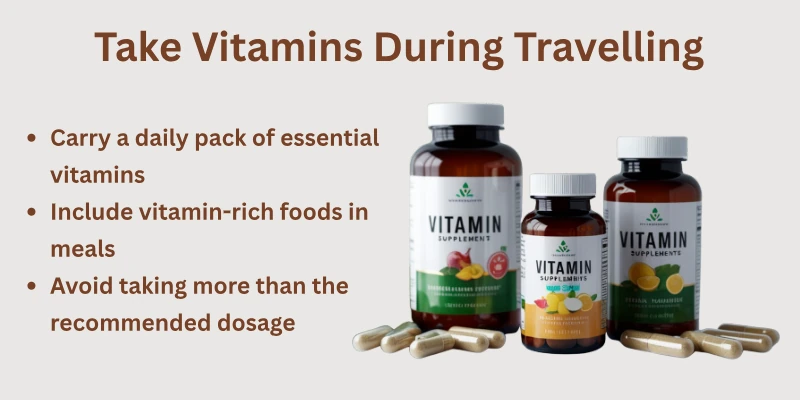
Consult a doctor if you have specific health conditions or dietary needs. Keep vitamins in a travel-friendly pill organizer for easy access.
Tips:
- Carry a daily pack of essential vitamins
- Include vitamin-rich foods in meals
- Avoid taking more than the recommended dosage
10. Protect Your Skin from the Sun
Travel often involves sun exposure, whether sightseeing or outdoor activities. Apply sunscreen daily with at least SPF 30. Wear hats, sunglasses, and light protective clothing. Reapply sunscreen every 2–3 hours when outdoors.
Moisturize after sun exposure to prevent dryness. Sun protection prevents skin damage, fatigue, and dehydration.
Tips:
- Use broad-spectrum sunscreen
- Stay in shade during peak sun hours (10 am – 4 pm)
- Drink water to stay hydrated in the sun
11. Choose Safe and Clean Food Options
Avoid foodborne illnesses by selecting clean, well-cooked meals. Stick to fresh, hot foods and avoid raw or street foods with questionable hygiene. Wash fruits and vegetables thoroughly. Safe food protects your stomach and overall health. Eating carefully prevents travel sickness and energy crashes.
Tips:
- Drink bottled or purified water
- Check reviews for restaurant hygiene
- Avoid ice or water from uncertain sources
12. Avoid Overpacking and Stay Organized
Heavy or disorganized luggage increases stress and reduces mobility. Pack light with essentials and versatile clothing.
Use compartments or packing cubes to stay organized. Being organized saves time and reduces travel fatigue. A lighter load helps you move freely and keeps your energy high.
Tips:
- Make a packing checklist before leaving
- Include multi-use clothing items
- Keep essential items in an easily accessible spot
13. Stay Mentally Active
Keep your brain engaged to prevent boredom and improve focus. Read, listen to podcasts, learn a language, or solve puzzles.
Journaling your travel experiences helps reflect and reduce stress. Mental activity complements physical health and keeps you alert during travel.
Tips:
- Carry a book or e-reader
- Listen to educational podcasts or audiobooks
- Maintain a daily travel journal
14. Include Outdoor Activities
Outdoor activity improves physical health, immunity, and mood. Walk, hike, swim, or explore nature trails.
Fresh air and sunlight boost vitamin D and energy. Balance sightseeing with light exercises to stay active. Outdoor activities also make travel more enjoyable and memorable.
Tips:
- Schedule walking tours or light hikes
- Stretch before and after outdoor activities
- Include activities that combine fun and fitness
15. Listen to Your Body
Pay attention to signals like fatigue, hunger, dehydration, or discomfort. Adjust your plans accordingly to avoid burnout or illness.
Rest when needed, eat when hungry, and hydrate regularly. Listening to your body ensures you enjoy your trip without sacrificing health.
Tips:
- Take breaks during long travel periods
- Don’t ignore signs of illness or fatigue
- Adjust activities based on energy levels
How You Can Continue These Habits
Healthy travel habits don’t end when your trip is over. Continue drinking water, eating balanced meals, sleeping well, and exercising daily. Keep practicing stress management, hygiene, and sun protection.
Track your progress and set small goals to maintain routines. Small, consistent habits ensure long-term energy, focus, and wellness. Traveling frequently becomes easier when you maintain these habits regularly.
Tips:
- Keep travel-friendly snacks at home or work
- Maintain daily walking or stretching routines
- Reflect weekly on energy, mood, and health
Final Note
In this guide, we covered 15 expert tips on how to stay healthy while traveling. Following these habits keeps your body energized, immune system strong, and mind alert. Simple, daily actions like staying hydrated, eating clean, moving daily, and managing stress prevent travel fatigue and illness.
Personally, I recommend planning, staying consistent, and making these habits part of every journey. With these strategies, traveling can be both fun and healthy.
FAQs
Here are some of the most commonly asked questions related to the tips to stay healthy while travelling:
Eat balanced meals, drink water, sleep well, and move daily. Practice hygiene and manage stress. Small habits keep your body fit and mind alert.
Choose fresh fruits, vegetables, whole grains, and lean proteins. Avoid fried and processed foods. Drink plenty of water to stay hydrated and energized.
Move regularly, rest when tired, and sleep well. Eat balanced meals and hydrate. Limit alcohol and caffeine to maintain energy.
Yes. Walk, stretch, do bodyweight workouts, or use hotel gyms. Even 10–30 minutes daily helps your body stay strong and energized.
Eat light, avoid risky foods, stay hydrated, and rest. Take breaks during long trips and practice stress reduction. Listen to your body to avoid illness.
Indeed. Energy and immunity are supported by vitamins like C, D, and multivitamins. Eat foods high in vitamins and carry a daily pack.
Drink eight to ten glasses a day, or more if you’re traveling or in a hot climate. Water keeps you hydrated, focused, and full of energy.
Practice meditation, deep breathing, or mindfulness. Take breaks, avoid over-scheduling, and spend time outdoors. Calm mind supports body health.
Stretch, walk, and move at regular intervals. Short movements improve circulation and energy. Even seat exercises help prevent stiffness.
Plan meals, pack healthy snacks, schedule movement, and rest. Track habits and stay consistent. Small actions keep you fit and energized.





- Be Respectful
- Stay Relevant
- Stay Positive
- True Feedback
- Encourage Discussion
- Avoid Spamming
- No Fake News
- Don't Copy-Paste
- No Personal Attacks
- Be Respectful
- Stay Relevant
- Stay Positive
- True Feedback
- Encourage Discussion
- Avoid Spamming
- No Fake News
- Don't Copy-Paste
- No Personal Attacks
