How to Regulate Periods Naturally: Simple Steps for Balanced Cycle
Published: 8 May 2026
Many women experience irregular periods at different times in their lives. Stress, diet changes, hormones, lifestyle habits, and health conditions can all affect your cycle. The good thing is that your body responds well to natural methods.
Simple daily habits can support your system, balance hormones, and help your periods become more regular over time. This guide explains how to regulate periods naturally in a clear and practical way.
How to Regulate Periods Naturally
Here are the best natural ways that help balance your cycle safely and gently:
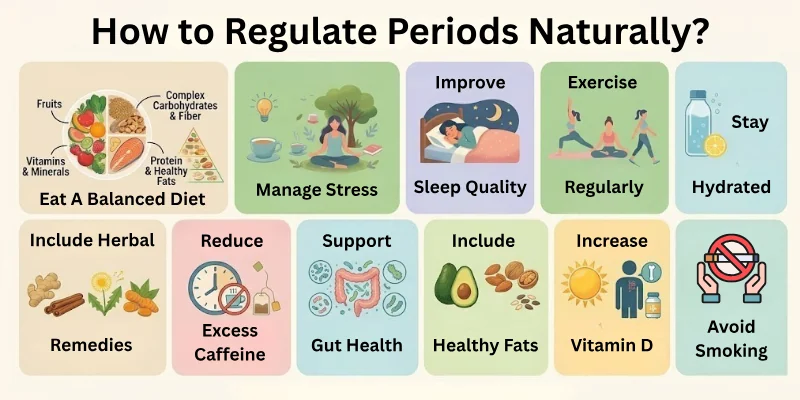
- Maintain A Healthy Weight
- Eat A Balanced Diet
- Manage Stress
- Improve Sleep Quality
- Exercise Regularly
- Include Herbal Remedies
- Stay Hydrated
- Reduce Excess Caffeine
- Support Gut Health
- Include Healthy Fats
- Track Your Menstrual Cycle
- Avoid Smoking And Alcohol
- Increase Vitamin D
- Use Warm Compress
- Check Underlying Conditions
Let us cover all these methods in detail.
1. Maintain A Healthy Weight
Keeping a healthy weight helps your hormones work normally and supports regular ovulation.
- Aim for gradual weight changes; lose or gain 0.5–1 kg per week if needed.
- Follow a balanced plan with whole foods, lean protein, and healthy carbohydrates.
- Avoid crash diets because they disrupt hormones and stop periods.
- Keep a moderate calorie deficit for weight loss instead of extreme cuts.
- Include strength training twice a week to preserve muscle while losing weight.
- Check your BMI and body composition, but focus on how you feel.
- Ask a nutritionist if you have trouble reaching a healthy weight safely.
- Track progress with photos and measurements rather than only the scale.
2. Eat A Balanced Diet
A balanced diet supplies vitamins and minerals your body needs to make hormones.
- Fill half your plate with vegetables and fruit at every main meal.
- Choose whole grains like brown rice, oats, and whole wheat bread.
- Include lean proteins such as eggs, chicken, fish, tofu, or lentils.
- Add healthy fats from nuts, seeds, avocado, and olive oil daily.
- Limit processed foods, sugary snacks, and ready-made meals.
- Eat iron-rich foods like spinach, beans, dates, and red meat sensibly.
- Space meals evenly to avoid large blood sugar swings that affect hormones.
- Consider a multivitamin if your diet lacks variety, after consulting a doctor.
3. Manage Stress
Reducing stress helps your brain send the right signals to your hormones.
- Practice 5–10 minutes of deep breathing or box breathing every day.
- Try a short walk outside to clear your mind when stress rises.
- Use simple relaxation methods like guided meditation or gentle yoga.
- Limit checking work email during evenings to protect your rest time.
- Build small daily habits that feel calming, such as reading or journaling.
- Connect with friends or family to share feelings and reduce worry.
- Seek professional help if anxiety or stress feels overwhelming or constant.
- Track stress triggers and reduce or rearrange them where possible.
4. Improve Sleep Quality
Good sleep supports hormone balance and helps your cycle stay regular.
- Aim for 7 to 8 hours of sleep every night on a consistent schedule.
- Go to bed and wake up at the same time even on weekends.
- Avoid screens and bright lights at least 30 minutes before bed.
- Keep your bedroom cool, dark, and quiet to improve sleep depth.
- Use a calming pre-sleep routine like warm tea or light reading.
- Limit heavy meals and caffeine in the late evening to avoid disruption.
- Nap briefly (20–30 minutes) only when needed and not late in the day.
- Track sleep patterns with a simple journal or a sleep app.
5. Exercise Regularly
Regular moderate exercise supports hormones without causing the stress that stops periods.
- Aim for 30 minutes of moderate activity most days, such as brisk walking.
- Include gentle strength workouts two times per week to support metabolism.
- Try yoga or Pilates to combine movement and stress reduction.
- Avoid excessive high-intensity training that may stop ovulation if overdone.
- Listen to your body and rest when you feel tired or overly sore.
- Keep your activity consistent rather than extreme bursts of exercise.
- Hydrate well before, during, and after workouts to support recovery.
- Check with a doctor if you have dramatic changes in menstrual flow after starting a new exercise.
6. Include Herbal Remedies
Certain herbs can support cycle health, but use them carefully and consistently.
- Ginger tea may support circulation and ease cramps when used regularly.
- Cinnamon can help balance cycles for some women when consumed in small amounts.
- Turmeric offers anti-inflammatory benefits and supports overall hormonal health.
- Vitex chasteberry sometimes helps balance luteal phase problems over months.
- Use herbs as teas or in food rather than high doses without advice.
- Talk to your healthcare provider before starting herbs if you take medicines.
- Start one herb at a time and track any changes in your cycle.
- Stop use and consult your doctor if you notice unusual bleeding or reactions.
7. Stay Hydrated
Water helps circulation, digestion, and the chemical reactions your hormones need.
- Drink plain water throughout the day aiming for about 2 litres, more if active.
- Start your morning with a glass of water to begin hydration early.
- Add water-rich foods like cucumber, watermelon, and oranges to meals.
- Avoid too many sugary drinks that can disturb insulin and hormones.
- Carry a refillable bottle to make drinking easy and habitual.
- Replace some caffeinated drinks with herbal tea to reduce dehydration.
- Notice urine colour: pale yellow usually means good hydration.
- Increase fluid intake before and during exercise or hot weather.
8. Reduce Excess Caffeine
Too much caffeine raises stress hormones and can affect your cycle.
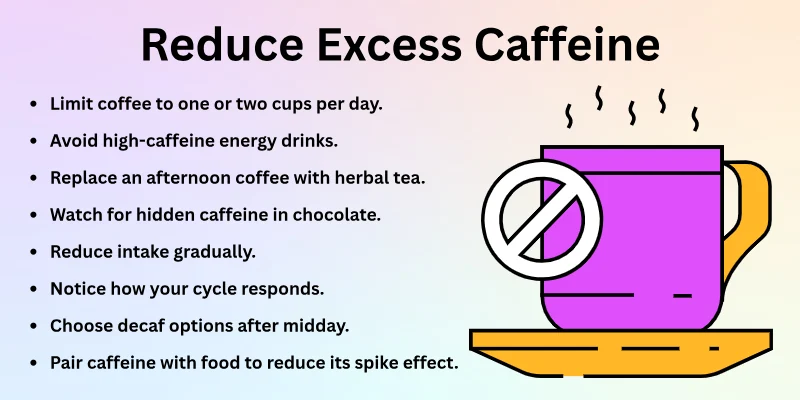
- Limit coffee to one or two cups per day, depending on tolerance.
- Avoid high-caffeine energy drinks and limit strong black tea in the evening.
- Replace an afternoon coffee with herbal tea or warm water with lemon.
- Watch for hidden caffeine in chocolate and some pain relievers.
- Reduce intake gradually if you consume a lot, to avoid withdrawal.
- Notice how your cycle responds and reduce further if it helps.
- Choose decaf options after midday to protect sleep quality.
- Pair caffeine with food to reduce its spike effect on your body.
9. Support Gut Health
A healthy gut helps your body process hormones and nutrients efficiently.
- Eat probiotic foods like plain yogurt, kefir, or fermented vegetables regularly.
- Include fiber-rich foods such as whole grains, beans, fruits, and vegetables.
- Avoid overuse of antibiotics unless a doctor prescribes them.
- Drink water and move daily to support digestion and bowel regularity.
- Limit highly processed and fried foods that disrupt gut flora.
- Consider a probiotic supplement for a short period after doctor advice.
- Notice and remove trigger foods that cause bloating or digestive upset.
- Support gut health to help hormone recycling and balance.
10. Include Healthy Fats
Healthy fats support hormone production and help maintain regular ovulation.
- Add sources like olive oil, avocados, nuts, seeds, and fatty fish.
- Include moderate portions of eggs regularly for fat-soluble nutrients.
- Avoid very low-fat diets which can reduce hormone production and stop cycles.
- Use olive oil in cooking or dressings instead of trans-fat alternatives.
- Eat fatty fish like salmon twice a week to get omega-3 fats.
- Snack on a small handful of nuts to supply healthy fats and minerals.
- Balance fats with protein and carbs to keep meals stabilizing.
- Choose whole food fat sources over packaged “low-fat” processed options.
11. Track Your Menstrual Cycle
Recording your cycle helps you spot patterns, triggers, and real changes early.
- Note first day of bleeding, length of flow, and total cycle length.
- Log symptoms such as cramps, mood changes, and energy levels each day.
- Use a paper calendar or a simple cycle tracking app.
- Compare logs month to month to find consistent patterns or shifts.
- Share accurate logs with your healthcare provider if you seek advice.
- Use ovulation predictor apps carefully and compare with your body’s signs.
- Track lifestyle events like travel, stress, sleep changes, or new meds.
- Tracking helps you make precise, useful changes to improve regularity.
12. Avoid Smoking And Alcohol
Both smoking and excess alcohol disrupt hormones and harm reproductive health.
- Quit smoking or reduce it to improve blood flow and hormone balance.
- Limit alcohol to occasional moderate amounts or remove it entirely.
- Alcohol affects the liver, which handles hormone processing and balance.
- Seek support groups or professional help if you struggle to stop.
- Replace social drinking with herbal tea or nonalcoholic alternatives.
- Notice improvements in your cycle after cutting down on these habits.
- Protect your fertility and overall health by keeping intake low.
- Keep long-term abstinence or strong reduction for best cycle stability.
13. Increase Vitamin D
Vitamin D helps reproductive function and supports healthy menstrual cycles.
- Get safe morning sun for 10 to 15 minutes several times weekly.
- Eat vitamin D foods like oily fish, eggs, and fortified milk.
- Check blood levels if you suspect a deficiency and supplement if needed.
- Use a doctor-recommended supplement dose rather than random high doses.
- Vitamin D supports mood and immune health as well as cycles.
- Combine sunlight, food, and possible supplementation to reach healthy levels.
- Ask your provider about testing if cycles stay irregular despite lifestyle changes.
- Keep consistent habits to maintain adequate vitamin D year-round.
14. Use Warm Compress
Warmth helps relax uterine muscles and can ease flow and cramps.
- Apply a warm water bottle or heating pad to your lower belly.
- Use heat for 10 to 20 minutes to ease cramps and improve comfort.
- Warmth helps blood flow and relaxes tight muscles during your period.
- Combine heat with gentle massage for extra relief and relaxation.
- Avoid very hot temperatures that cause burns; test before applying.
- Use the compress whenever you feel cramps or discomfort during flow.
- Pair warmth with relaxation breathing to reduce pain and tension.
- Keep a warm compress ready as part of your period care kit.
15. Check Underlying Conditions
If lifestyle changes do not help, look for medical causes with a professional.
- See a doctor if your periods stop for three months or more.
- Ask for thyroid tests, PCOS screening, and other relevant blood tests.
- Discuss medication side effects with your provider that might alter cycles.
- Bring your cycle log and symptom notes to appointments for clear context.
- Treating identified conditions often restores cycle regularity with targeted care.
- Consider referral to an endocrinologist or gynecologist for complex issues.
- Do not ignore heavy bleeding, severe pain, or sudden cycle changes.
- Early testing and treatment make natural regulation easier and more effective.
Habits That Disrupt Your Period
Here are some of the major habits that disrupt your periods:
- Skipping Meals Regularly: Not eating on time affects blood sugar levels and hormones, leading to irregular cycles.
- Excess Sugar Intake: Too much sugar causes inflammation and insulin spikes, which can disturb ovulation.
- Over-Exercising Beyond Your Limit: Very intense workouts reduce body fat and stress the body, causing missed periods.
- Sleeping Very Late Every Night: Poor sleep affects melatonin and cortisol, both linked with menstrual balance.
- Using Too Many Caffeinated Drinks: High caffeine levels over time increase stress hormones and disrupt your cycle.
- Relying On Junk Food Daily: Processed foods lack nutrients your reproductive hormones need to stay balanced.
- High Stress Lifestyle With No Breaks: Consistent stress interferes with ovulation and delays or shortens your cycle.
- Smoking Or Vaping Frequently: Nicotine impacts estrogen levels and can disturb natural menstrual patterns.
- Alcohol Consumption Every Week: Alcohol affects liver function, which regulates hormones that control periods.
- Ignoring Early Signs Of Hormonal Issues: Small symptoms like acne, cramps, or mood swings can become bigger cycle problems if untreated.
Final Thoughts
In this guide, we have covered the best natural ways to regulate your periods. You learned how lifestyle changes, diet habits, stress control, and hormonal balance all play an important role in keeping your cycle regular. Everybody is different, so small, consistent habits matter more than quick fixes.
By eating well, staying active, improving sleep, and avoiding harmful habits, you support your hormones naturally. If you follow these tips regularly, you will notice more stable cycles, fewer symptoms, and better overall health.
If your periods remain irregular for a long time, it is always better to talk to a doctor. Natural methods help, but medical advice is important when symptoms don’t improve.
FAQs
Here are some of the most commonly asked questions related to how to regulate periods naturally:
Periods become irregular due to stress, weight changes, hormones, or poor lifestyle. Lack of sleep, heavy workouts, and certain medical conditions can also affect your cycle. It’s always good to track your symptoms. If irregularity continues, consult a doctor.
Yes, many natural habits support your hormones and balance your cycle. Diet, sleep, exercise, and stress control play a big role. Results may take a few weeks, so consistency matters. If there’s no improvement, seek medical advice.
Most people notice changes within 1 to 3 months. Your body needs time to adjust to new habits. Regular sleep, diet, and routine speed up results. If your cycle stays irregular for months, get checked.
Foods rich in iron, healthy fats, whole grains, and leafy greens help. They support hormones and improve blood flow. Avoid junk food, sugary snacks, and too much caffeine. Balanced eating keeps your cycle stable.
Yes, stress directly affects hormones that control your menstrual cycle. High stress can delay, stop, or lengthen periods. Relaxation and breathing exercises help a lot. Keeping stress low maintains balance.
Moderate exercise helps regulate hormones and improves blood circulation. Walking, yoga, and light workouts work best. Heavy or extreme exercise can make periods worse. Balance is the key.
Yes, hydration supports blood flow and hormonal balance. Dehydration can cause bloating, cramps, and discomfort. Drinking enough water daily keeps your cycle and body healthy. Make it a habit.
Ginger, cinnamon, fennel, and spearmint tea may help balance hormones. These herbs improve blood flow and reduce period pain. Use them consistently in small amounts. If you take medicines, check with a doctor first.
If your cycle is irregular for more than 3 months, visit a doctor. Also check if periods are extremely painful, too heavy, or suddenly stop. These can be signs of underlying issues. Early care prevents future problems.
Yes, being underweight or overweight can disturb hormones. Healthy body weight keeps your cycle stable. Even small lifestyle changes help a lot. Aim for slow and steady improvements.






- Be Respectful
- Stay Relevant
- Stay Positive
- True Feedback
- Encourage Discussion
- Avoid Spamming
- No Fake News
- Don't Copy-Paste
- No Personal Attacks
- Be Respectful
- Stay Relevant
- Stay Positive
- True Feedback
- Encourage Discussion
- Avoid Spamming
- No Fake News
- Don't Copy-Paste
- No Personal Attacks
