Exercises for Jaw Relaxation: Simple Ways to Relieve Jaw Tension Naturally
Published: 27 Jul 2026
Jaw tension can make everyday activities uncomfortable. You may notice tightness in your jaw, soreness around your face, or difficulty fully opening your mouth. Some people also experience clicking sounds, headaches, or pain that spreads to the neck and shoulders.
Several factors can cause jaw tension. Stress, teeth grinding, poor posture, and TMJ disorders are among the most common. Over time, these issues can place extra strain on the jaw muscles and affect normal jaw movement.
Jaw relaxation exercises can help loosen tight muscles and improve jaw mobility. When done regularly, they may reduce discomfort and support better jaw function.
In this article, you will learn about the best exercises for jaw relaxation. We will also cover massage techniques, breathing exercises, neck and shoulder stretches, daily habits that help prevent jaw tightness, and tips for maintaining long-term jaw comfort.
Best Exercises for Jaw Relaxation
These exercises help reduce tightness in the jaw muscles. They also improve movement and ease discomfort caused by stress, posture, or jaw overuse. When done regularly, jaw relaxation exercises can support better jaw function and reduce stiffness over time.
Start slow and focus on proper form. Consistency matters more than intensity.
If you are dealing with jaw tension, try these simple jaw relaxation exercises below and add them to your daily routine.
- Relaxed Jaw Position Exercise
- Gentle Jaw Opening Exercise
- Tongue-to-Palate Stretch
- Goldfish Exercise (Partial Opening)
- Side-to-Side Jaw Movement
- Forward Jaw Glide Exercise
- Chin Tuck Exercise
- Resisted Jaw Opening
Let’s start with the most effective jaw relaxation exercises you can try at home.
1. Relaxed Jaw Position Exercise
This exercise helps your jaw settle into a natural resting state. It reduces unnecessary muscle activity and helps you notice when you are unknowingly tensing your jaw. With regular practice, it supports better control over jaw relaxation during the day.
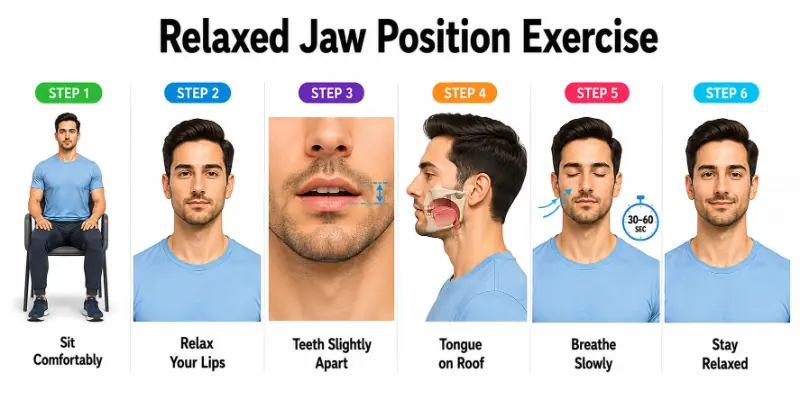
How to do it:
- Sit in a comfortable position with a straight but relaxed posture
- Close your lips gently without pressing them together
- Let your teeth stay slightly apart
- Rest your tongue lightly on the roof of your mouth
- Keep your jaw loose without forcing it into any position
- Breathe slowly through your nose for 30 to 60 seconds
Benefits:
- Encourages a natural resting position for the jaw
- Reduces unconscious jaw clenching during the day
- Improves awareness of jaw tension habits
Tip: Avoid clenching or pressing your teeth together. Keep your face, neck, and shoulders soft.
2. Gentle Jaw Opening Exercise
Jaw stiffness often makes it difficult to open the mouth comfortably. This movement trains your jaw to open slowly and under controlled conditions, without adding extra pressure to the muscles.
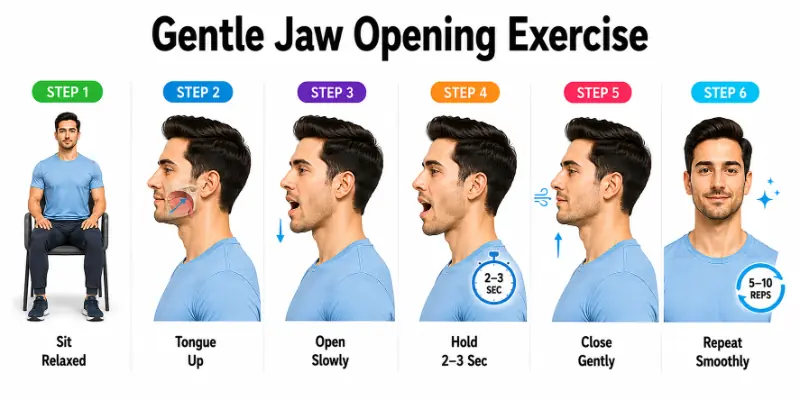
How to do it:
- Sit in a relaxed position with your shoulders loose
- Keep your tongue resting lightly on the roof of your mouth
- Slowly open your mouth as far as it feels comfortable
- Hold for 2 to 3 seconds without strain
- Gently close your mouth again
- Repeat 5 to 10 times in a slow rhythm
- Breathe normally throughout
Benefits:
- Builds better control of jaw movement
- Reduces tightness during mouth opening
- Improves overall jaw flexibility
Tip: Keep the movement smooth. Do not push past your comfort level.
3. Tongue-to-Palate Stretch
Jaw tension often builds when tongue posture is weak or not aligned properly. This exercise focuses on correct tongue placement to support smoother jaw movement and reduce pressure on the jaw joints.
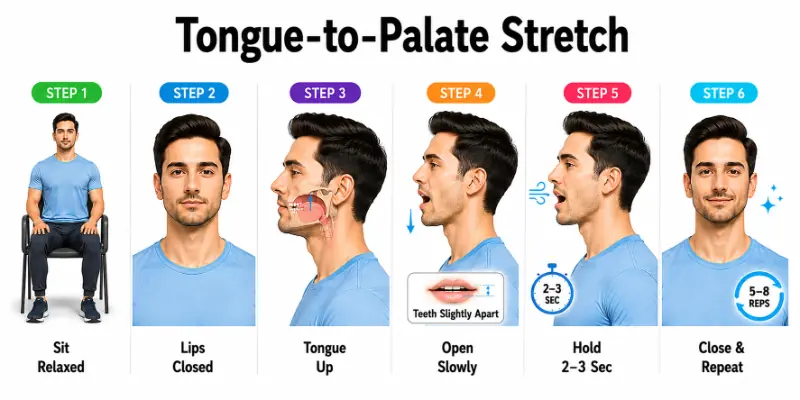
How to do it:
- Sit in a relaxed position with your back straight
- Close your lips gently
- Place your tongue flat against the roof of your mouth
- Keep your teeth slightly apart
- Slowly open your mouth while keeping the tongue in place
- Hold for 2 to 3 seconds
- Close your mouth slowly and repeat 5 to 8 times
- Breathe steadily throughout the movement
Benefits:
- Improves tongue and jaw coordination
- Reduces pressure on jaw joints
- Supports better jaw alignment and relaxation
Tip: Do not press your tongue too hard. Keep the pressure light and natural.
4. Goldfish Exercise (Partial Opening)
Jaw tightness can reduce smooth movement inside the jaw joint. This exercise uses small controlled motions to improve coordination and ease mild stiffness around the jaw area.
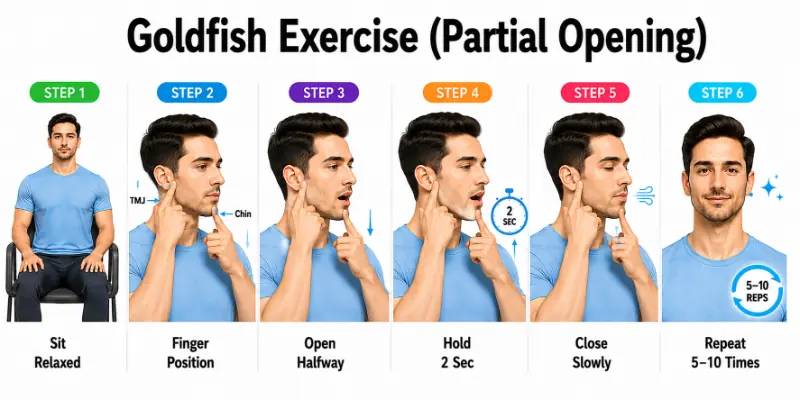
How to do it:
- Sit or stand in a relaxed position
- Place one finger lightly on the TMJ area (in front of your ear)
- Place another finger on your chin for support
- Open your mouth only halfway, not fully
- Hold for 2 seconds without strain
- Close your mouth slowly and gently
- Repeat 5 to 10 times in a slow rhythm
- Keep your breathing steady throughout
Benefits:
- Improves jaw joint coordination
- Reduces mild stiffness in the jaw area
- Supports smoother jaw movement during daily activities
Tip: Avoid opening too wide. Keep the movement small and controlled.
5. Side-to-Side Jaw Movement
Jaw muscles can become tight when movement stays limited in one direction. This exercise helps the jaw move more freely from side to side and reduces uneven muscle tension.
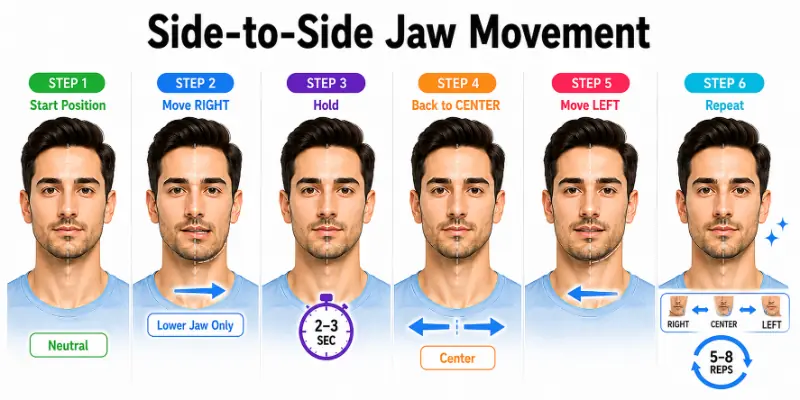
How to do it:
- Sit in a relaxed position with your head straight
- Keep your lips gently closed
- Slowly move your lower jaw to the right side
- Hold for 2 to 3 seconds
- Bring it back to the centre
- Then move your jaw to the left side
- Hold again for 2 to 3 seconds
- Repeat 5 to 8 times on each side
- Keep the movement slow and controlled
Benefits:
- Improves side-to-side jaw mobility
- Reduces uneven muscle tightness
- Supports smoother jaw movement in daily use
Tip: Do not force the jaw beyond comfort. Keep your neck relaxed while moving.
6. Forward Jaw Glide Exercise
Jaw stiffness can also come from limited forward movement of the lower jaw. This exercise helps improve controlled forward motion and reduces tightness around the jaw joint.
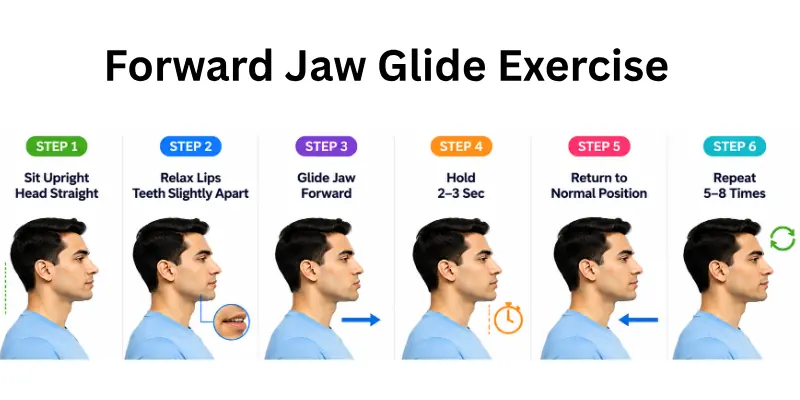
How to do it:
- Sit in a relaxed position with your head upright
- Keep your lips slightly closed and relaxed
- Slowly move your lower jaw forward in a straight line
- Hold the position for 2 to 3 seconds
- Bring your jaw back to the normal resting position
- Repeat 5 to 8 times in a slow and steady rhythm
- Keep your breathing normal throughout
Benefits:
- Improves forward jaw movement control
- Reduces stiffness in the jaw joint
- Supports better overall jaw mobility
Tip: Move the jaw only as far as it feels comfortable. Do not push or strain the joint.
7. Chin Tuck Exercise
Poor neck posture often adds extra strain to the jaw muscles. This exercise helps align the head and neck properly, which reduces pressure on the jaw area and supports better posture.
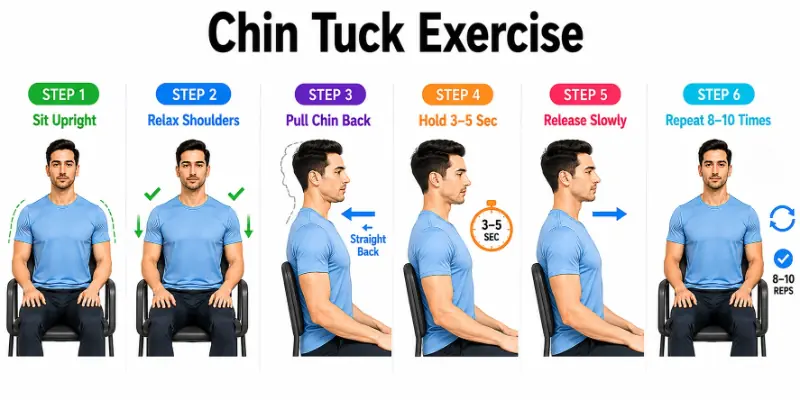
How to do it:
- Sit or stand with your back straight
- Keep your shoulders relaxed
- Slowly pull your chin straight back (like making a double chin)
- Hold the position for 3 to 5 seconds
- Release gently to the normal position
- Repeat 8 to 10 times in a slow rhythm
- Breathe normally throughout the movement
Benefits:
- Improves neck posture
- Reduces strain on jaw muscles
- Supports better jaw and head alignment
Tip: Do not tilt your head up or down. Keep the movement straight and controlled.
8. Resisted Jaw Opening
Jaw muscles sometimes become weak or overactive, which can lead to poor control and tightness. This exercise adds gentle resistance to improve strength and stability in a controlled way.
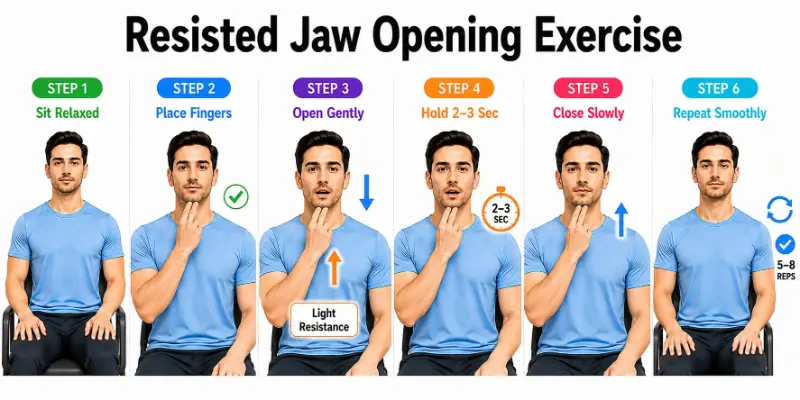
How to do it:
- Sit in a relaxed position with your shoulders down
- Place two fingers under your chin
- Slowly try to open your mouth while applying light resistance with your fingers
- Hold the position for 2 to 3 seconds
- Close your mouth slowly and relax
- Repeat 5 to 8 times in a steady rhythm
- Keep your breathing calm and normal throughout
Benefits:
- Improves jaw muscle strength and control
- Enhances the stability of jaw movement
- Reduces risk of sudden jaw stiffness during daily use
Tip: Use very light pressure. Do not force the movement or push into pain.
Jaw Massage Techniques for Relaxation
Now that we have covered the best exercises for jaw relaxation, let’s move to another effective way to reduce jaw tension. Massage techniques help release tight muscles and improve blood flow in the jaw area.
Try these simple jaw massage techniques to relax your muscles and ease daily discomfort.
- Temple Massage
- Cheek Muscle Massage
- Jawline Release Massage
- Neck and Upper Shoulder Massage
1. Temple Massage
Jaw tension often spreads to the temples and can lead to a pressure or mild headache feeling. This massage helps relax that tight area and reduces overall facial strain.
How to do it:
- Place your fingertips on both sides of your temples
- Use gentle circular movements with light pressure
- Keep the motion slow and steady
- Massage for 30 to 60 seconds
- Breathe slowly and relax your face while doing it
Tip: Do not press too hard. Keep the movement light and comfortable throughout.
2. Cheek Muscle Massage
Jaw tightness often builds up in the cheek area due to clenching or stress. This massage helps soften those muscles and reduce facial stiffness.
How to do it:
- Place your fingertips on the cheek muscles
- Apply gentle circular pressure
- Move slowly across both sides of the face
- Massage for 30 to 60 seconds
- Keep your breathing calm and steady
Tip: Use light pressure and avoid pressing too close to sensitive areas.
3. Jawline Release Massage
The jawline carries a lot of tension from daily speaking and chewing. This massage helps relax those muscles and improve comfort along the jaw.
How to do it:
- Place your fingers along the jawline
- Start from the chin and move toward the ears
- Use slow, upward strokes
- Repeat for 30 to 60 seconds on both sides
- Keep your face relaxed throughout
Tip: Do not rush the movement. Keep strokes smooth and controlled.
4. Neck and Upper Shoulder Massage
Tension in the neck and shoulders often contributes to jaw discomfort. This massage helps release that connected tightness.
How to do it:
- Place your hands on the upper shoulders
- Gently press tight areas with your fingertips
- Use slow circular motions
- Massage for about 1 minute
- Keep your breathing relaxed and even
Tip: Stop if you feel any discomfort or pain.
How Often Should You Do Jaw Relaxation Exercises
Jaw relaxation exercises work best when you do them regularly and gently. The goal is to reduce tension without overworking the muscles.
| Category | Recommendation |
|---|---|
| Daily Frequency | 1 to 2 times per day |
| Repetitions | 5 to 10 times per exercise |
| Duration | 5 to 10 minutes per session |
| Morning Practice | Helps reduce overnight jaw tightness |
| Daytime Practice | Useful during stress or clenching |
| Night Practice | Helps relax the jaw before sleep |
Benefits of Jaw Relaxation Exercises
After learning how these exercises and massages help reduce jaw tension, it’s also important to understand the benefits they bring to your overall jaw health.
- Less Stiffness: These exercises help loosen tight jaw muscles and improve smooth movement.
- Better Mobility: They support improved jaw movement and increase flexibility over time.
- Less Facial Tension: They release built-up tension in the face, especially around the jaw and temples.
- Fewer Headaches: Jaw relaxation can reduce headaches and neck discomfort linked to muscle tension.
- Healthy Jaw Function: They support proper jaw coordination and help maintain natural movement.
Mistakes to Avoid During Jaw Exercises
Jaw relaxation exercises are helpful only when done correctly. Small mistakes can slow down progress or increase discomfort instead of reducing it.
- Forcing the Jaw Open: Do not push your jaw beyond its natural limit. Overstretching can increase strain on the jaw joint.
- Exercising Through Pain: Stop immediately if you feel pain. These exercises should feel gentle, not painful or stressful.
- Moving Too Quickly: Fast movements reduce control and effectiveness. Always keep the motion slow and steady.
- Ignoring Proper Posture: Poor posture can add extra pressure on the jaw. Keep your head, neck, and shoulders relaxed during all exercises.
Conclusion
In this article, we have covered how exercises for jaw relaxation can help reduce jaw tension, improve mobility, and support overall jaw health through simple daily practices.
Regular practice is important because consistency gives better and long-term results. Along with exercises, good posture and stress control also play a key role in reducing jaw discomfort.
From my personal recommendation, start with gentle exercises only and do them daily for a few minutes. Do not rush the process, and always focus on comfort instead of intensity.
FAQs
Here are the most common questions people ask about exercises for jaw relaxation and jaw tension.
Jaw relaxation exercises are simple movements that help reduce tightness in the jaw muscles. They improve comfort in daily activities like speaking and chewing. These exercises also support better jaw flexibility and relaxation.
Yes, they can help reduce mild TMJ symptoms like stiffness and discomfort. These exercises improve jaw movement and reduce pressure on the joint. However, severe TMJ issues should be checked by a dentist.
Most people notice improvement within 1 to 2 weeks of regular practice. Results depend on how often you do the exercises. Consistency is the key to better jaw relaxation.
Yes, these exercises can help reduce unconscious jaw clenching over time. They train your jaw muscles to stay relaxed during the day. This can also lower teeth grinding caused by stress.
Yes, they are safe when done gently and correctly. You should avoid forcing any movement or feeling pain. Daily practice actually improves jaw health and reduces tension.
Here are the best times to do jaw relaxation exercises:
- Morning to reduce overnight jaw stiffness
- During the day, when stress or clenching happens
- Before bed, relax jaw muscles for better sleep
Yes, they can help reduce mild jaw pain and stiffness. They improve blood flow and relax tight muscles around the jaw. If pain is severe, medical advice is recommended.
Here are the recommended guidelines for daily practice:
- 1 to 2 times per day is enough
- Each session should last 5 to 10 minutes
- Focus on consistency instead of overdoing exercises
Yes, they can help reduce facial tension caused by tight jaw muscles. This also helps lower tension headaches and neck discomfort. Regular practice gives better long-term relief.
You should see a doctor if you have constant pain or jaw locking. Clicking with severe discomfort is also a warning sign. Professional treatment is needed if symptoms do not improve.



- Be Respectful
- Stay Relevant
- Stay Positive
- True Feedback
- Encourage Discussion
- Avoid Spamming
- No Fake News
- Don't Copy-Paste
- No Personal Attacks
- Be Respectful
- Stay Relevant
- Stay Positive
- True Feedback
- Encourage Discussion
- Avoid Spamming
- No Fake News
- Don't Copy-Paste
- No Personal Attacks
