Best Breathing Exercises for Asthma Relief and Breathing Control
Published: 24 Sep 2026
Asthma affects millions of people and can make everyday breathing more difficult. Symptoms such as wheezing, chest tightness, coughing, and shortness of breath may interfere with daily activities and exercise. Along with prescribed medications, breathing exercises for asthma may help improve breathing control and support overall symptom management.
While medications remain an important part of asthma treatment, many people also use breathing exercises for asthma to help improve breathing control and reduce discomfort. Certain asthma breathing exercises may help you breathe more efficiently, stay calmer during symptoms, and support overall asthma management.
This guide covers the best asthma breathing exercises, how each technique works, how to practice them correctly, and important safety tips to keep in mind.
Best Breathing Exercises for Asthma
Different breathing techniques can help improve breathing control and make it easier to manage asthma symptoms. While these exercises do not replace medication, they can be a useful part of an asthma management plan.
Try the following breathing exercises to find the techniques that work best for you:
- Diaphragmatic Breathing (Belly Breathing)
- Pursed-Lip Breathing
- Buteyko Breathing Method
- Papworth Method
- Nasal Breathing
- Deep Breathing Exercises
- Yoga Breathing (Pranayama)
Let’s learn how each exercise works and how to do it properly.
1. Diaphragmatic Breathing (Belly Breathing)
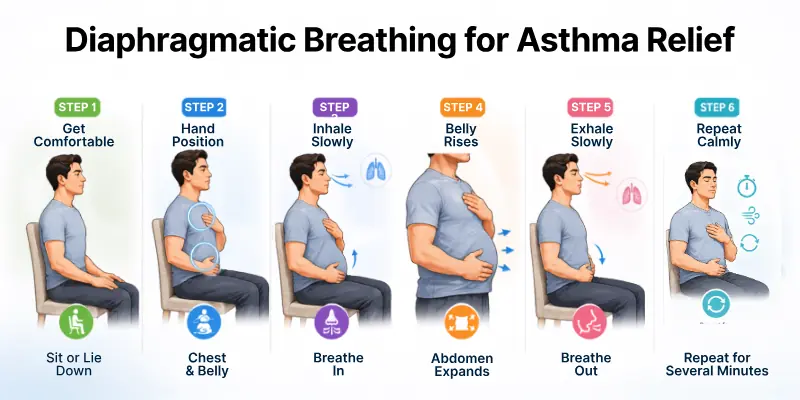
Diaphragmatic breathing, often called belly breathing, helps you use your diaphragm more effectively while breathing. It encourages slow, deep breaths instead of shallow chest breathing. Many people with asthma use this technique to improve breathing control and feel more relaxed.
How to Perform
- Sit comfortably or lie flat on your back.
- Place one hand on your chest and the other on your abdomen.
- Breathe in slowly through your nose.
- Allow your abdomen to rise while keeping your chest as still as possible.
- Exhale slowly through your mouth.
- Repeat for several minutes while maintaining a steady rhythm.
Benefits
- Helps the lungs fill with air more effectively
- Encourages deeper breathing from the abdomen
- Reduces reliance on shallow chest breathing
2. Pursed-Lip Breathing
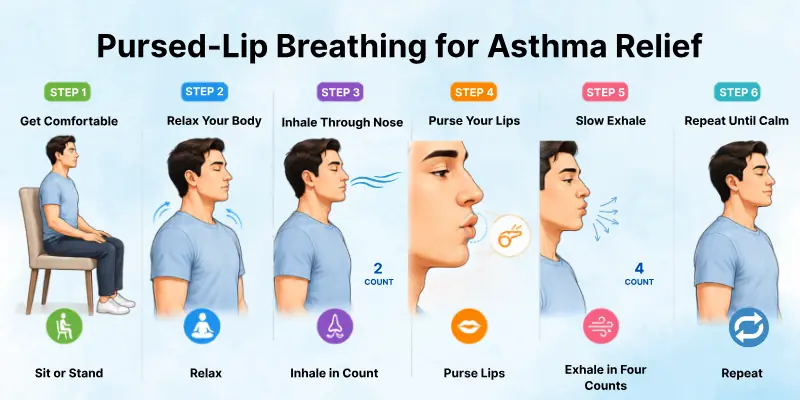
Pursed-lip breathing is a simple technique that slows your breathing and helps keep the airways open longer. It involves inhaling through the nose and exhaling slowly through pursed lips. People with asthma often use this method when they feel short of breath or need better breathing control.
How to Perform
- Sit or stand in a comfortable position.
- Relax your neck and shoulder muscles.
- Inhale slowly through your nose for about two counts.
- Pucker your lips as if you are about to whistle.
- Exhale gently through your pursed lips for about four counts.
- Repeat the exercise until your breathing feels more controlled.
Benefits
- Helps slow rapid breathing
- Makes exhalation more controlled
- Reduces feelings of breathlessness during activity
3. Buteyko Breathing Method
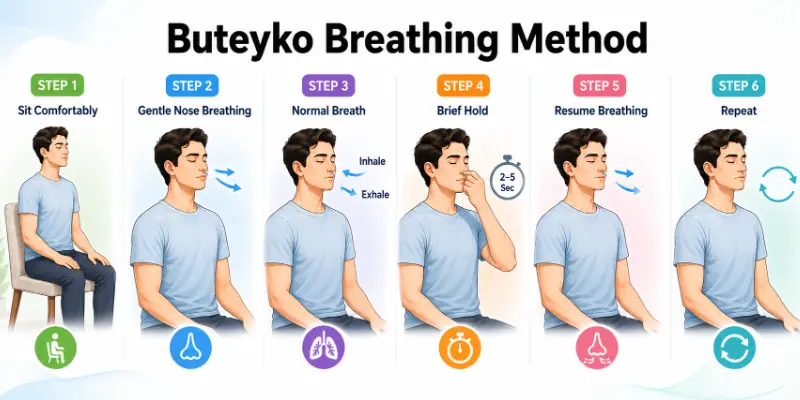
The Buteyko Breathing Method focuses on slow, controlled breathing through the nose. It aims to reduce overbreathing and encourage a more regular breathing pattern. Some people with asthma use this technique to help manage breathing discomfort and improve breathing awareness.
How to Perform
- Sit comfortably and relax your shoulders.
- Breathe gently through your nose for a few minutes.
- Take a normal breath in and out through your nose.
- After exhaling, pinch your nose and hold your breath for a short time.
- Release your nose and return to calm nasal breathing.
- Repeat the exercise several times without straining yourself.
Benefits
- Encourages healthier breathing habits
- Supports breathing through the nose
- Helps reduce unnecessary overbreathing
4. Papworth Method
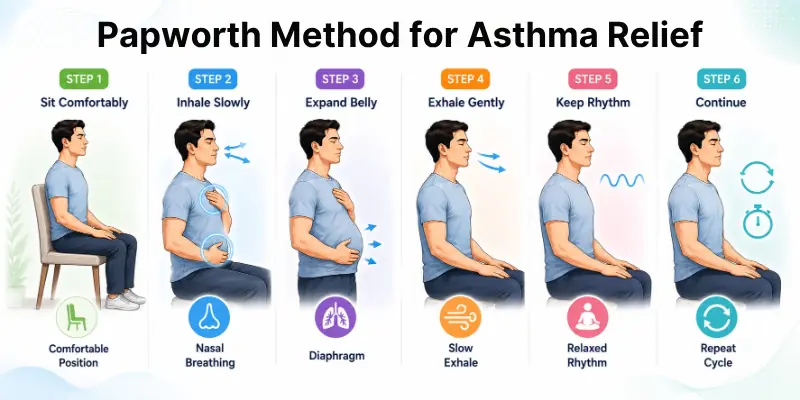
The Papworth Method combines diaphragmatic breathing with relaxation techniques. It encourages slow, gentle breathing through the nose while reducing unnecessary chest breathing. People with asthma may use this method to develop calmer and more controlled breathing habits.
How to Perform
- Sit comfortably with your shoulders relaxed.
- Breathe in slowly through your nose using your diaphragm.
- Allow your abdomen to expand as you inhale.
- Exhale gently and steadily through your nose.
- Focus on maintaining a slow, relaxed breathing rhythm.
- Continue for several minutes while staying relaxed.
Benefits
- Promotes a calmer breathing pattern
- Helps you relax during breathing discomfort
- Reduces shallow chest breathing
5. Nasal Breathing
Nasal breathing means breathing in and out through the nose instead of the mouth. The nose helps filter, warm, and humidify the air before it reaches the lungs. This breathing technique may help people with asthma maintain a more comfortable breathing pattern.
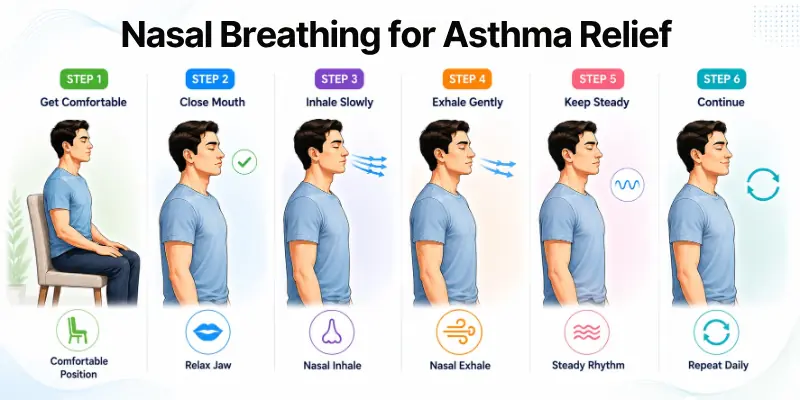
How to Perform
- Sit or stand in a comfortable position.
- Close your mouth and relax your jaw.
- Breathe in slowly through your nose.
- Exhale gently through your nose.
- Keep your breathing steady and relaxed.
- Continue for several minutes.
Benefits
- Filters and humidifies incoming air
- Supports a steady breathing rhythm
- Reduces dependence on mouth breathing
6. Deep Breathing Exercises
Deep breathing exercises focus on taking slow, full breaths that allow the lungs to expand more completely. This technique can help improve breathing awareness and encourage a steady breathing pattern. Many people use deep breathing as part of their asthma breathing exercises routine.
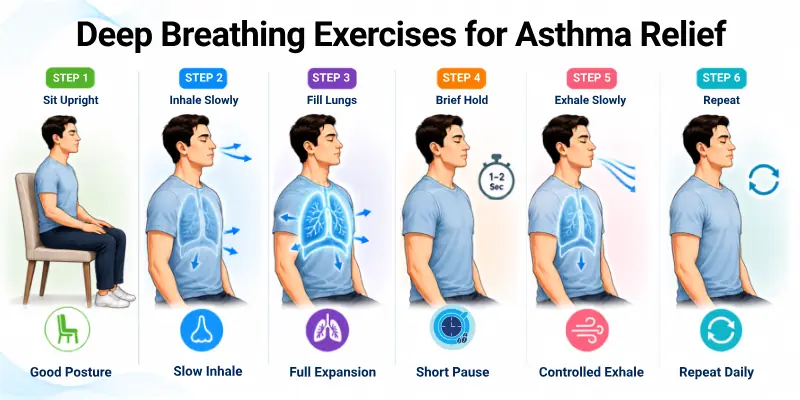
How to Perform
- Sit upright in a comfortable position.
- Breathe in slowly through your nose.
- Allow your lungs to fill with air as much as feels comfortable.
- Hold your breath for a second or two.
- Exhale slowly through your mouth.
- Repeat the exercise for several minutes.
Benefits
- Expands the lungs more fully
- Encourages slower, deeper breaths
- Relieves tension in the chest area
7. Yoga Breathing (Pranayama)
Yoga breathing, also known as pranayama, includes a variety of controlled breathing techniques used in yoga practice. These exercises focus on slow, mindful breathing and relaxation. Some people with asthma use pranayama to develop better breathing habits and reduce stress.
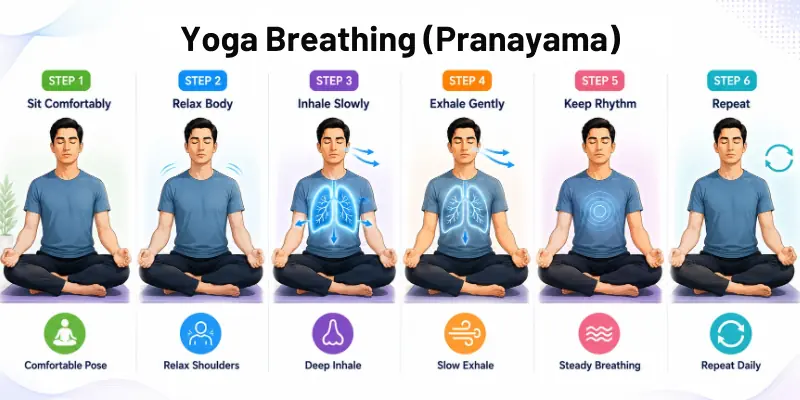
How to Perform
- Sit comfortably with your back straight.
- Relax your shoulders and facial muscles.
- Inhale slowly and deeply through your nose.
- Exhale gently through your nose while maintaining a steady rhythm.
- Focus on slow, controlled breaths.
- Continue for several minutes without forcing your breathing.
Benefits
- Promotes relaxation and mindfulness
- Helps manage stress levels
- Encourages controlled breathing
Breathing Exercises for Children with Asthma
Children with asthma can also practice simple breathing exercises to support healthy breathing habits. The best techniques are easy to follow, safe, and engaging enough to keep a child’s attention.
1. Child-Friendly Techniques
The following breathing exercises are often easier for children to understand and practice:
Belly Breathing
- Have your child lie down comfortably.
- Place a small stuffed toy on their stomach.
- Ask them to breathe in slowly and watch the toy rise.
- Encourage a slow exhale and watch the toy lower.
Bubble Blowing
- Let your child blow bubbles using slow, steady breaths.
- This activity can make breathing practice more enjoyable.
Pinwheel Breathing
- Give your child a pinwheel to blow.
- Encourage gentle breaths that keep the pinwheel spinning steadily.
2. Safety Tips for Parents
- Keep breathing exercises simple and age-appropriate.
- Turn practice sessions into a fun activity rather than a chore.
- Never force a child to continue if they feel uncomfortable.
- Continue using prescribed asthma medications as directed.
- Supervise younger children during breathing exercises.
3. When to Seek Medical Advice
Contact a healthcare provider if your child:
- Has frequent coughing or wheezing
- Experiences ongoing shortness of breath
- Needs a rescue inhaler more often than usual
- Has symptoms that affect sleep or daily activities
- Shows signs of worsening asthma despite treatment
Common Mistakes to Avoid
Breathing exercises can be a helpful part of asthma management when practiced correctly. However, certain mistakes may make the exercises less effective or cause unnecessary discomfort.
Here are some common mistakes to avoid.
- Breathing Fast: Rapid breathing can make it harder to stay relaxed and maintain proper breathing control.
- Forcing Breaths: Taking overly deep breaths may cause discomfort or dizziness.
- Severe Symptoms: Breathing exercises should not replace emergency treatment during serious asthma symptoms.
- Skipping Medication: These exercises can support asthma management but should not replace prescribed medications.
Conclusion
In this guide, we explored some of the most effective breathing exercises for asthma, including diaphragmatic breathing, pursed-lip breathing, the Buteyko method, and other helpful techniques. These exercises can support better breathing control, encourage healthier breathing habits, and complement your overall asthma management plan.
While asthma breathing exercises may offer benefits, they should not replace prescribed medications or medical advice.
Practice the techniques regularly, choose the ones that feel most comfortable, and work with your healthcare provider to find the best approach for managing your symptoms.
FAQs: About Breathing Exercises for Asthma
Here are the most common questions about breathing exercises for asthma.
Diaphragmatic breathing and pursed-lip breathing are among the most commonly recommended breathing exercises for asthma. They help promote slower and more controlled breathing. The best technique may vary from person to person.
Breathing exercises may help support asthma management when used alongside prescribed treatment.
- They do not cure asthma.
- They may improve breathing awareness.
- They may reduce anxiety related to breathing difficulties.
- They should be used alongside prescribed treatment.
Many people practice asthma breathing exercises once or twice a day. Regular practice can help you become more comfortable with the techniques. Follow your healthcare provider’s advice if you have specific concerns.
The Buteyko method is a breathing technique that focuses on slow, controlled nasal breathing. Some people find it helpful for improving breathing awareness. Results can vary between individuals.
Yes, children can practice simple breathing exercises for asthma under adult supervision. Child-friendly techniques such as belly breathing and bubble blowing are often easier to follow. Parents should ensure the exercises are performed safely.
The best times to practice breathing exercises for asthma include:
- In the morning, to establish a breathing routine
- During periods of stable asthma symptoms
- Before light exercise or physical activity
- In the evening, to promote relaxation
Avoid practising new breathing techniques during severe asthma symptoms.
No, breathing exercises do not replace inhalers or other asthma medications. They are intended to support asthma management alongside prescribed treatment. Always follow your healthcare provider’s recommendations.
Breathing exercises may help some people improve breathing efficiency and breathing control. They can also encourage healthier breathing patterns. However, they should be viewed as a supportive tool rather than a cure.
Breathing exercises are generally used as a supportive strategy, even for people with severe asthma. However, they should be practised according to medical advice. Seek immediate medical attention if you experience serious breathing difficulties.
Results vary from person to person, but many people notice benefits such as:
- Better awareness of breathing patterns
- Improved breathing control
- Increased comfort during daily activities
- Greater confidence when managing symptoms
Consistent practice is usually needed to experience lasting improvements.






- Be Respectful
- Stay Relevant
- Stay Positive
- True Feedback
- Encourage Discussion
- Avoid Spamming
- No Fake News
- Don't Copy-Paste
- No Personal Attacks
- Be Respectful
- Stay Relevant
- Stay Positive
- True Feedback
- Encourage Discussion
- Avoid Spamming
- No Fake News
- Don't Copy-Paste
- No Personal Attacks
