Causes of Itchy Ears: Common Reasons, Symptoms & Treatment
Published: 7 Oct 2026
Why do my ears itch even when they look clean and healthy? Many people experience this problem and wonder what is irritating them. Itchy ears can happen due to several reasons, including dry skin, allergies, skin conditions, or infections. Understanding the exact cause can help you manage the problem and prevent it from returning.
In this article, we will discuss the common causes of itchy ears, the symptoms that may appear with ear itching, available treatment options, and when you should see a doctor.
Let’s explore the main causes of itchy ears in detail.
Common Causes of Itchy Ears
Itchy ears can happen for many different reasons, from simple dryness to infections and skin conditions. The cause may be inside the ear canal or around the outer ear. Some people experience mild itching, while others may have ongoing irritation that affects their daily routine. Identifying the reason behind the itching can help you choose the right care and prevent the problem from getting worse.
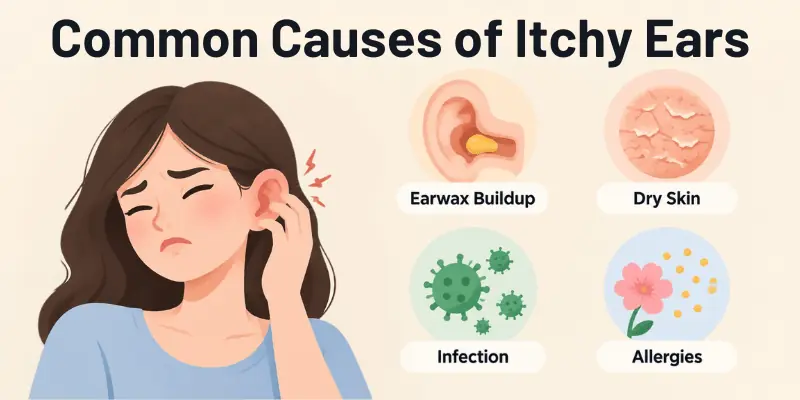
Here are the common causes of itchy ears:
- Dry Skin Inside the Ear
- Earwax Buildup
- Allergies
- Ear Eczema
- Psoriasis Around the Ears
- Swimmer’s Ear (Otitis Externa)
- Fungal Ear Infections
- Bacterial Ear Infections
- Hearing Aids, Earbuds, and Earplugs
- Overcleaning the Ears
- Contact Dermatitis
- Foreign Objects in the Ear
- Hormonal Changes and Aging
- Stress and Skin Sensitivity
Let’s look at each cause in detail.
1. Dry Skin Inside the Ear
Dry skin inside the ear is one of the most common causes of itchy ears. When the skin loses moisture, it can become irritated, flaky, and uncomfortable. The itching may be mild at first but can worsen if the dryness continues.
The ear canal relies on natural oils and earwax to stay moisturized. When these protective substances decrease, the skin becomes more sensitive and prone to irritation.
Common reasons include:
- Low earwax production that reduces natural moisture
- Cold or dry weather that dries the skin
- Aging and reduced oil production
- Frequent ear cleaning habits
- Sensitive skin that loses moisture easily
- Exposure to dry indoor air for long periods
2. Earwax Buildup
Earwax helps protect the ear canal by trapping dust, dirt, and other particles. It also keeps the skin inside the ear moisturized. However, too much earwax can build up and cause irritation, itching, and a feeling of fullness in the ear.
In some cases, earwax becomes impacted and blocks the ear canal. This can lead to discomfort and make the ear feel itchy or clogged. Improper cleaning methods often make the problem worse.
Factors that contribute to earwax buildup include:
- Excessive earwax production by the glands
- Narrow ear canals that trap wax more easily
- Frequent use of earbuds or earphones
- Cotton swabs that push wax deeper inside
- Regular use of hearing aids or earplugs
- Natural difficulty removing earwax from the ear canal
3. Allergies
Allergies can cause itching in different parts of the body, including the ears. When the immune system reacts to an allergen, it may trigger irritation and inflammation inside or around the ear canal.
Some people experience itchy ears during allergy seasons, while others may react to specific substances throughout the year. The itching may occur alone or along with sneezing, a runny nose, or watery eyes.
Common triggers include:
- Pollen from trees, grasses, or weeds
- Dust mites found in household items
- Pet dander from cats and dogs
- Mold exposure in damp environments
- Certain foods that trigger allergic reactions
- Seasonal changes that increase allergen levels
4. Ear Eczema
Ear eczema is a skin condition that causes dry, itchy, and inflamed skin in or around the ears. The affected area may become red, flaky, and sensitive, making the itching difficult to ignore.
This condition often develops when the skin barrier becomes weak and unable to retain moisture properly. Symptoms may come and go and can worsen when exposed to certain triggers.
Common triggers include:
- Harsh soaps and skincare products
- Fragrances in shampoos or cosmetics
- Frequent scratching of the ears
- Dry weather and low humidity
- Stress that can worsen skin irritation
- A personal or family history of eczema
5. Psoriasis Around the Ears
Psoriasis is a chronic skin condition that causes skin cells to build up more quickly than normal. This can lead to thick, dry, and scaly patches around the ears, often accompanied by persistent itching.
The condition may affect the outer ear, behind the ears, or the skin near the ear canal. Symptoms can vary from mild irritation to noticeable scaling and discomfort.
Common factors include:
- An overactive immune system response
- A family history of psoriasis
- Stress that may trigger flare-ups
- Cold and dry weather conditions
- Skin injuries or irritation
- Certain infections that worsen symptoms
6. Swimmer’s Ear (Otitis Externa)
Swimmer’s ear is an infection of the outer ear canal that often develops when water becomes trapped inside the ear. The moisture creates an environment where bacteria can grow, leading to irritation and itching.
Although swimming is a common cause, this condition can also occur after excessive ear cleaning or minor injuries to the ear canal. Early symptoms often include itching before pain develops.
Common risk factors include:
- Frequent swimming or water exposure
- Moisture trapped inside the ear canal
- Cleaning the ears too aggressively
- Small scratches inside the ear
- Humid environments that promote bacterial growth
- Using contaminated water sources
7. Fungal Ear Infections
Fungal ear infections occur when fungi grow inside the ear canal. These infections can cause intense itching, irritation, and discomfort. In some cases, people may also notice flaking skin or unusual ear discharge.
Fungi thrive in warm and moist conditions, making the ear canal a suitable environment when excess moisture is present. The condition may develop after prolonged water exposure or previous ear infections.
Common risk factors include:
- Excess moisture inside the ear canal
- Living in warm and humid climates
- Frequent swimming activities
- Previous ear infections
- Excessive use of antibiotic ear drops
- Weakened immune system function
8. Bacterial Ear Infections
Bacterial ear infections can irritate the ear canal and cause persistent itching. As the infection develops, symptoms may progress to pain, redness, swelling, or discharge from the ear.
These infections often occur when bacteria enter the ear through small cuts, trapped moisture, or damaged skin. Prompt treatment can help prevent complications and reduce discomfort.
Common factors include:
- Moisture trapped inside the ear canal
- Small cuts or scratches in the ear
- Poor ear hygiene habits
- Frequent swimming activities
- Weakened immune system function
- Untreated outer ear infections
9. Hearing Aids, Earbuds, and Earplugs
Devices that sit inside the ear can sometimes cause irritation and itching. They may create friction, trap moisture, or place pressure on the delicate skin of the ear canal.
Some people may also react to the materials used in these devices. Regular cleaning and proper fitting can help reduce irritation and improve comfort.
Common causes include:
- Friction against the ear canal skin
- Moisture trapped by the device
- Poorly fitted hearing aids or earbuds
- Dirty devices that collect bacteria
- Sensitivity to certain materials
- Prolonged daily use without breaks
10. Overcleaning the Ears
Many people believe frequent ear cleaning keeps the ears healthy, but excessive cleaning can do more harm than good. Removing too much earwax may leave the ear canal dry, irritated, and more likely to itch.
Using cotton swabs or other objects can also damage the delicate skin inside the ear. This irritation may increase discomfort and raise the risk of infection.
Common habits include:
- Frequent use of cotton swabs
- Removing protective earwax too often
- Scratching inside the ear canal
- Using sharp objects to clean the ears
- Applying harsh cleaning products
- Cleaning the ears when unnecessary
11. Contact Dermatitis
Contact dermatitis is a skin reaction that occurs when the skin comes into contact with an irritating substance or allergen. This reaction can cause itching, redness, and irritation around or inside the ears.
Symptoms often improve once the triggering product is identified and avoided. Repeated exposure may lead to ongoing discomfort and skin sensitivity.
Common triggers include:
- Hair dyes and coloring products
- Shampoos with harsh ingredients
- Fragrances in personal care products
- Earrings containing certain metals
- Cosmetics applied near the ears
- Skincare products that irritate sensitive skin
12. Foreign Objects in the Ear
Foreign objects inside the ear can irritate the ear canal and cause persistent itching. Even small particles can create discomfort and make the ear feel blocked or sensitive.
This problem is more common in children, but adults can also experience it when dust, debris, or other small objects enter the ear. Leaving the object in place may increase irritation and lead to infection.
Common examples include:
- Dust or dirt particles inside the ear
- Small beads or toy pieces in children
- Insects that accidentally enter the ear
- Cotton swab fibers left behind
- Pieces of earplugs or earbuds
- Other small objects lodged in the ear canal
13. Hormonal Changes and Aging
Hormonal changes and aging can affect the health of the skin inside the ears. As people get older, the body may produce less oil and earwax, making the ear canal more prone to dryness and itching.
Changes in hormone levels can also affect skin moisture and sensitivity. These changes may increase the risk of irritation, especially in people with naturally dry skin.
Common factors include:
- Reduced earwax production with age
- Lower natural oil production
- Dry skin associated with aging
- Hormonal fluctuations affecting skin health
- Increased skin sensitivity over time
- Slower skin repair and renewal
14. Stress and Skin Sensitivity
Stress can affect the body in many ways, including the health of the skin. In some people, stress may worsen itching and trigger flare-ups of existing skin conditions that affect the ears.
People with sensitive skin may notice that irritation becomes more noticeable during stressful periods. Managing stress can help reduce discomfort and support overall skin health.
Common factors include:
- Increased skin sensitivity during stress
- Flare-ups of eczema or psoriasis
- Stress-related inflammation in the body
- Frequent scratching caused by irritation
- Reduced skin barrier function
- Emotional stress that worsens symptoms
Symptoms That May Occur Along With Itchy Ears
Itchy ears often occur with other symptoms that can help identify the underlying cause. These symptoms may range from mild irritation to more serious signs that require medical attention. The severity of the symptoms often depends on whether the itching is caused by dryness, allergies, skin conditions, or an infection.
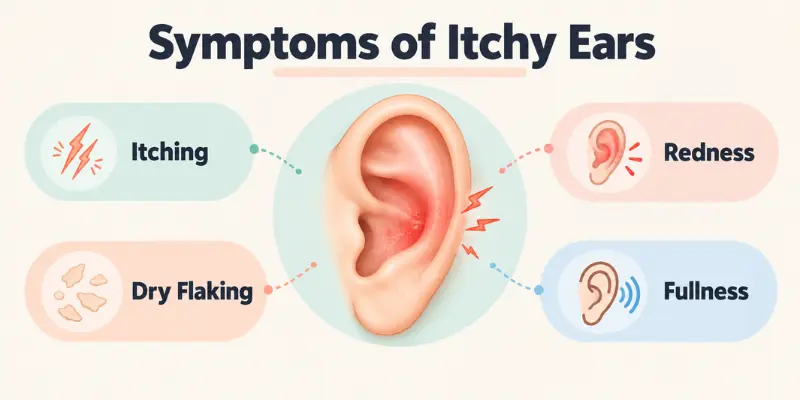
Paying attention to these symptoms can help you understand when simple care may be enough and when it may be time to seek medical advice.
Here are the common symptoms that may occur along with itchy ears:
1. Mild Symptoms
Mild symptoms usually appear during the early stages of ear irritation. They often cause discomfort but do not significantly affect daily activities.
These symptoms may come and go and are commonly linked to dry skin, allergies, or minor irritation.
- Tickling: A light sensation inside the ear that creates the urge to scratch
- Dryness: Lack of moisture that makes the ear canal feel rough or uncomfortable
- Irritation: Mild discomfort that may occur without pain or swelling
2. Moderate Symptoms
Moderate symptoms are more noticeable and may indicate ongoing irritation or an underlying condition. They can affect comfort and may become worse without proper care.
These symptoms often develop when inflammation or skin problems affect the ear area.
- Redness: Visible inflammation around or inside the ear
- Flaking: Small pieces of dry skin that shed from the affected area
- Fullness: A blocked or clogged feeling inside the ear
3. Severe Symptoms
Severe symptoms may suggest an infection or a more serious ear condition. These signs should not be ignored, especially if they continue or worsen over time.
Medical attention may be necessary to identify the cause and prevent complications.
- Pain: Persistent discomfort that may increase when touching the ear
- Swelling: Enlargement of the ear tissue due to inflammation
- Discharge: Fluid, pus, or other substances coming from the ear
Treatment Options for Itchy Ears
The best treatment for itchy ears depends on the underlying cause. Some cases improve with simple ear care, while others may require medical treatment. Identifying the reason behind the itching is important because treating the cause often provides the most effective relief.
If the itching persists, worsens, or occurs with other symptoms, it is best to seek medical advice. Early treatment can help prevent complications and reduce discomfort.
Here are the common treatment options for itchy ears:
- Ear drops: Help relieve dryness and restore moisture inside the ear canal
- Wax removal: Removes excess earwax that may be causing irritation and itching
- Allergy control: Reduces exposure to allergens that trigger ear irritation
- Skin medications: Help control inflammation, dryness, and skin irritation
- Antibiotics: Treat bacterial infections that may be causing discomfort
- Antifungals: Eliminate fungal infections affecting the ear canal
Read our detailed guide on home remedies for itchy ears for natural relief options.
When Should You See a Doctor?
Occasional ear itching is usually not a cause for concern and may improve with proper ear care. However, some symptoms can indicate an underlying condition that requires medical attention. Ignoring these warning signs may allow the problem to worsen over time.
Seeking medical advice can help identify the cause and prevent complications. Early treatment often leads to faster relief and better ear health.
You should see a doctor if you experience any of the following:
- Persistent itching: Ongoing itching that does not improve or keeps returning
- Ear pain: Pain or swelling that may indicate an infection or inflammation
- Ear discharge: Fluid, pus, or blood coming from the ear canal
- Hearing loss: Reduced hearing that affects one or both ears
- Recurring problems: Frequent episodes of itching despite proper ear care
Conclusion
In this guide, you learned about the common causes of itchy ears, including dry skin, earwax buildup, allergies, eczema, psoriasis, and ear infections. You also learned about the symptoms that may occur with ear itching, available treatment options, and when it is important to see a doctor.
Many cases of itchy ears improve once the underlying cause is identified and treated. However, ongoing itching, pain, discharge, or hearing changes may require medical attention.
If your symptoms do not improve or keep coming back, consult a healthcare professional for proper diagnosis and treatment. Identifying the cause early can help relieve symptoms, protect ear health, and prevent future irritation.
FAQs About Causes of Itchy Ears
Here are some common questions and answers about the causes of itchy ears.
The most common causes include:
- Dry skin inside the ear
- Earwax buildup in the ear canal
- Allergies triggered by pollen, dust, or pet dander
- Ear eczema that causes dry and itchy skin
- Swimmer’s ear caused by trapped moisture
- Contact dermatitis from irritating products or materials
Yes, allergies are a common reason for itchy ears. Pollen, dust mites, pet dander, and certain foods can trigger irritation inside or around the ears. Many people notice ear itching during allergy season.
Constant itching inside the ears may result from dry skin, eczema, allergies, or an ear infection. Frequent ear cleaning can also remove protective earwax and worsen irritation. A doctor can help identify the exact cause if symptoms persist.
Yes, excess earwax can irritate the ear canal and cause itching. Impacted earwax may also create a feeling of fullness or blockage in the ear. Safe earwax removal can often relieve these symptoms.
Sometimes itchy ears can be an early sign of an ear infection. As the infection progresses, symptoms such as pain, swelling, or discharge may develop. Medical treatment may be needed to clear the infection.
Ear itching may feel more noticeable at night because there are fewer distractions. Dry skin, allergies, and skin conditions such as eczema can also contribute to nighttime itching. Identifying the underlying cause can help reduce discomfort.
Yes, frequent use of earbuds or headphones can irritate the ear canal. They may trap moisture, create friction, or allow bacteria to build up on the skin. Cleaning them regularly can help prevent ear irritation.
You can help prevent itchy ears by:
- Avoiding excessive ear cleaning that removes protective earwax
- Keeping your ears dry after swimming or bathing
- Managing allergies that may trigger ear irritation
- Avoiding products that irritate sensitive skin
- Cleaning earbuds, earplugs, and hearing aids regularly
- Following good ear hygiene habits without overcleaning the ears
You should see a doctor if the itching does not improve or keeps returning. Medical attention is also important if you experience pain, swelling, discharge, or hearing loss. Early treatment can help prevent complications.
Stress may not directly cause itchy ears, but it can worsen skin sensitivity and certain skin conditions. People with eczema or psoriasis may notice increased itching during stressful periods. Managing stress may help reduce flare-ups and discomfort.






- Be Respectful
- Stay Relevant
- Stay Positive
- True Feedback
- Encourage Discussion
- Avoid Spamming
- No Fake News
- Don't Copy-Paste
- No Personal Attacks
- Be Respectful
- Stay Relevant
- Stay Positive
- True Feedback
- Encourage Discussion
- Avoid Spamming
- No Fake News
- Don't Copy-Paste
- No Personal Attacks
