How to Reduce Period Bloating Naturally: Best Tips
Published: 29 Apr 2026
Period bloating is one of the most uncomfortable symptoms women face during their monthly cycle. It often makes your stomach feel swollen, tight, and heavier than usual.
Many women experience difficulty wearing fitted clothes, sitting comfortably, or carrying out daily tasks because of the discomfort. This happens mainly due to hormonal changes that affect the way the body holds water and salt.
The good news is that simple lifestyle changes can reduce bloating and make your period days much more manageable. With the right habits and daily routines, you can control water retention, improve digestion, and feel lighter.
In this guide, I will share the best ways to reduce period bloating naturally, safely, and effectively.
How to Reduce Period Bloating
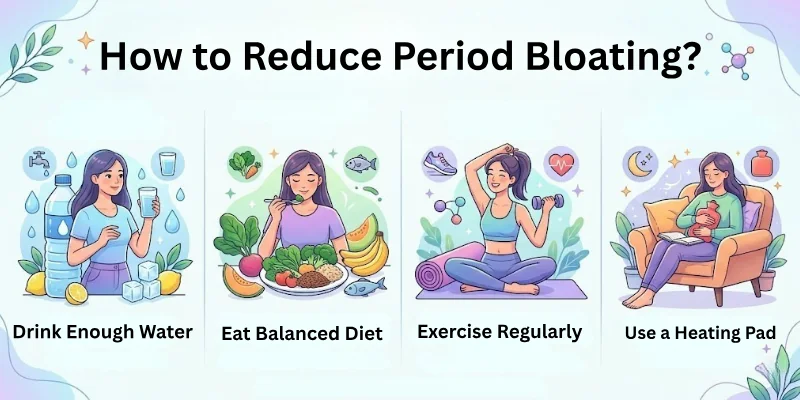
Here are the best tips to reduce period bloating and feel lighter before and during your period:
- Avoid Salty Foods
- Drink Enough Water
- Reduce Caffeine and Alcohol
- Eat Potassium-Rich Foods
- Eat Foods That Act as Natural Diuretics
- Avoid Foods That Cause Gas
- Add More Fiber to Your Diet
- Exercise Regularly
- Try Light Yoga and Stretching
- Use a Heating Pad
- Consider Magnesium Supplements
- Track Your Cycle and Symptoms
- Manage Stress
- Avoid Tight Clothing
- Talk to Your Doctor if Symptoms Persist
Let’s cover all the tips in detail.
1. Avoid Salty Foods
Eating too much salt can make your body hold water, which directly increases bloating. During your period, the body becomes more sensitive to sodium, so salty foods make the stomach feel swollen even faster.
Reducing salt helps your kidneys handle fluid better. This makes your stomach feel lighter and less tight. If you cut down on salty snacks and processed foods, you will notice a big improvement in bloating. Start this habit at least one week before your period starts for best results.
Helpful Tips:
- Skip chips, packaged snacks, and fast food
- Choose low-sodium seasoning
- Cook meals at home
- Read labels for hidden sodium
- Avoid canned soups and instant noodles
2. Drink Enough Water
Drinking more water actually reduces water retention. When your body is dehydrated, it holds onto extra water, which causes bloating. Staying hydrated improves kidney function and flushes out excess salt.
Water also improves digestion and reduces constipation, which can worsen bloating. Try drinking water consistently throughout the day instead of large amounts all at once.
Helpful Tips:
- Aim for 6–8 glasses daily
- Start your morning with a glass of warm water
- Add lemon or cucumber
- Carry a water bottle everywhere
- Avoid sugary drinks
3. Reduce Caffeine and Alcohol
Caffeine and alcohol can worsen bloating by dehydrating the body. When dehydration occurs, water retention increases, leading to a swollen belly. Both caffeine and alcohol also cause digestive discomfort and gas.
Reducing them during the week of your period helps ease symptoms. You don’t need to cut them completely; just limit your intake.
Helpful Tips:
- Replace coffee with herbal tea
- Avoid alcohol 5–7 days before your period
- Drink water between beverages
- Choose decaf options
- Keep servings small
4. Eat Potassium-Rich Foods
Potassium helps balance fluids in the body and lowers sodium levels. This reduces water retention and bloating. Foods like bananas, tomatoes, and sweet potatoes work naturally with your body to prevent swelling.
Eating potassium-rich foods before and during your period gives faster relief. It also improves energy levels.
Helpful Tips:
- Eat a banana daily
- Add tomatoes to salads
- Snack on coconut water
- Eat sweet potatoes for dinner
- Add spinach to smoothies
5. Eat Foods That Act as Natural Diuretics
Natural diuretic foods help your body release extra water. They support kidney function and reduce the heavy feeling in your stomach. These foods gently remove excess salt and fluids without harming your body.
They also improve digestion and reduce puffiness. Adding a few diuretic foods to your meals can make a noticeable difference.
Helpful Tips:
- Eat cucumbers, pineapple, and watermelon
- Add asparagus to meals
- Snack on peaches or berries
- Drink herbal teas like dandelion
- Add parsley or lemon to dishes
6. Avoid Foods That Cause Gas
Some foods naturally produce gas during digestion. Eating them before or during your period can worsen bloating and create stomach discomfort.
Avoiding these foods helps your stomach stay calm. You don’t need to cut them forever; just avoid them when you’re close to your period. Your digestion will feel much smoother.
Helpful Tips:
- Limit beans and lentils
- Reduce intake of onions and garlic
- Avoid carbonated drinks
- Be careful with broccoli, cauliflower, and cabbage
- Chew food slowly
7. Add More Fiber to Your Diet
Fiber improves bowel movement and prevents constipation. Constipation is a major cause of bloating during periods. Eating more fiber helps move food smoothly through your digestive system. It also improves gut health and reduces discomfort. Increase fiber slowly to avoid sudden gas.
Helpful Tips:
- Eat oats and chia seeds
- Add berries to breakfast
- Include whole grains
- Add vegetables to every meal
- Drink water to help fiber work
8. Exercise Regularly
Exercise improves circulation and helps your body release extra fluids. It also reduces stress hormones that can worsen bloating.
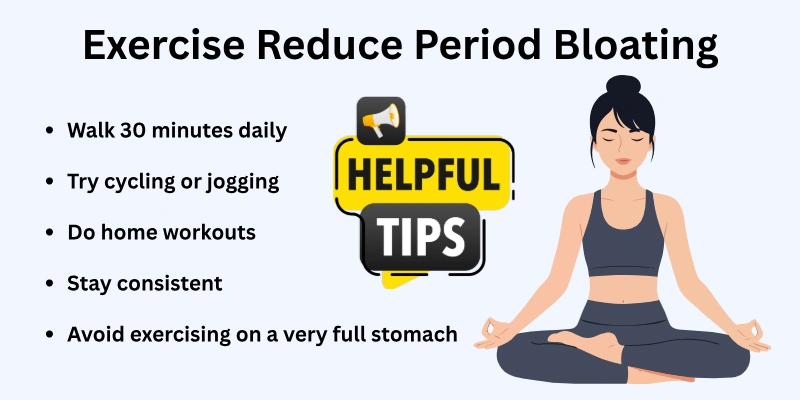
Moving your body daily supports digestion and prevents constipation. Even mild physical activity can reduce bloating within minutes. Make it a habit, especially 3–5 days before your period.
Helpful Tips:
- Walk 30 minutes daily
- Try cycling or jogging
- Do home workouts
- Stay consistent
- Avoid exercising on a very full stomach
9. Try Light Yoga and Stretching
Yoga relaxes your muscles and improves blood flow to your abdomen. Certain poses help reduce gas, pressure, and heaviness.
Gentle stretching can calm cramps and help your body release trapped gas. Doing yoga during your period is safe and effective. It also improves mood and reduces fatigue.
Helpful Tips:
- Try child’s pose
- Try cat-cow pose
- Do gentle twists
- Stretch your lower back
- Practice deep breathing
10. Use a Heating Pad
Heat relaxes your abdominal muscles and reduces discomfort. It can also improve blood circulation and ease bloating. Using a heating pad during cramps naturally soothes the stomach. This method works quickly and is very comforting. It is especially helpful in the evening.
Helpful Tips:
- Place heat on your lower belly
- Use for 15–20 minutes
- Avoid sleeping with it
- Try warm baths
- Combine with gentle stretching
11. Consider Magnesium Supplements
Magnesium helps regulate fluids and relaxes muscles. It reduces water retention and improves digestion. Many women experience relief from bloating after adding magnesium. It also reduces PMS symptoms like cramps and mood swings. Always talk to a doctor before starting supplements.
Helpful Tips:
- Try magnesium glycinate
- Take it at night
- Avoid very high doses
- Eat magnesium-rich foods
- Monitor body response
12. Track Your Cycle and Symptoms
Tracking your cycle helps you notice patterns of bloating. When you know when bloating usually happens, you can start prevention early. This reduces discomfort and helps you stay prepared. It also helps you understand hormone changes. Cycle tracking apps make this very easy.
Helpful Tips:
- Use a period tracker
- Note symptoms daily
- Record food triggers
- Track stress levels
- Share patterns with your doctor if needed
13. Manage Stress
Stress increases cortisol, a hormone that worsens water retention. High cortisol can lead to bloating, mood changes, and digestive problems. Managing stress helps your body stay balanced. It also supports better sleep and digestion. Small daily stress-relief habits are highly effective.
Helpful Tips:
- Practice deep breathing
- Try meditation
- Take short breaks
- Go outside for fresh air
- Do enjoyable activities
14. Avoid Tight Clothing
Tight clothing adds pressure to your stomach and makes bloating feel worse. Wearing loose and comfortable outfits gives your abdomen space to relax. It also improves circulation and reduces discomfort. Choose soft fabrics that do not press against your belly. Comfort matters more during your period.
Helpful Tips:
- Wear loose pants
- Choose soft waistbands
- Avoid shapewear
- Try cotton fabrics
- Pick flowy dresses on heavy days
15. Talk to Your Doctor if Symptoms Persist
If bloating becomes severe or lasts too long, it may be a sign of another condition. Conditions like IBS, endometriosis, or food intolerances can worsen bloating. A doctor can help you find the root cause. Early guidance prevents complications. Never ignore symptoms that feel unusual.
Helpful Tips:
- Track symptoms for 2–3 cycles
- Share your period pattern
- Discuss medications
- Ask about hormone testing
- Get regular checkups
How You Can Take Care of All These Tips in One Go
This section helps you apply everything easily in daily life.
- Start reducing salt and drinking water one week before your period.
- Plan meals that include potassium and fiber daily.
- Do light exercise or yoga for 20–30 minutes.
- Keep a heating pad ready for comfort.
- Track your symptoms to adjust your routine.
Consistency makes all the difference in reducing bloating.
Final Note
In this guide, we have covered the most effective and practical ways on how to reduce period bloating naturally. These tips work together to manage water retention, improve digestion, and calm your body during hormonal changes. By following these strategies consistently, you can make each period more comfortable.
My personal advice is to start applying these habits at least one week before your cycle for the best results. Remember, your comfort matters, and small daily steps can make a big difference.
FAQs
Here are some of the most commonly asked questions related to how to reduce period bloating:
Hormonal changes increase water retention before your period. These changes affect how the body handles salt and fluids. This leads to temporary swelling and heaviness. The bloating usually reduces once your period begins.
Period bloating can start 3–7 days before your period. It usually improves within the first two days of menstruation. Some women may experience bloating for a week. Lifestyle habits can shorten the length of bloating.
Yes, drinking water reduces bloating by flushing out excess salt. Hydration prevents water retention. It also supports digestion. Regular water intake is one of the simplest fixes.
Salty snacks, fried foods, dairy, and carbonated drinks can worsen bloating. These foods cause gas and water retention. Avoiding them before your period helps reduce discomfort. Choose fresh, whole foods instead.
Yes, exercise improves blood circulation and reduces fluid retention. Walking or light workouts can relieve pressure in your stomach. Exercise also reduces stress hormones. Even 15 minutes can help.
Yes, potassium helps balance sodium levels. This reduces water retention and swelling. Foods like bananas and tomatoes are especially helpful. Eat them daily during your period week.
See a doctor if bloating becomes severe, painful, or lasts too long. It could be related to other conditions like IBS or endometriosis. Persistent bloating is not normal. Medical guidance helps find the cause.
Yes, magnesium helps relax muscles and balance fluids. It reduces PMS symptoms including bloating. Many women feel relief within a few cycles. Always ask your doctor before taking supplements.



- Be Respectful
- Stay Relevant
- Stay Positive
- True Feedback
- Encourage Discussion
- Avoid Spamming
- No Fake News
- Don't Copy-Paste
- No Personal Attacks
- Be Respectful
- Stay Relevant
- Stay Positive
- True Feedback
- Encourage Discussion
- Avoid Spamming
- No Fake News
- Don't Copy-Paste
- No Personal Attacks
